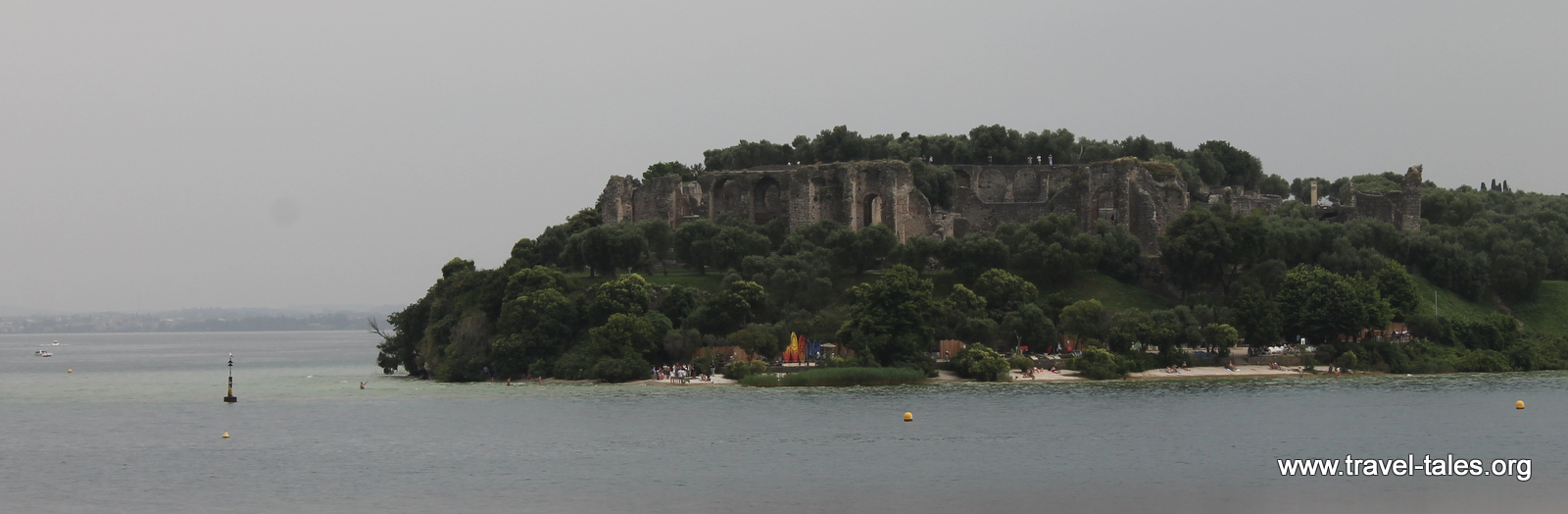
Leaving the town of Sirmione towards the tip of the peninsular is all uphill. There were signs to a grotto in this direction. The pictures don’t show it but it was a hot day. I did not really feel like walking uphill in the heat just to see a grotto. My travel companion felt differently, so up we headed. I am glad we did.
What we found at the Grotto di Cattulo, was not a gotto at all. When things on this site were first discovered people thought it was a grotto. That is why it has this name. It is actually the ruins of a magnificent Roman Villa built for Cattulus.
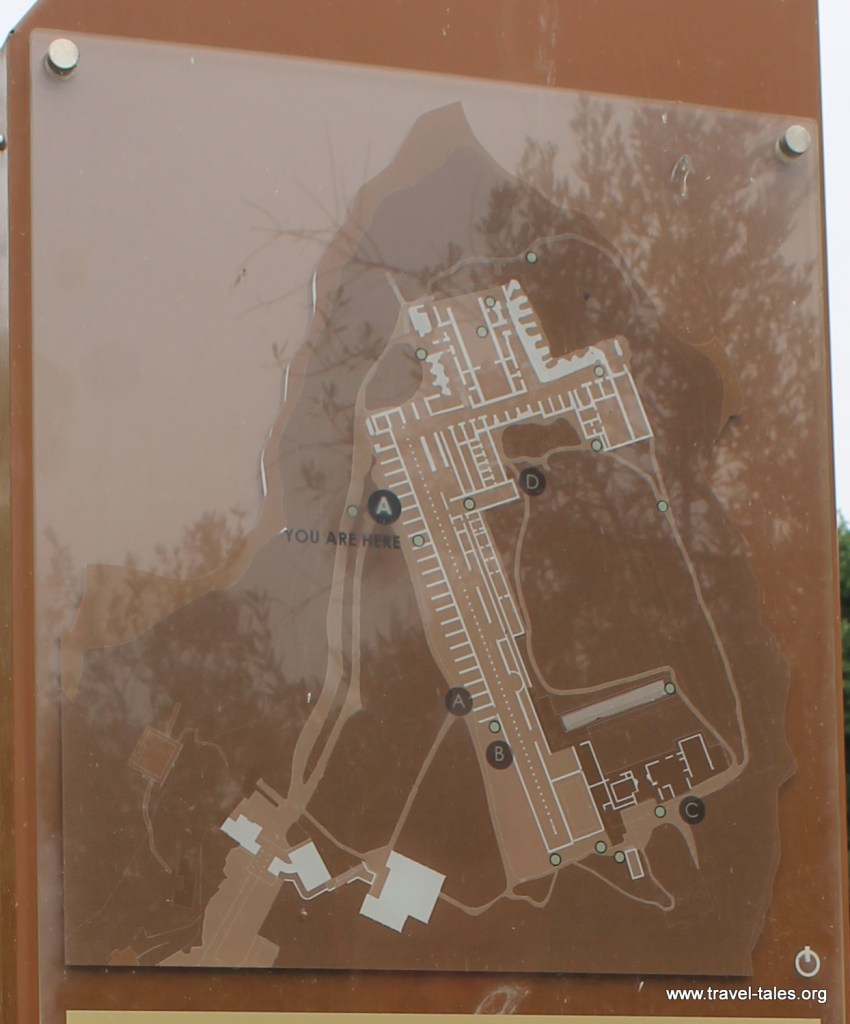
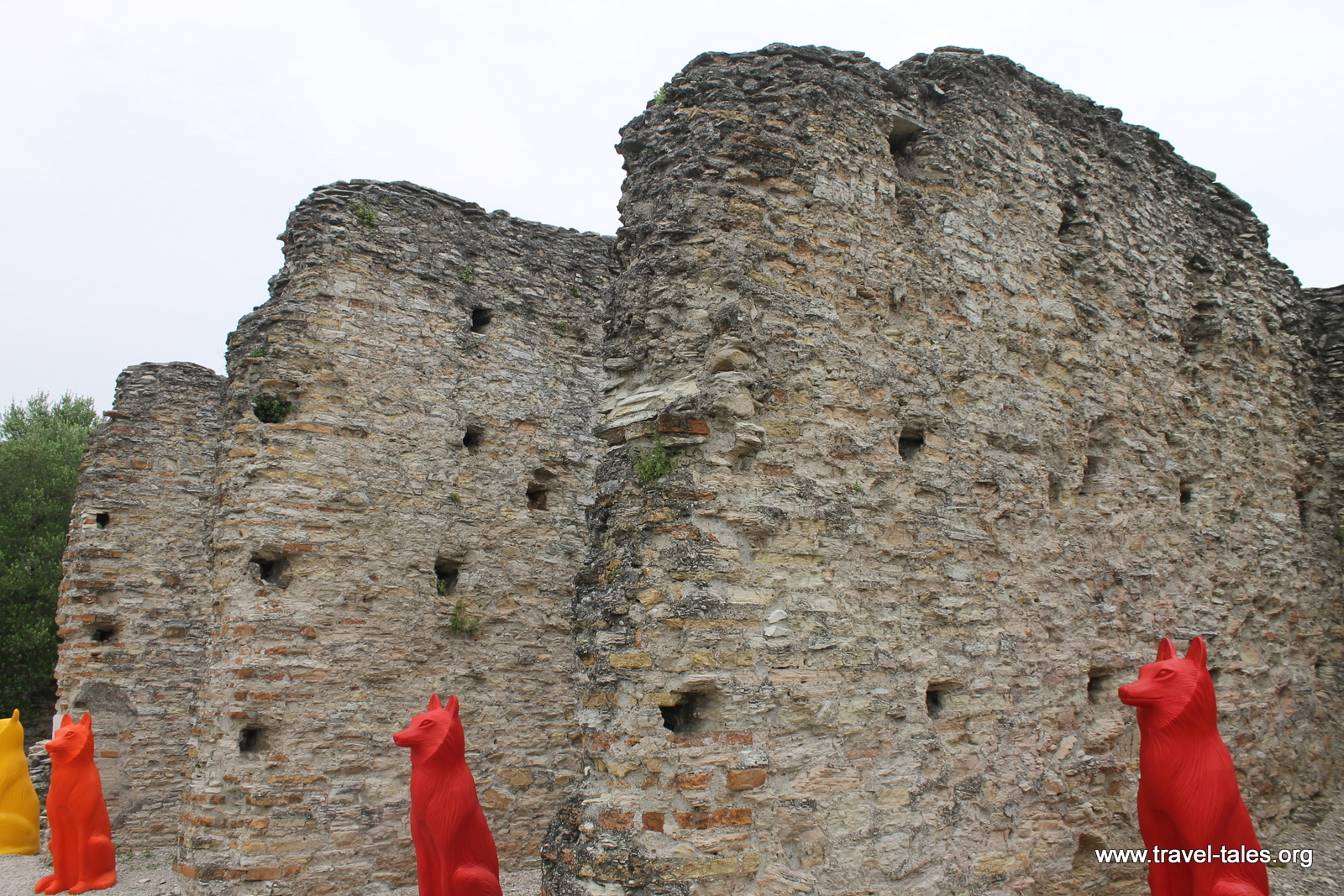
Built along the side of the peninsula are rows of rooms. It is unclear what all were used for. Those closest to the tip are thought to have been kitchens. All the rooms are now guarded by a collection of wolves by a modern artist. Some pillars supporting the upper floor of the villa remain, although the floor itself is no longer there.
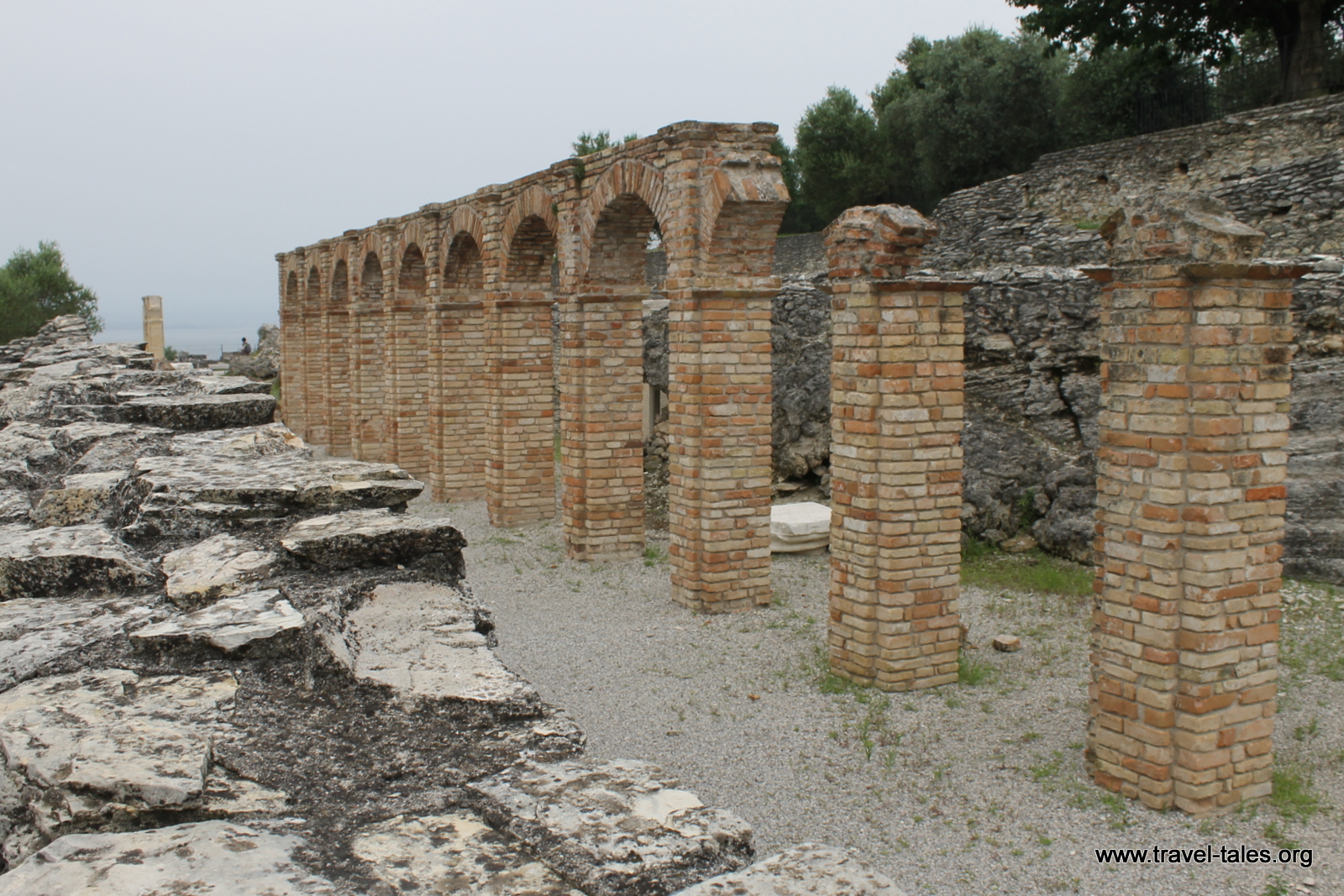

The panorama terrace at the tip of the peninsula is long and provides grandiose views across Lake Garda. The steps down to the lower gardens with their tall arches give you a good impression of the size of the villa.


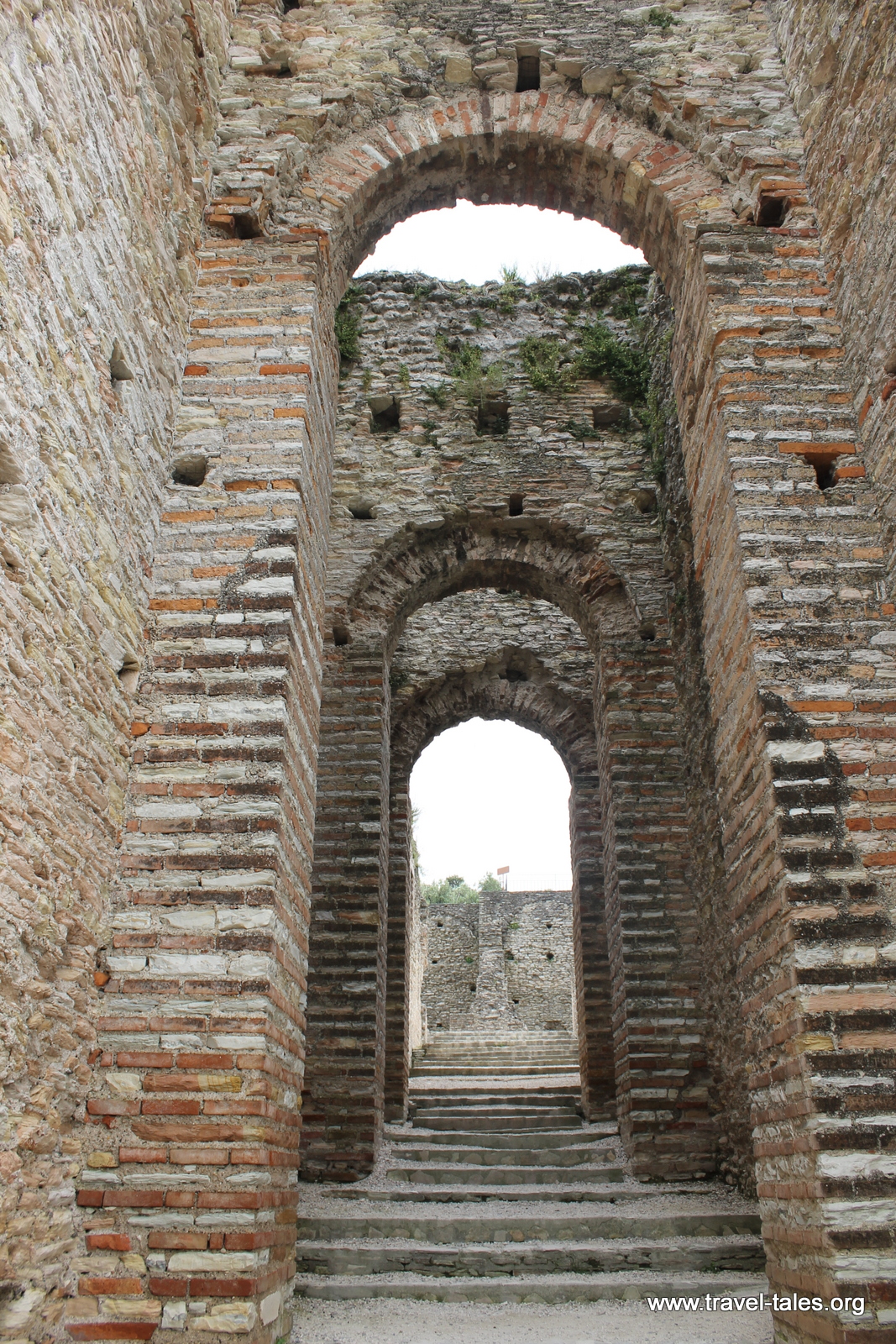
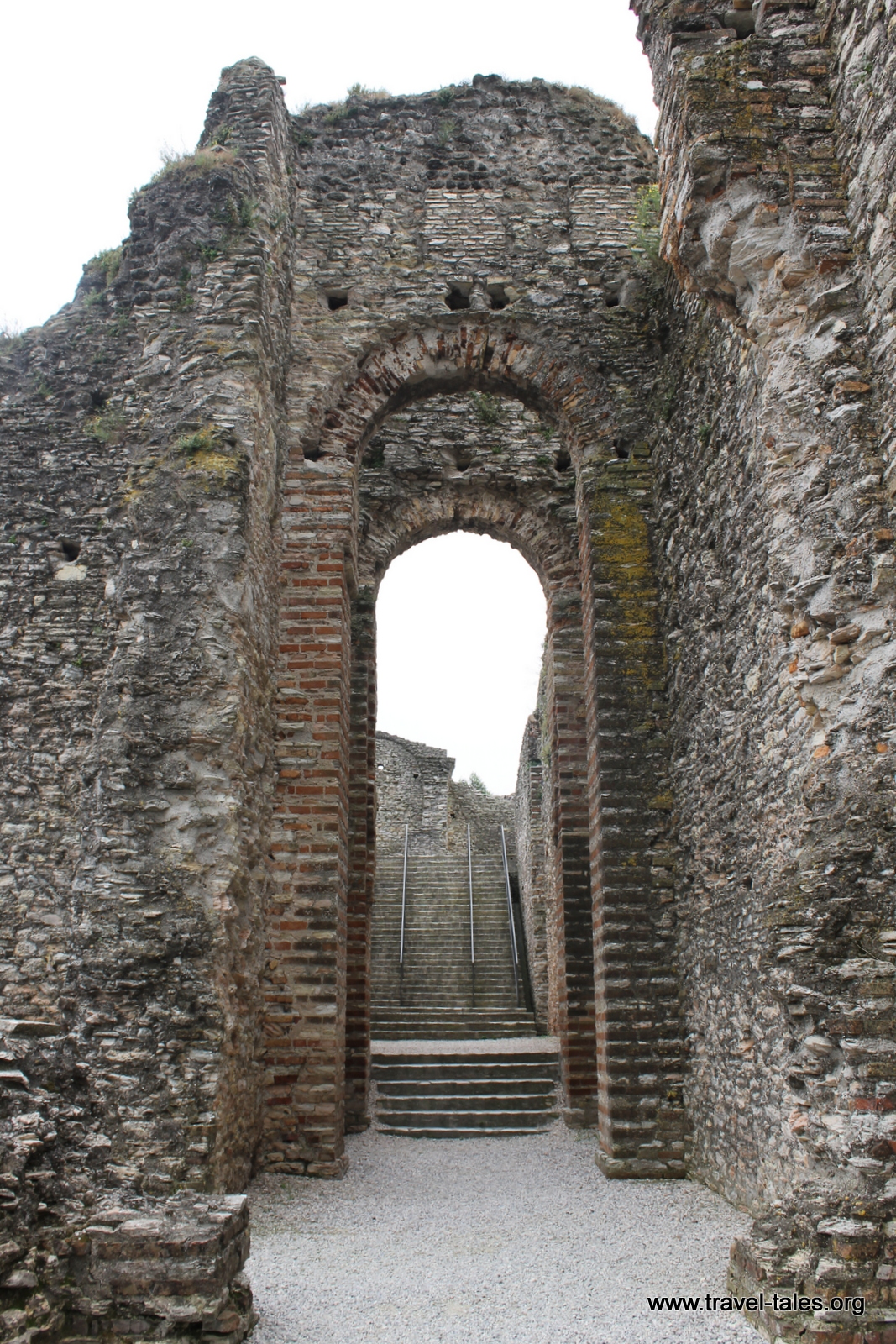

Further inland there is a large underground cistern which will have supplied the villa with water. It is protected now to prevent the roof from falling in. Other finds of this brickwork are displayed in the part of the villa in which they were found.


Another construction marvel in the villa is the heated swimming pool. Around the edges of the pool you can see a double wall. At the entrance to that double wall are signs of fire. Archeologists therefore believe the narrow gap was filled with hot air to warm the water in the swimming pool.


To commemorate Cattulus’ impact on Sirmione, a bust of him is displayed in the harbour.


 travel tales