
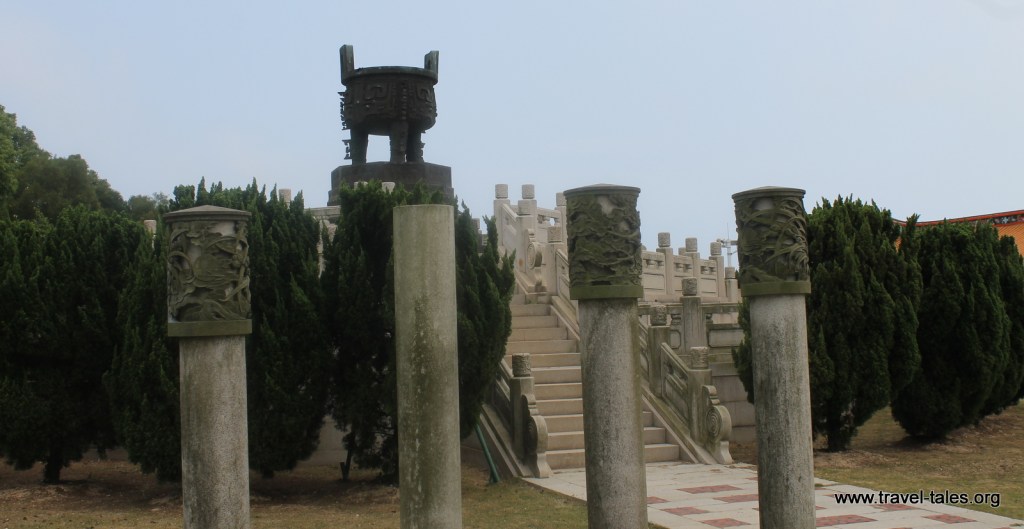
The statue of A-Ma is part of a broader complex built to commemorate the return of Macau to China referred to as the “Cultural Village”. Right next to the statue is the Bao Ding Plaza. The Bao Ding symbolises Macau’s return to China in 1999.

Historically, dings were associated with power and dominion over land. It is therefore understandable that when Macau’s land ceased being governed by the Portuguese a commemorative ding was created and installed.
Dings are thought to have developed into ritual vessels over time and food cooked in a ding would have been an offering to ancestors. Most are three-legged round cauldrons, although rectangular ones have also been found as grave offerings. Dings are usually decorated with a taotie, a pattern resembling two eyes.
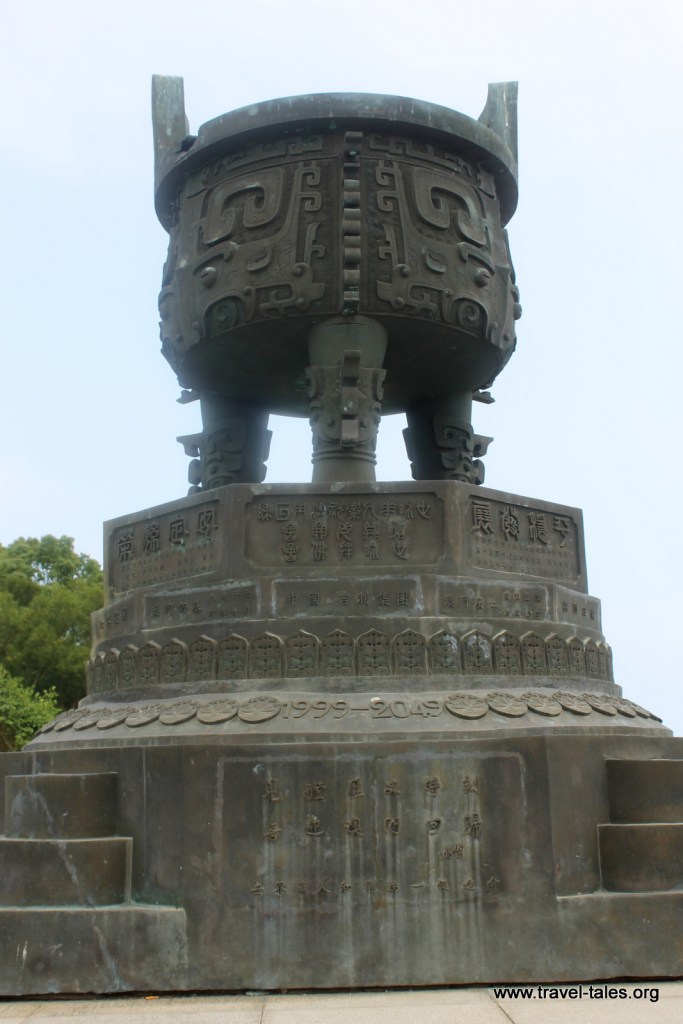
The more ornate ones are also decorated with animals and carry inscriptions. The inscriptions could be to denote the owner or tell a story. The Bao Ding is decorated with 56 harmonious dragons, representing the motherland’s 56 nationalities. Its inscriptions reflect Macau’s return and include the numbers 1999 – 2049 symbolising “one country two systems” and “unchanged for 50 years”.

 travel tales