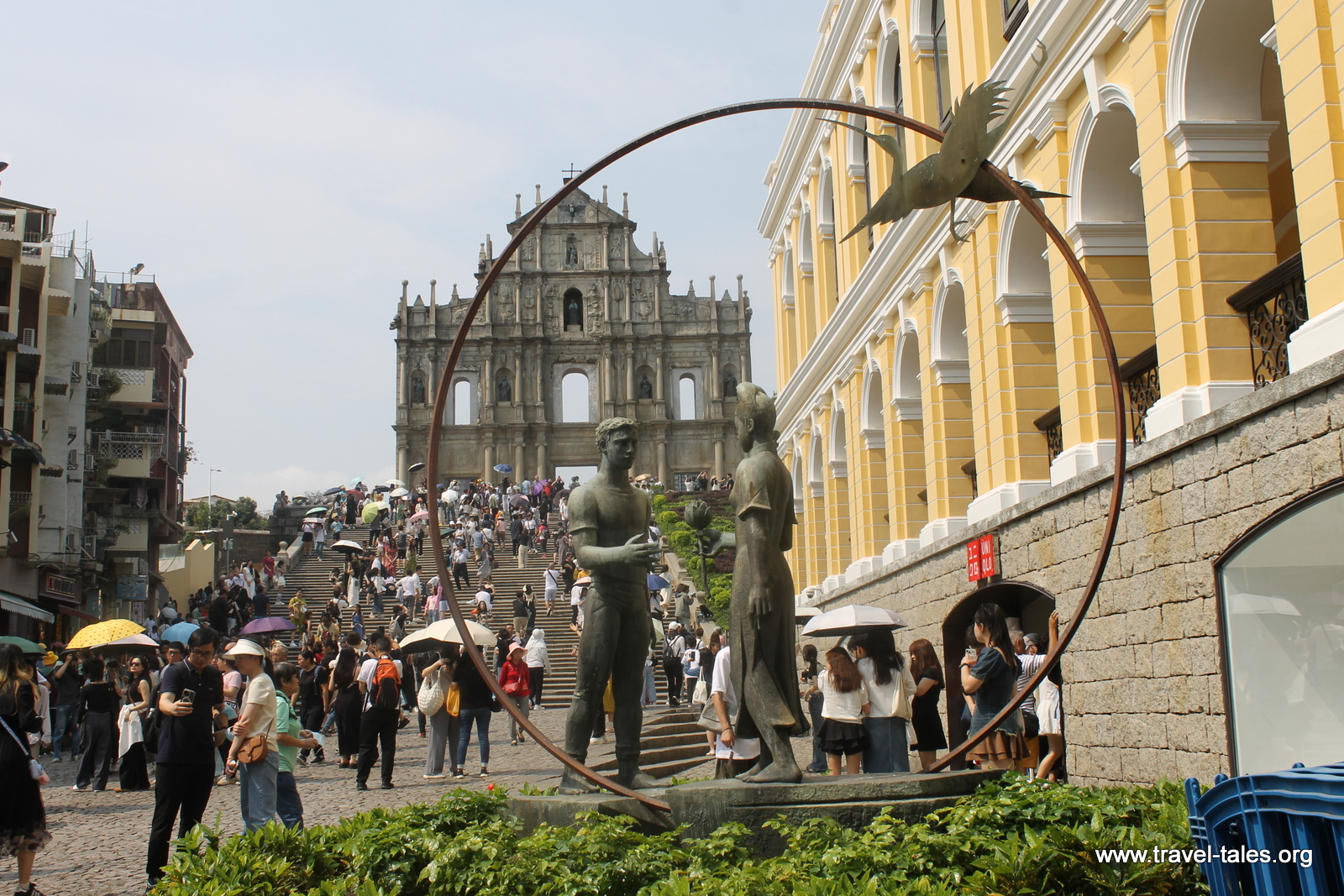
While Macau was under Portuguese administration, it never attracted large numbers of colonists or missionaries. Most of the Portuguese who lived there were traders or soldiers, few of whom brought wives or families.
This resulted in an interesting blend of cultures. A dominant example of which, is the most visited landmark of Macau: the facade of the church Mater Dei. Next to it are the ruins of St Paul’s college, which is why the site is usually referred to as Ruins of St. Paolo.
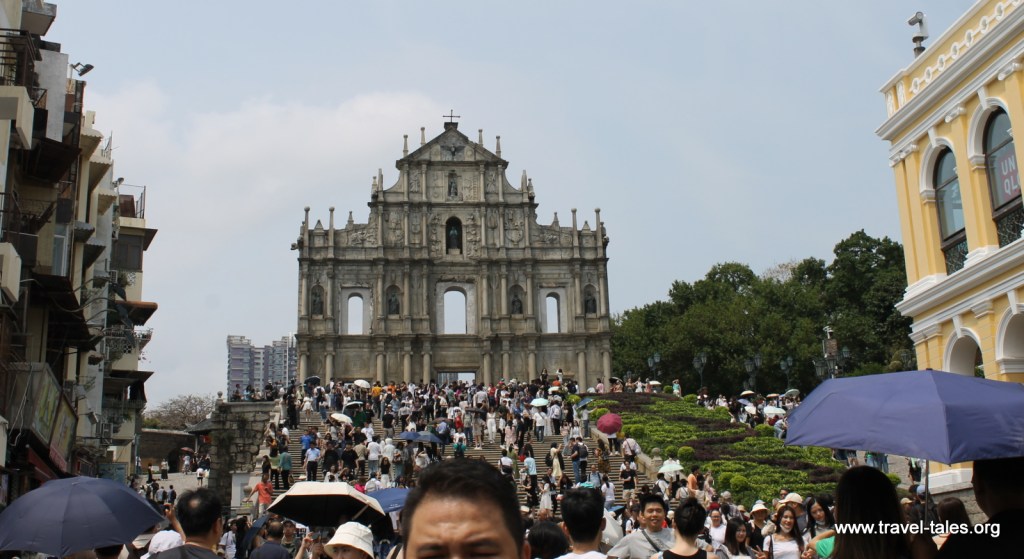
I didn’t take any close-up pictures but saw on my second visit in the rain that the images on the facade include both Christian iconography and Chinese characters and lions. You can read up a bit more on the facade on the World Heritage Site for the location
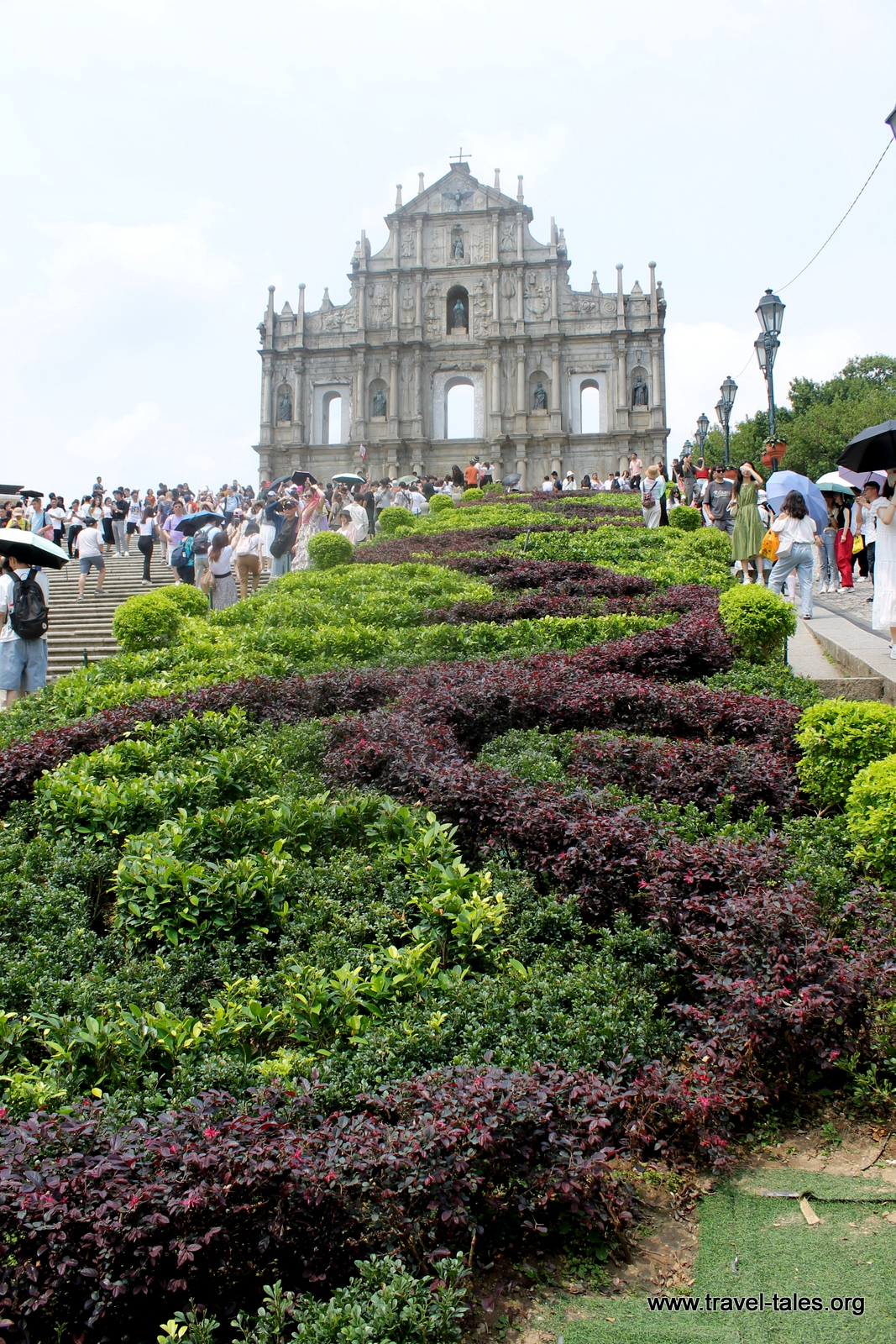
The actual church was made of wood and burned down. Only the steps up to the entrance, the facade and the granite floor remain intact.

The crypt under the floor can still be visited. A small museum adjacent to the crypt displays a collection of items used in Christian religious ceremonies. It was impossible to take good pictures because the glass cabinets reflected the light so much. They did not appear significantly different to other Christian ceremonial items. For the many visitors from mainland China, they may be quite unusual.

A famous missionary remains well remembered in Macau, Matteo Ricci. He arrived in Macau in 1582 and spent his first year learning Chinese. He then embarked on travels in China and gained permission to live in Beijing in 160. He wrote Christian texts in Chinese and translated Confucian texts into Latin. After he died in 1610, he became the first foreigner to be granted permission to be buried in Beijing.


 travel tales