The origins of the city of Dresden lie in its position along the river Elbe. It flows wide and slowly here, making it good for trade. These days there are pleasant river cruises up and down river to other towns on the river.
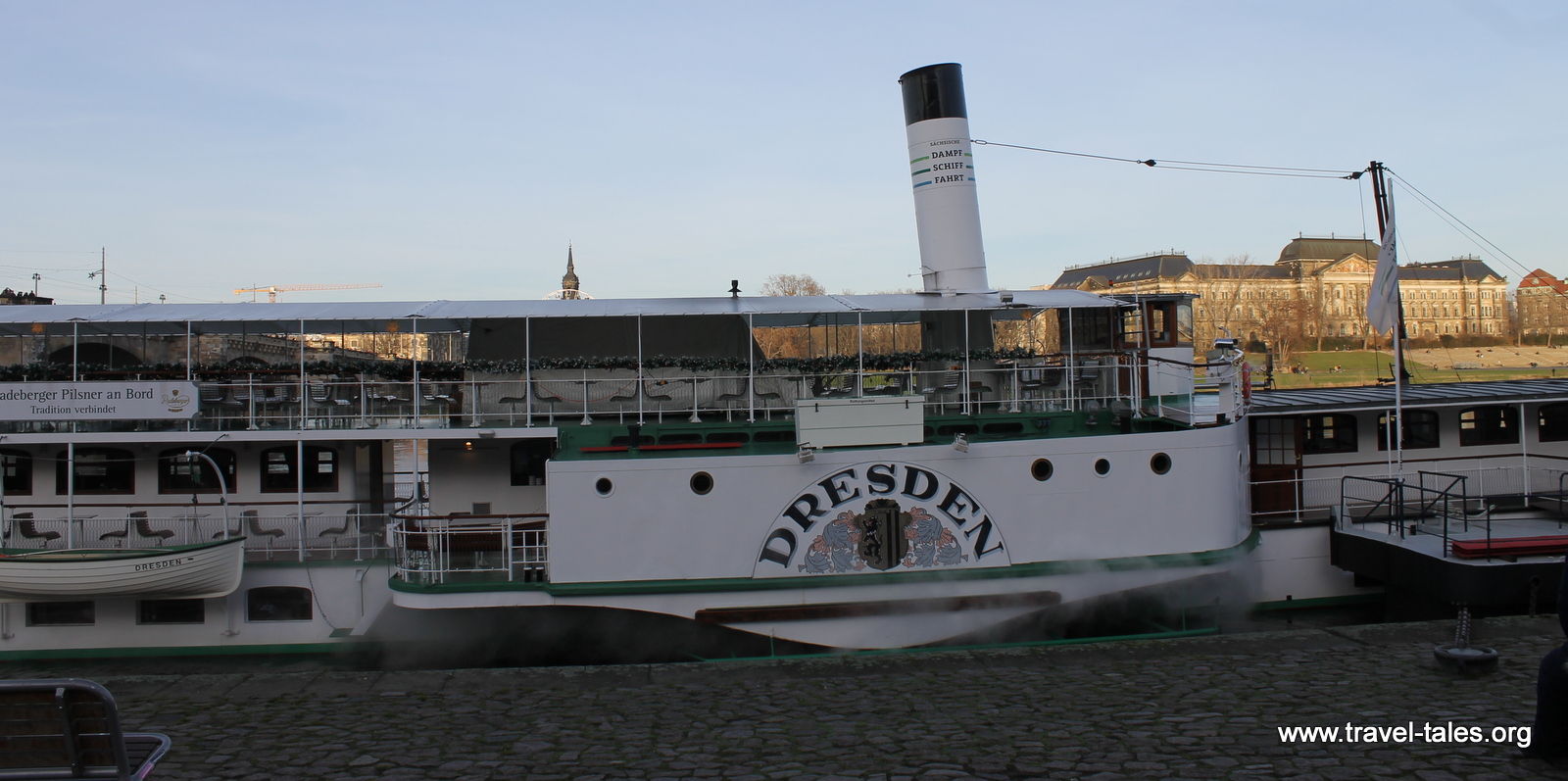
Travelling from outside the Akademie der Künste to Pillnitz, you first pass two impressive buildings, now home to various ministries, on the northern bank.


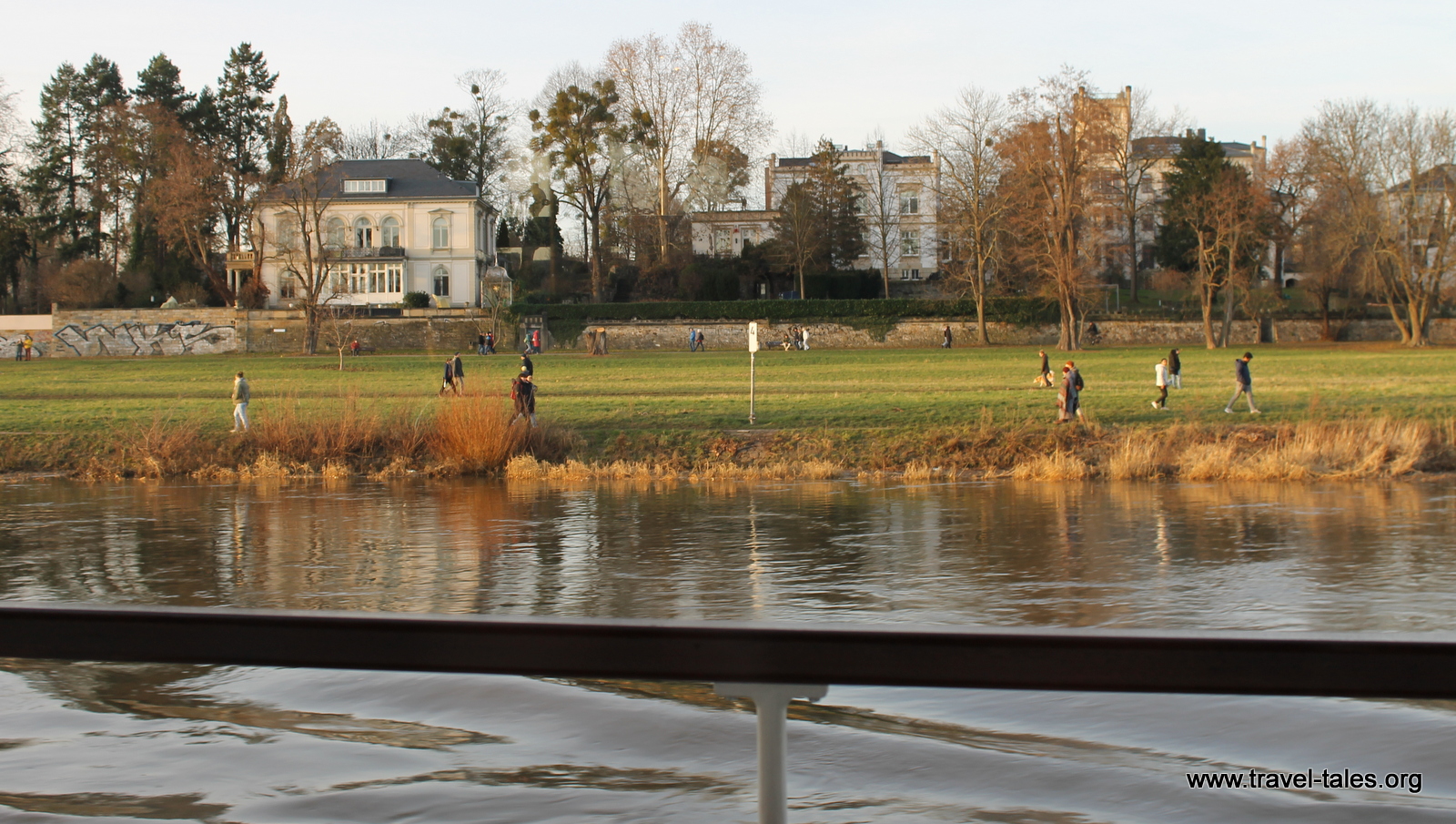
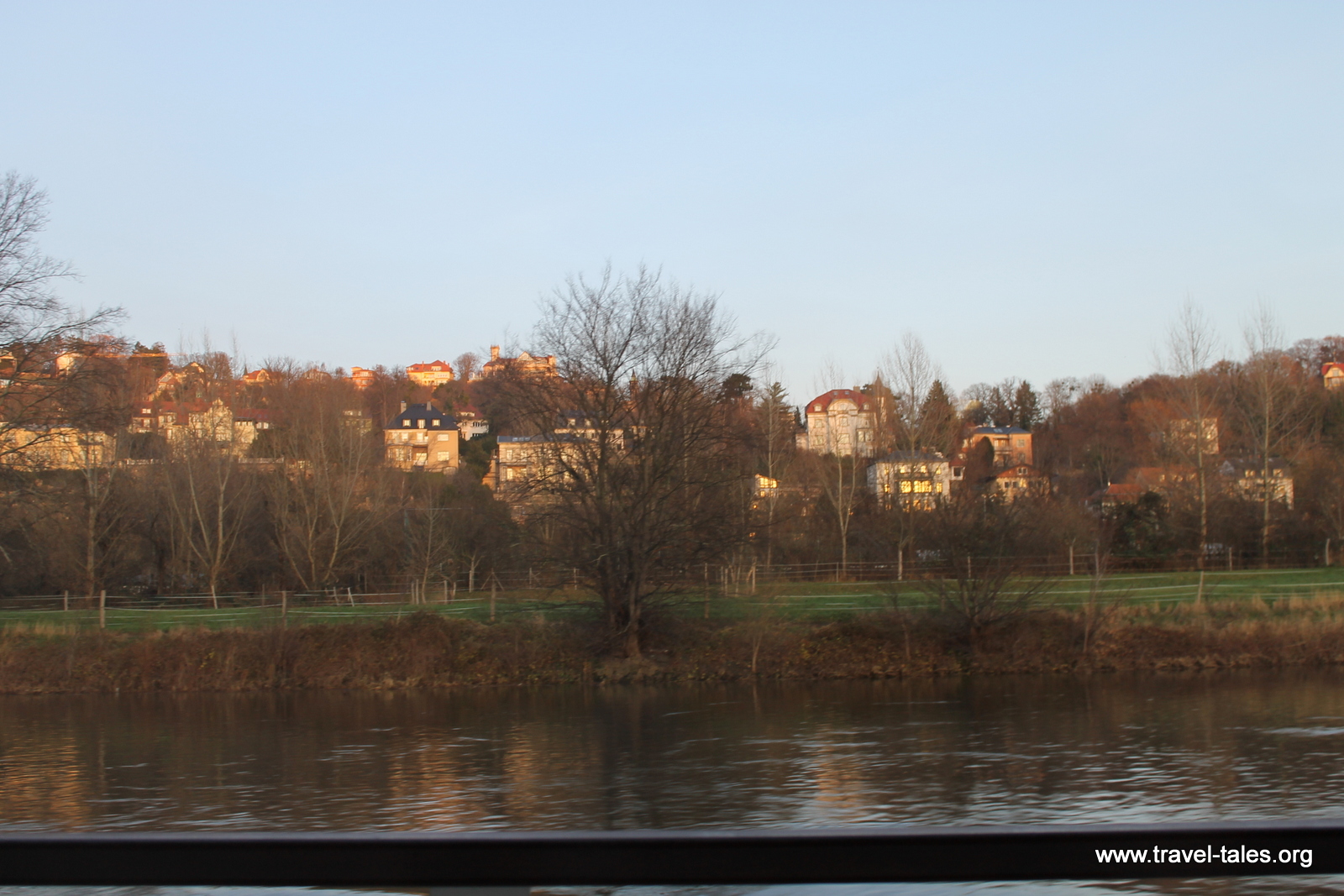
On the other side of the river, we got to see the backs of some nice residential properties and the popular public space of the Elbwiese, part of the flood plain for the river.
The subsequent sight is an infamous bridge across the river. Its construction initially resulted in an “at risk” classification of the UNESCO World Heritage Status for the valley of the Elbe. Three years later, the status was lost. It is a much-needed connection between the two river banks, however, its design appears to have caused the loss of heritage status.

Having passed under this bridge we saw one of the main attractions of this particular cruise, the three palaces. Rowed up on the north side of the river are three palaces, often referred to as the Elbschlösser – Elbe Palaces.
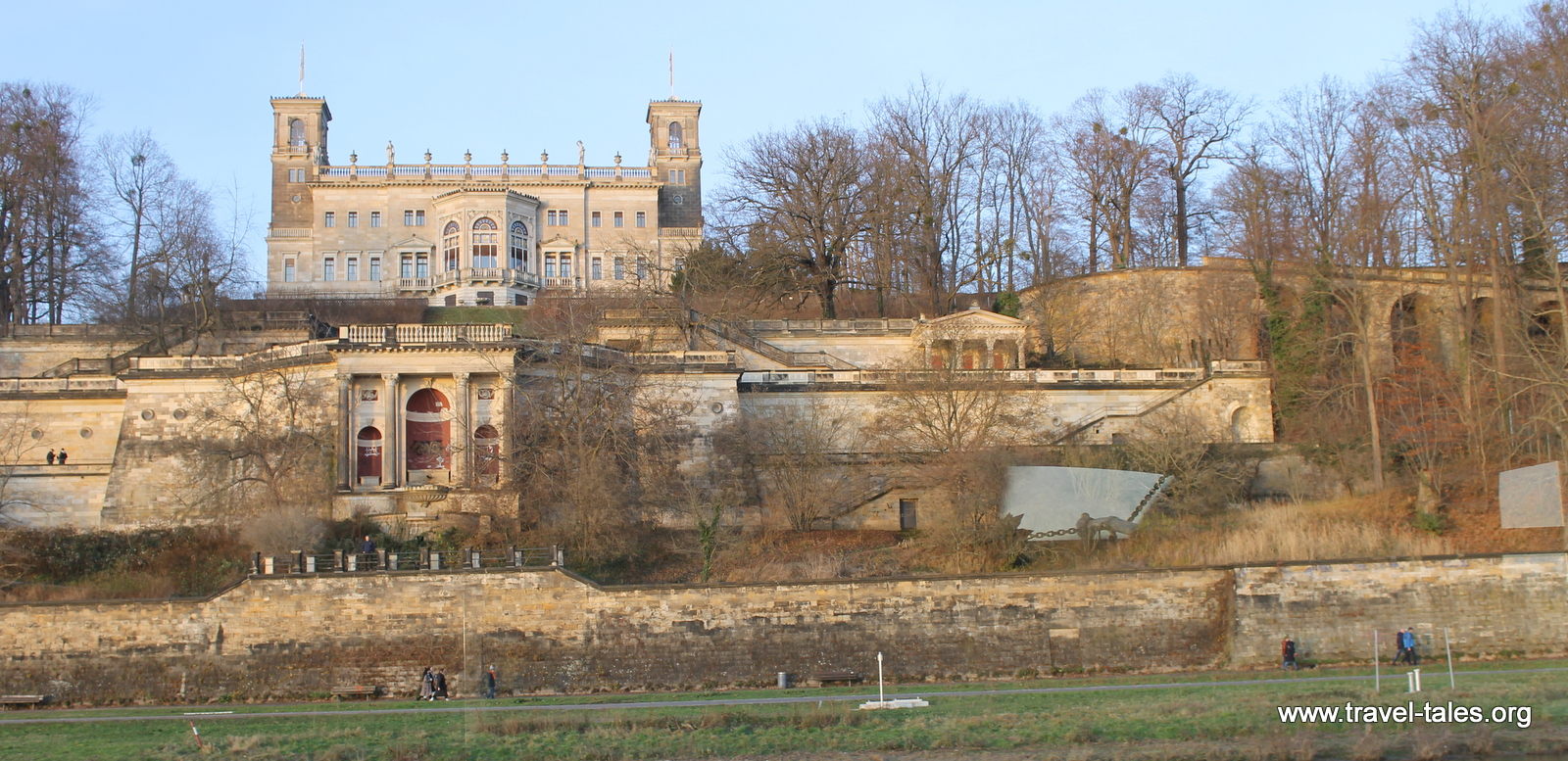
Travelling upriver, we passed the Schloss Albrechtsberg first. It was commissioned in 1850 by the Prince Albrecht of Prussia. The steep banks of the river needed to be reinforced to enable the construction at the top of the hill. The terracing down the side of the hill sought to emulate Italian palaces, may also contribute to the stabilisation. The building was completed in 1854. As money had run out, not all aspects of the original design were built.
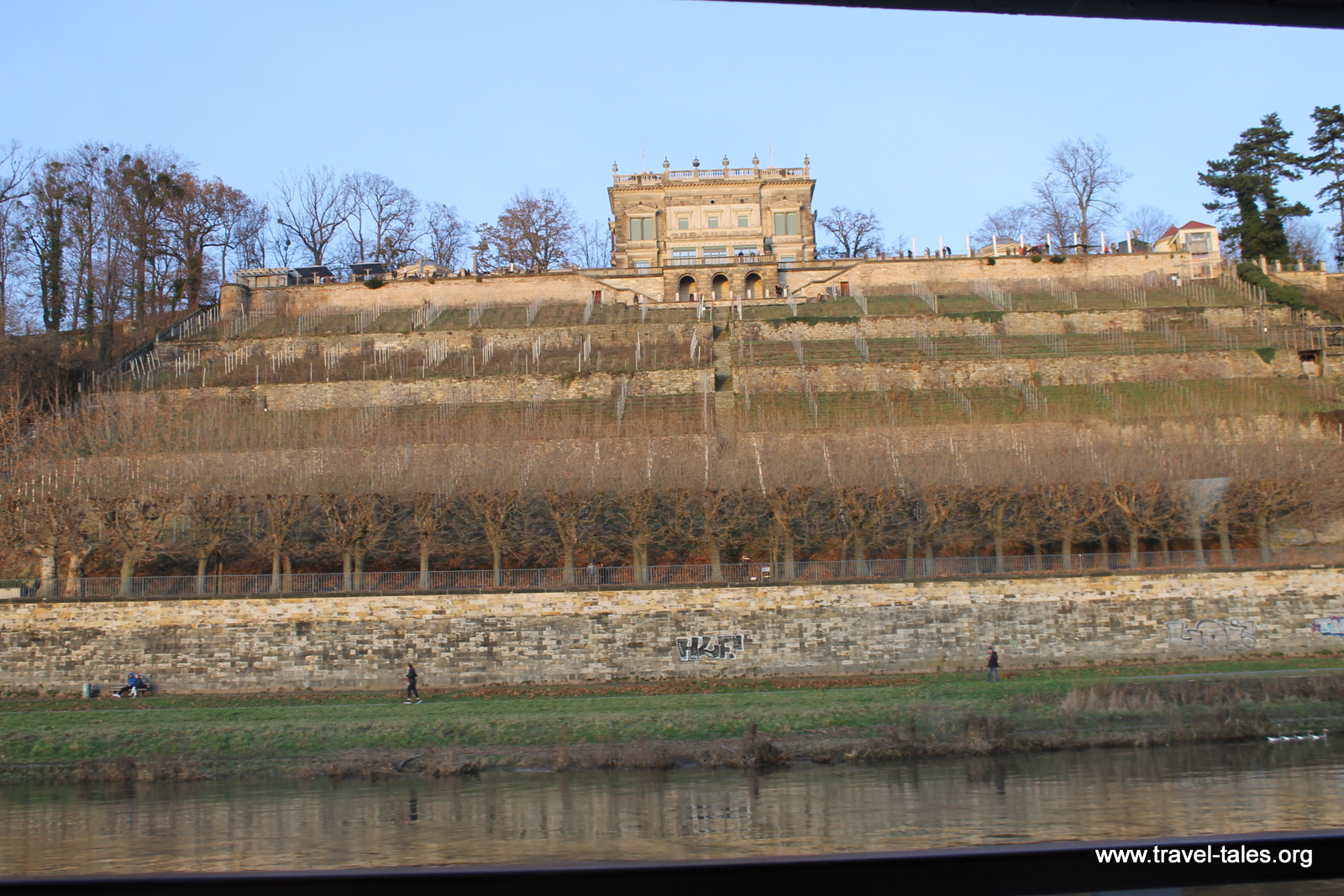
The next palace was also commissioned by the Prince of Prussia and started at the same time as Schloss Albrechtsberg. Originally called Villa Stockhausen, it is often called Lingnerschloss. The vineyard was already in existence and had previously belonged to a Scottish Earl. A less grand building, it was completed in 1853.
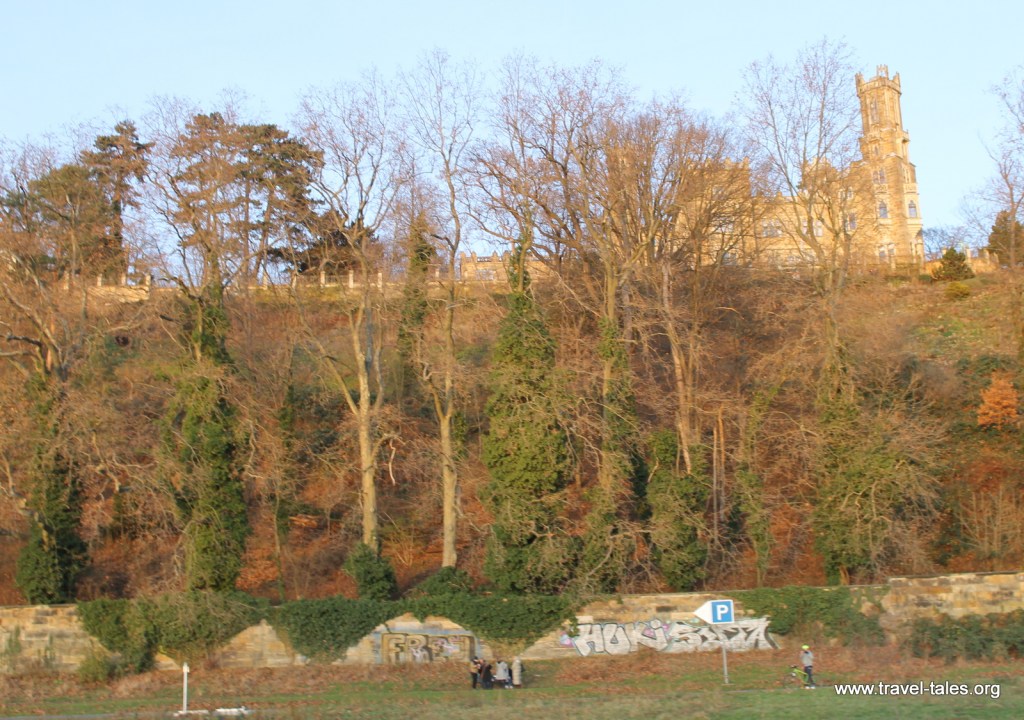
The last in the row of palaces is Schloss Eckberg, which was commissioned by a merchant, Johann Souchay in 1859. It only took 2 years to build.
All three palaces have changed hands multiple times since their construction and were also all untouched by the Allied bombing raids in 1945. One is now a hotel, another a convention centre and the last has housed a culinary school.
The next bridge along the cruise is the “Blaues Wunder” – blue miracle. It got this name after it was painted with paint thought to have been green, which turned blue when dry. In German there is a play on words, as to experience a “blaues Wunder” is to experience something completely unexpected. The view from the river towards Loschwitz may appear familiar to readers, as you can see the construction of the Schwebebahn going straight up the hill to Upper Loschwitz.


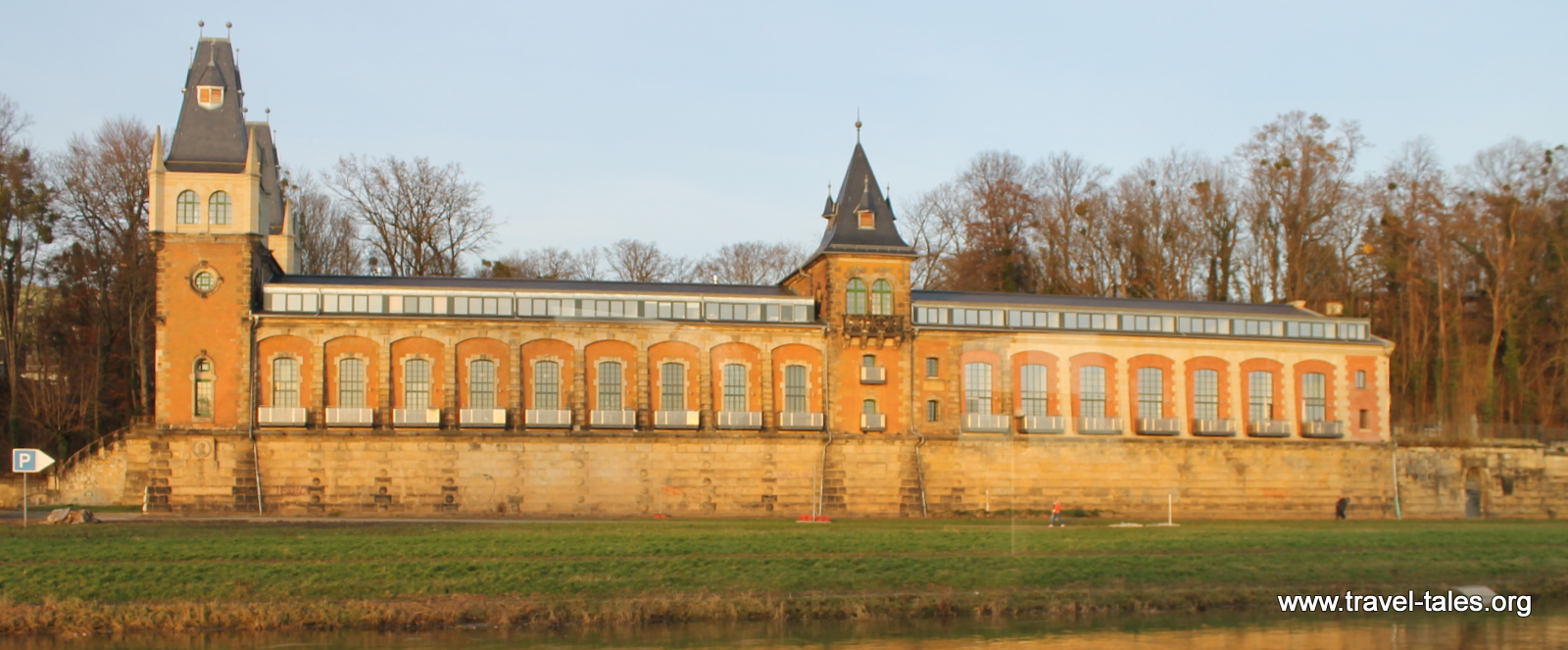
The rest of the cruise to Pillnitz was past nice riverside properties. The old waterworks, which have been converted into residential flats, stand out even more after dark because of the green floodlights up the sides of the brick walls. I suspect the residents have good curtains to keep the effect of the lights out.



 travel tales