Like the Fraunkirche, the baroque palace called “Zwinger” was severely damaged during the bombings of Dresden in February 1945. Its palatial rather than religious purpose resulted in its rebuilding being started by the Soviet administration in late 1945.
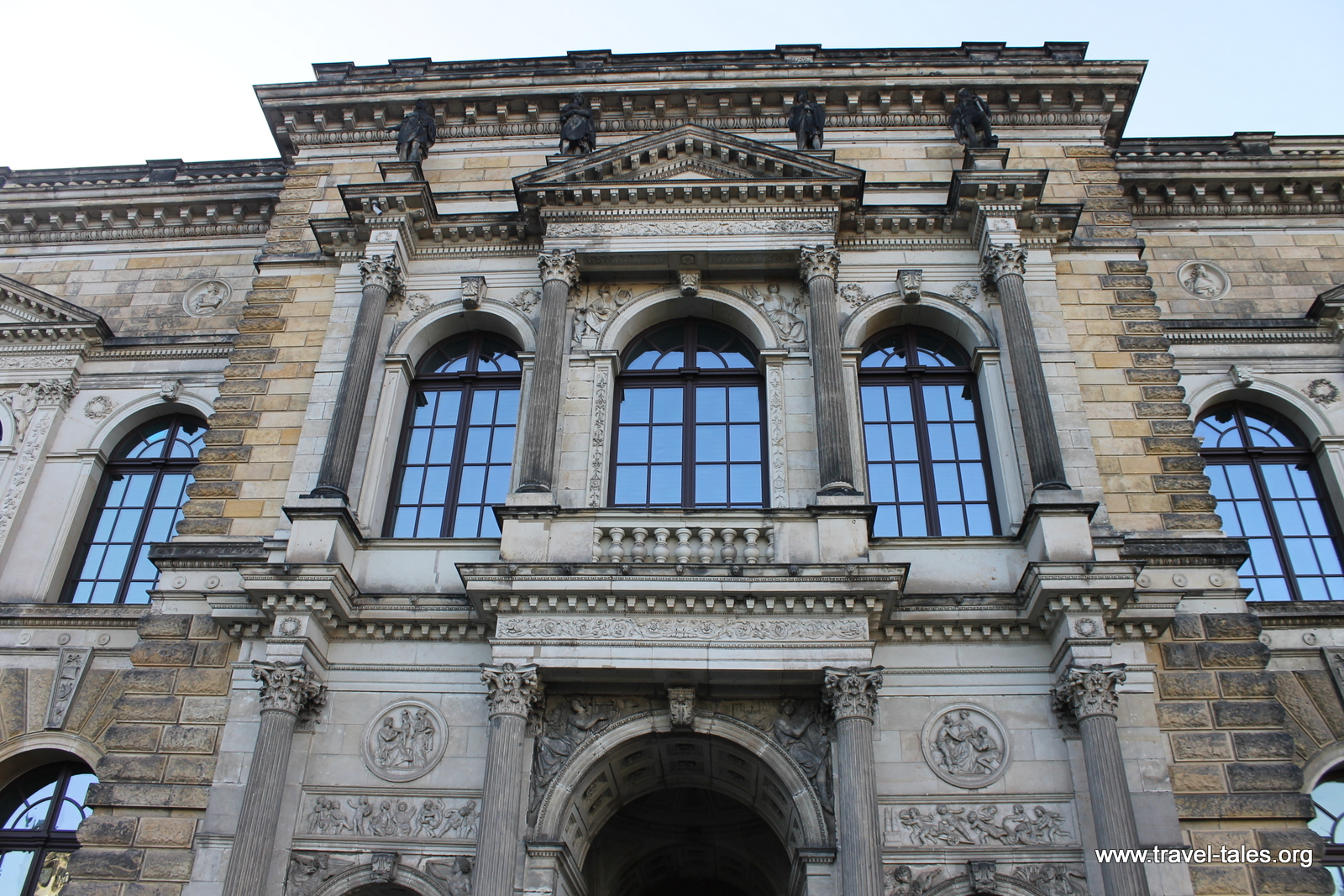
For many German speakers, the name of this palace appears odd. The word Zwinger originally referred to the section of ground between an inner and outer defensive wall. In the 15th century, a second meaning developed, referring to a fenced-in area in which animals are kept, a kennel. As kennels are more common than defensive wards around castles, this second meaning has remained in common usage. The position of these grounds, between the inner and outer city walls of Dresden, gives it its name.
The original plan was for an Orangerie and pleasure garden. Over time it developed into a palace with six salons or pavilions joined by galleries. They are all arranged around central gardens. At the time I visited, the gardens were under reconstruction. The intention is to re-create the fountains and ponds.
The eastern section had been open towards the river, but a new gallery was built there by Gottfried Semper in 1854. Now the gardens-under-construction are surrounded by buildings.
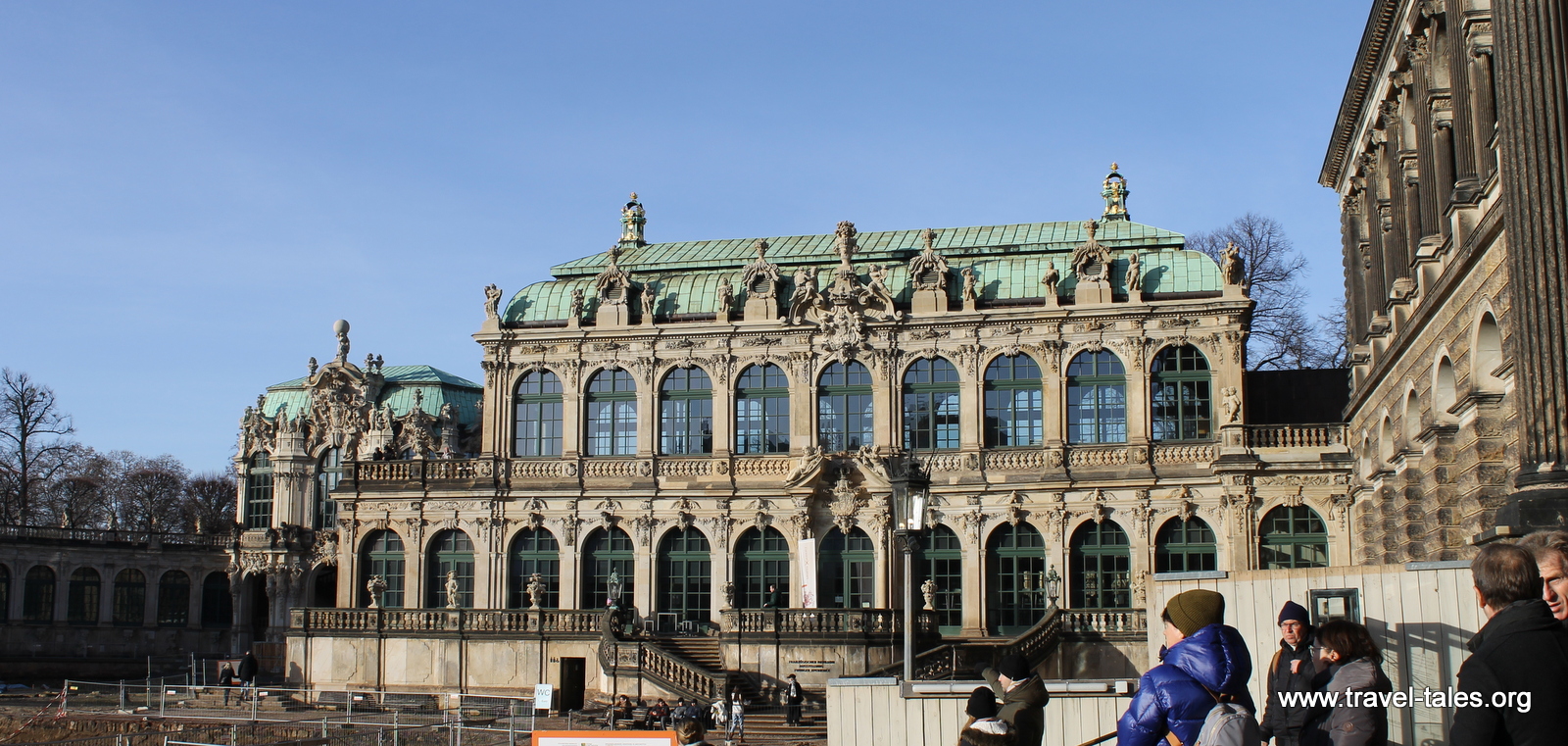
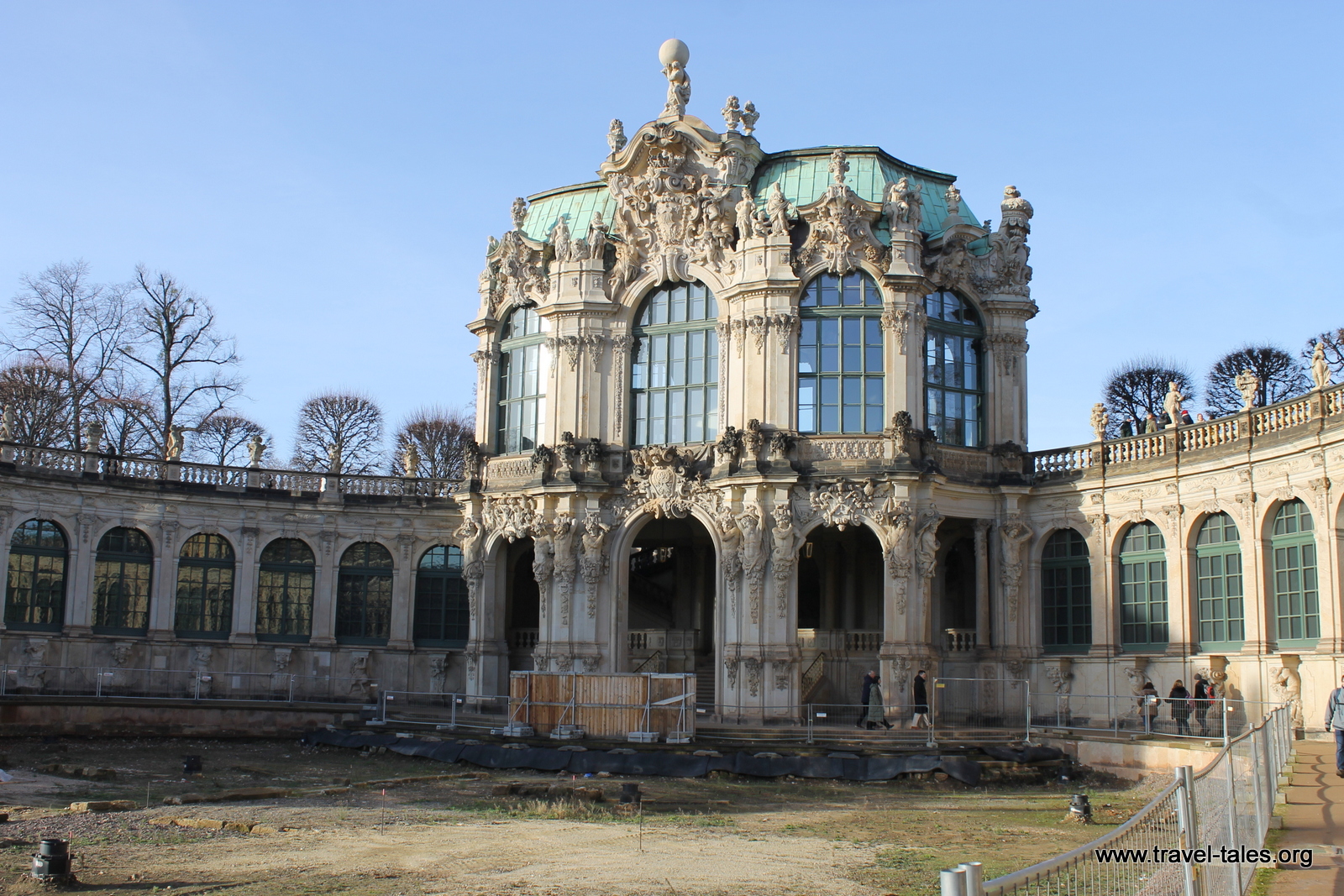
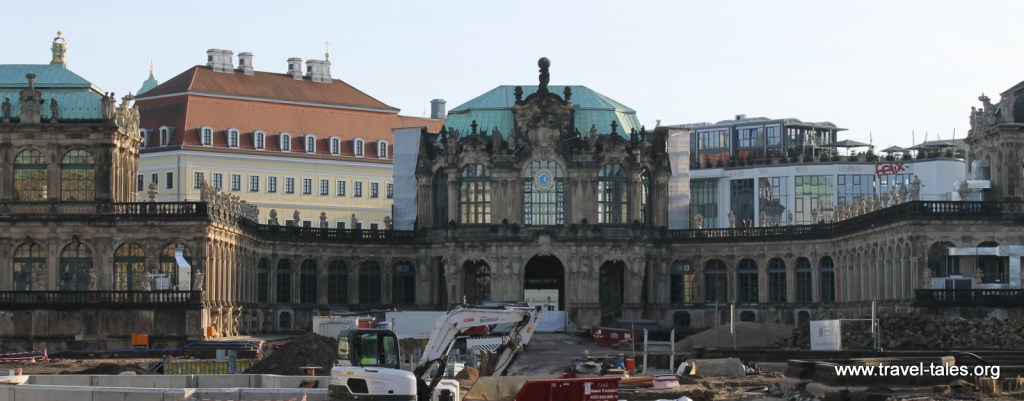
The French Pavillion still carries the impression of an Orangerie with its many windows. The Wall Pavilion just beyond it does too, although I do not believe plants are kept there. The next pavilion, following the counter-clockwise route around the centre, holds a collection of mathematical and physics instruments.
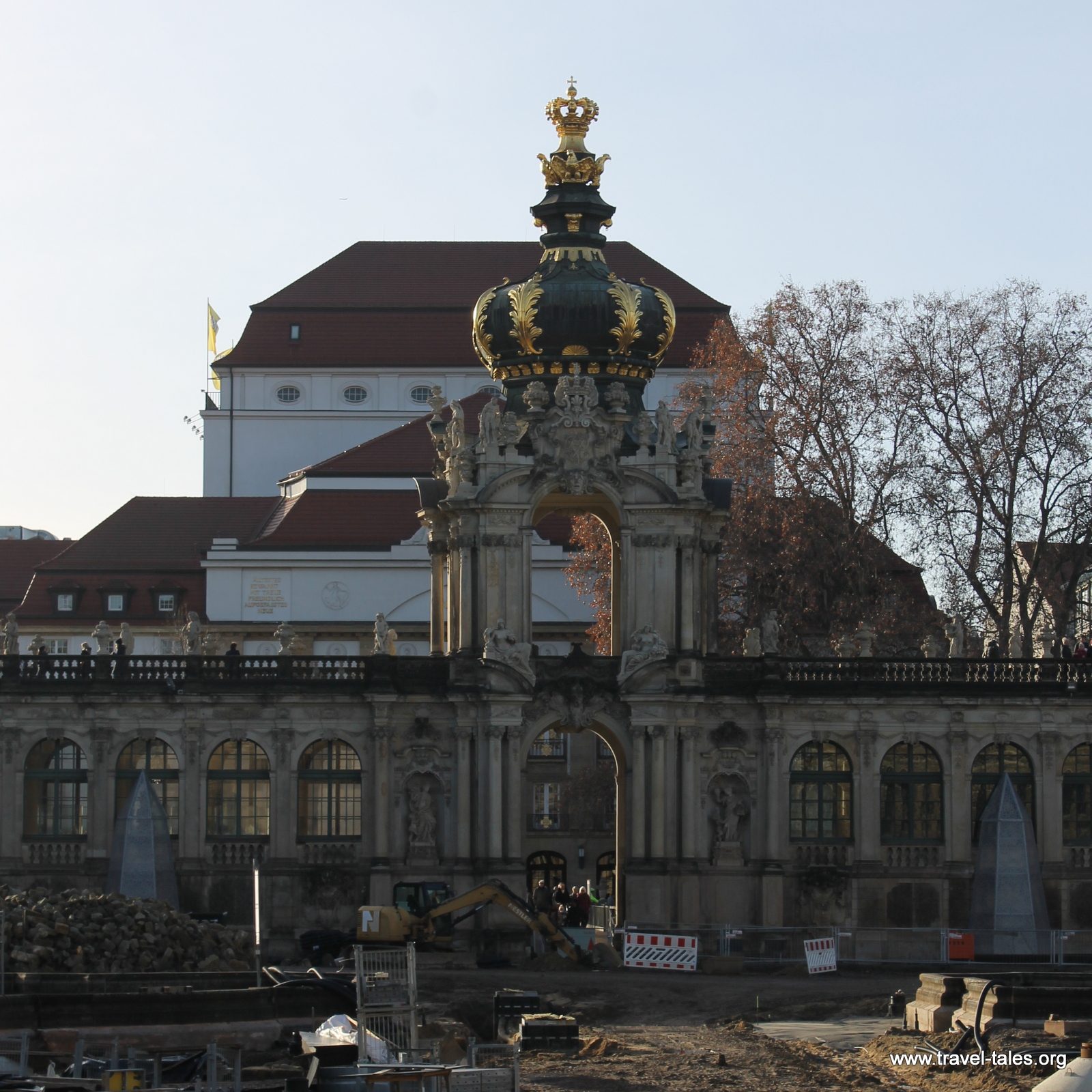
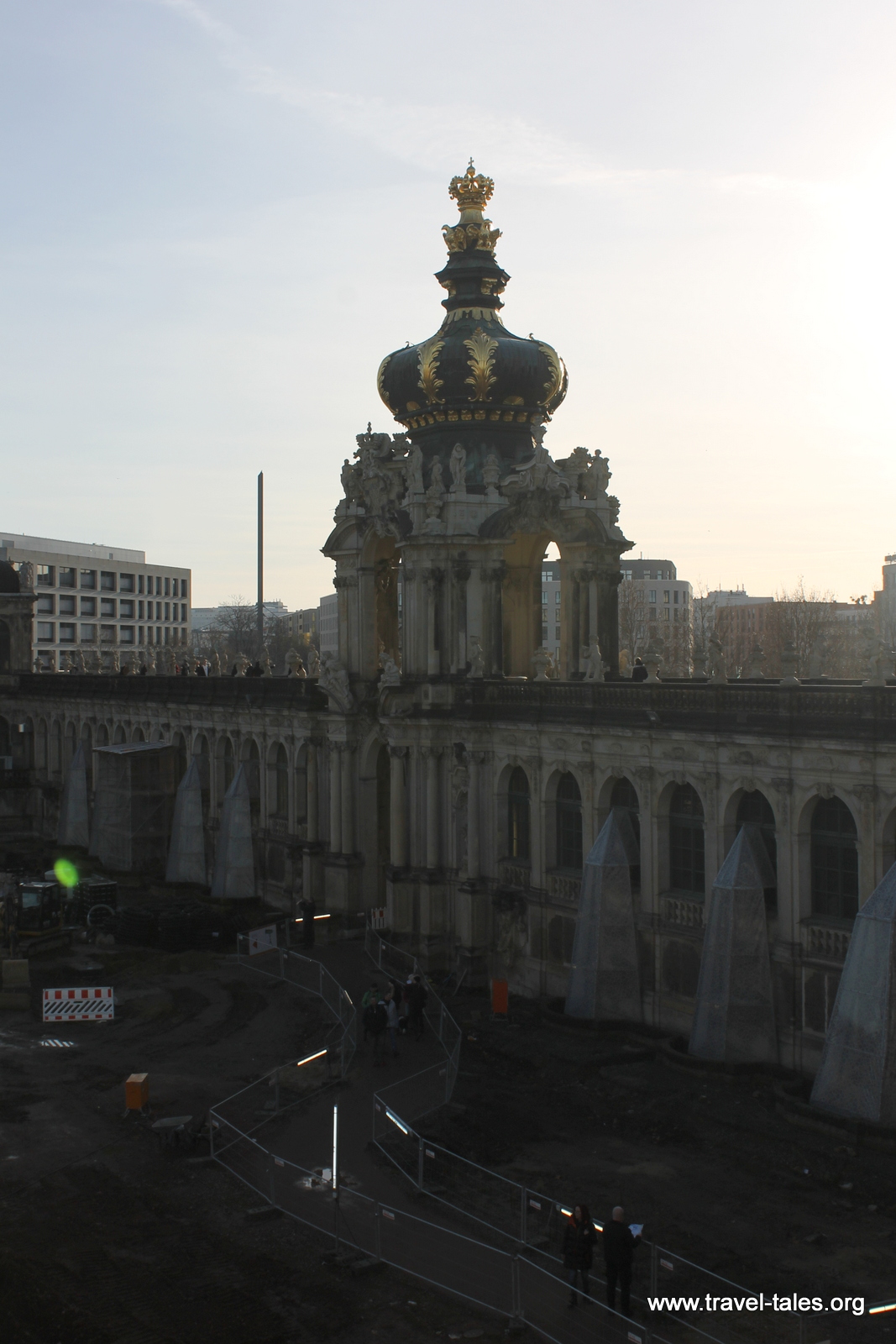
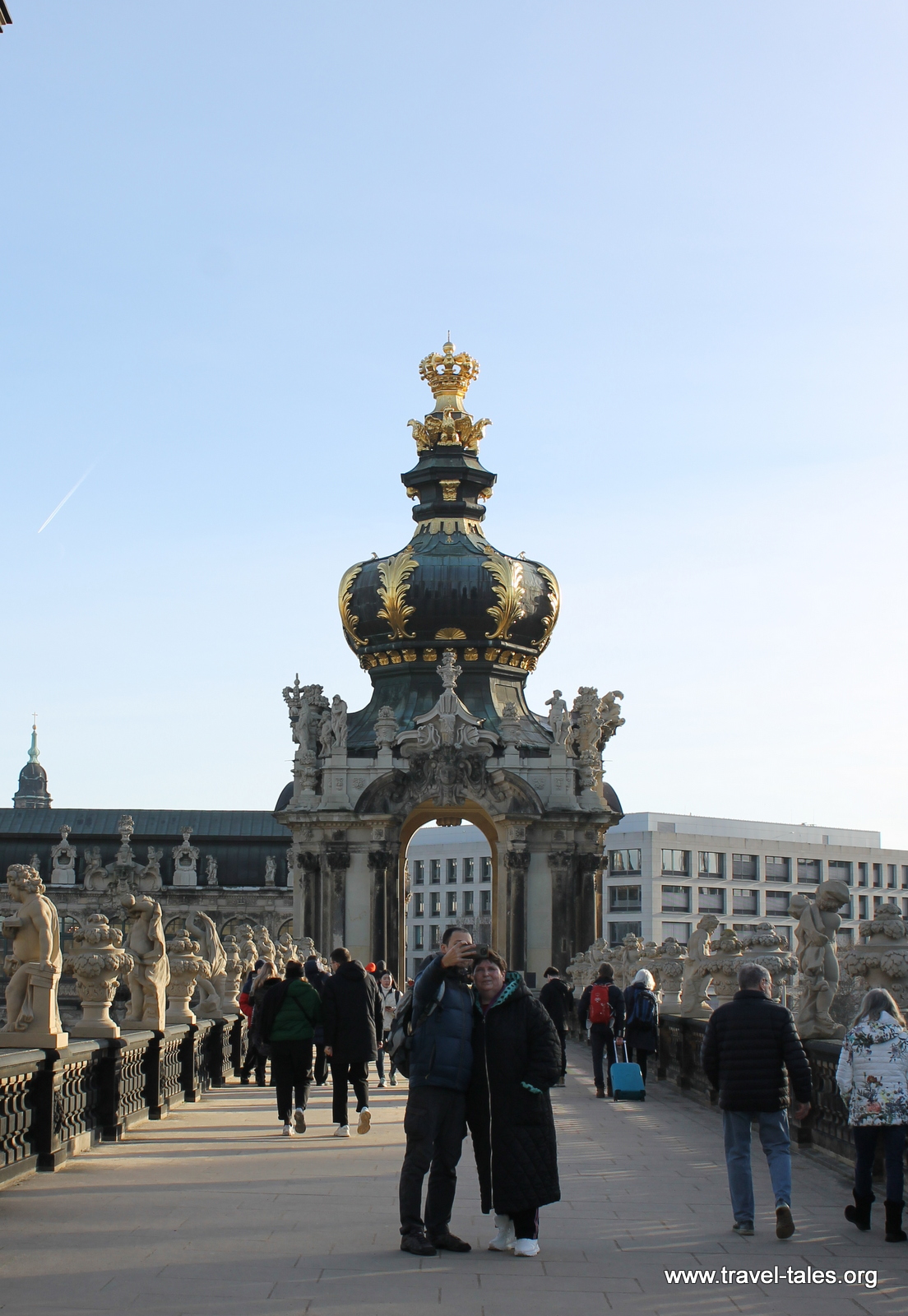
Directly opposite the entrance through the Semper Gallery is the Crown Gate. It is probably the most famous of the buildings in the Zwinger and is often shown in publications. As can be seen, also a popular selfie location.
The Semper Gallery, through which we entered, can be seen in its totality from this side of the grounds.
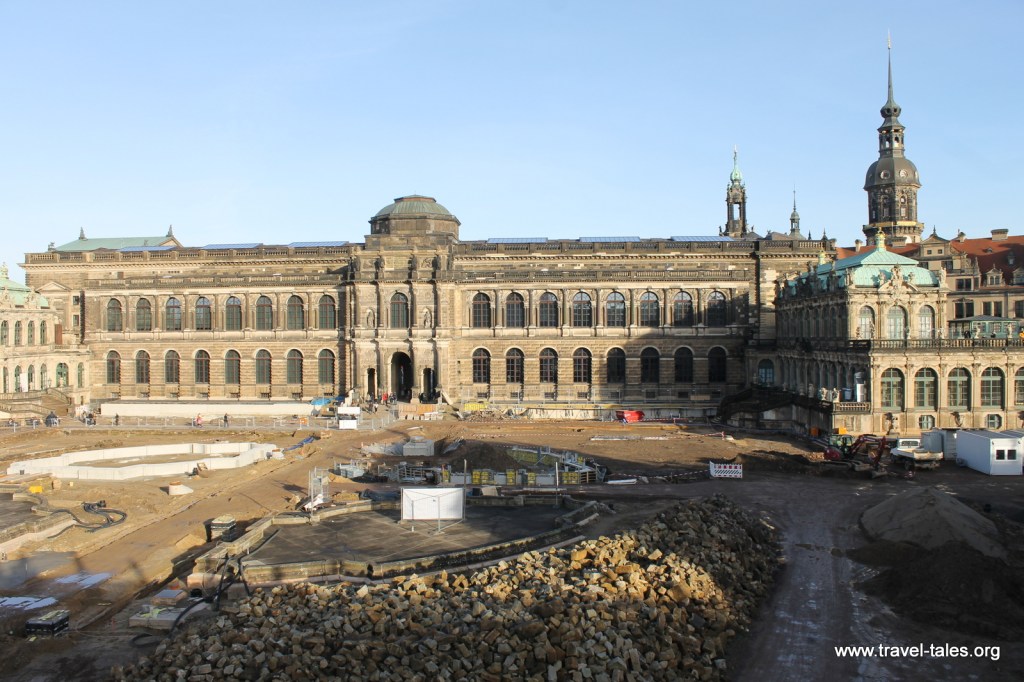
If you know what you are looking for, you can spot the roof of the Semper Oper on the left-hand side behind the gallery building, outside the Zwinger. On the right, inside the grounds is the German Pavilion.
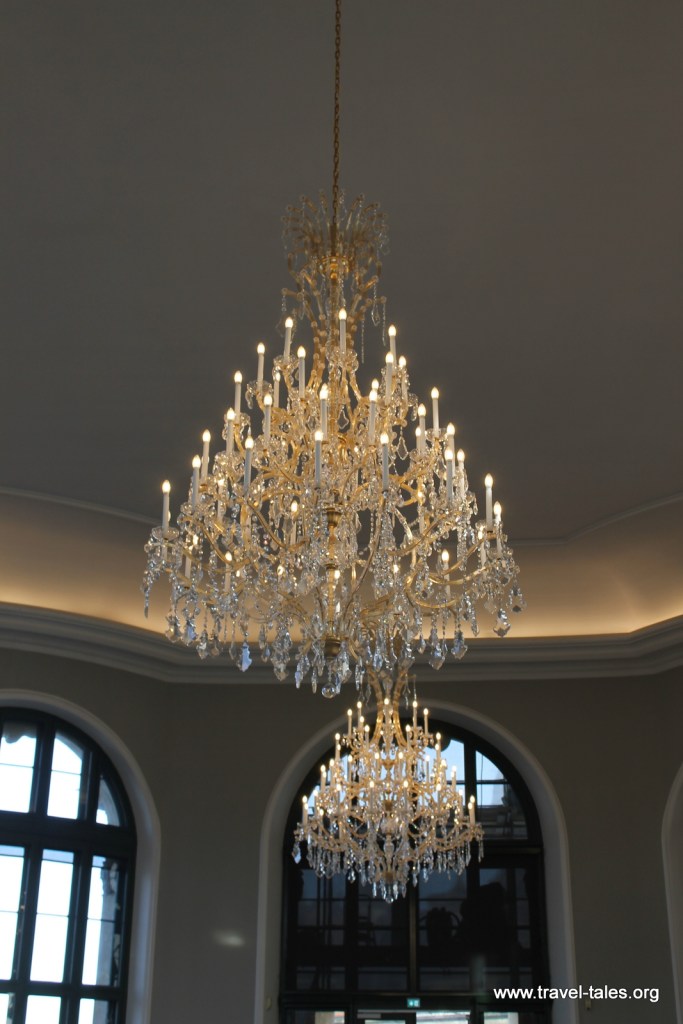
The Porcelain Pavillion, which houses a porcelain collection on the ground floor is between the Crown Gate and the German Pavillion. On the upper floor, level with the pedestrian route around the grounds, is a nice cafe, home to this stunning chandelier.
This building between the Porcelain and German Pavillion is home to an elaborate Glockenspiel. We were lucky to be on the grounds during one of its performances, triggered by the clock on the building.
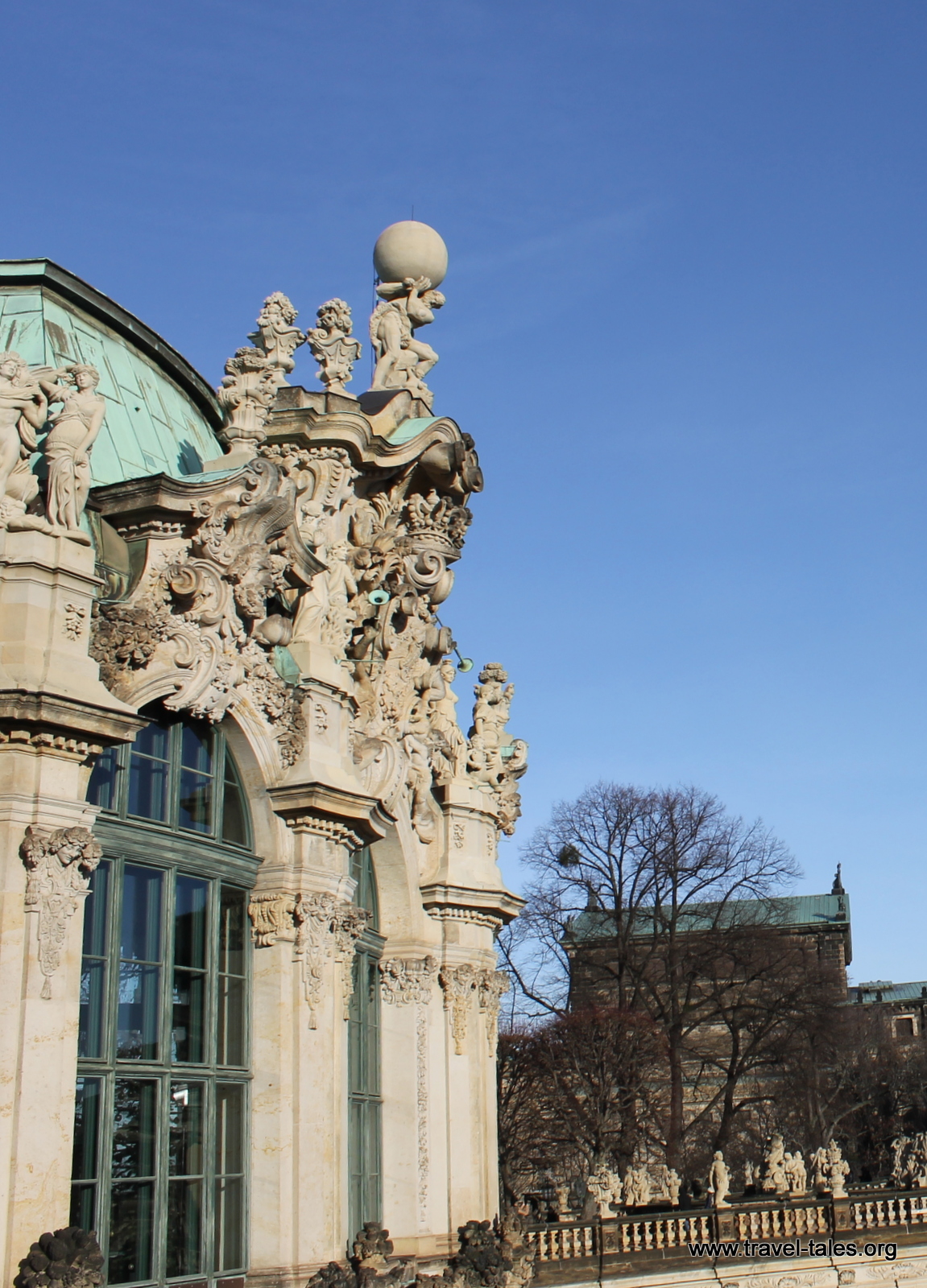
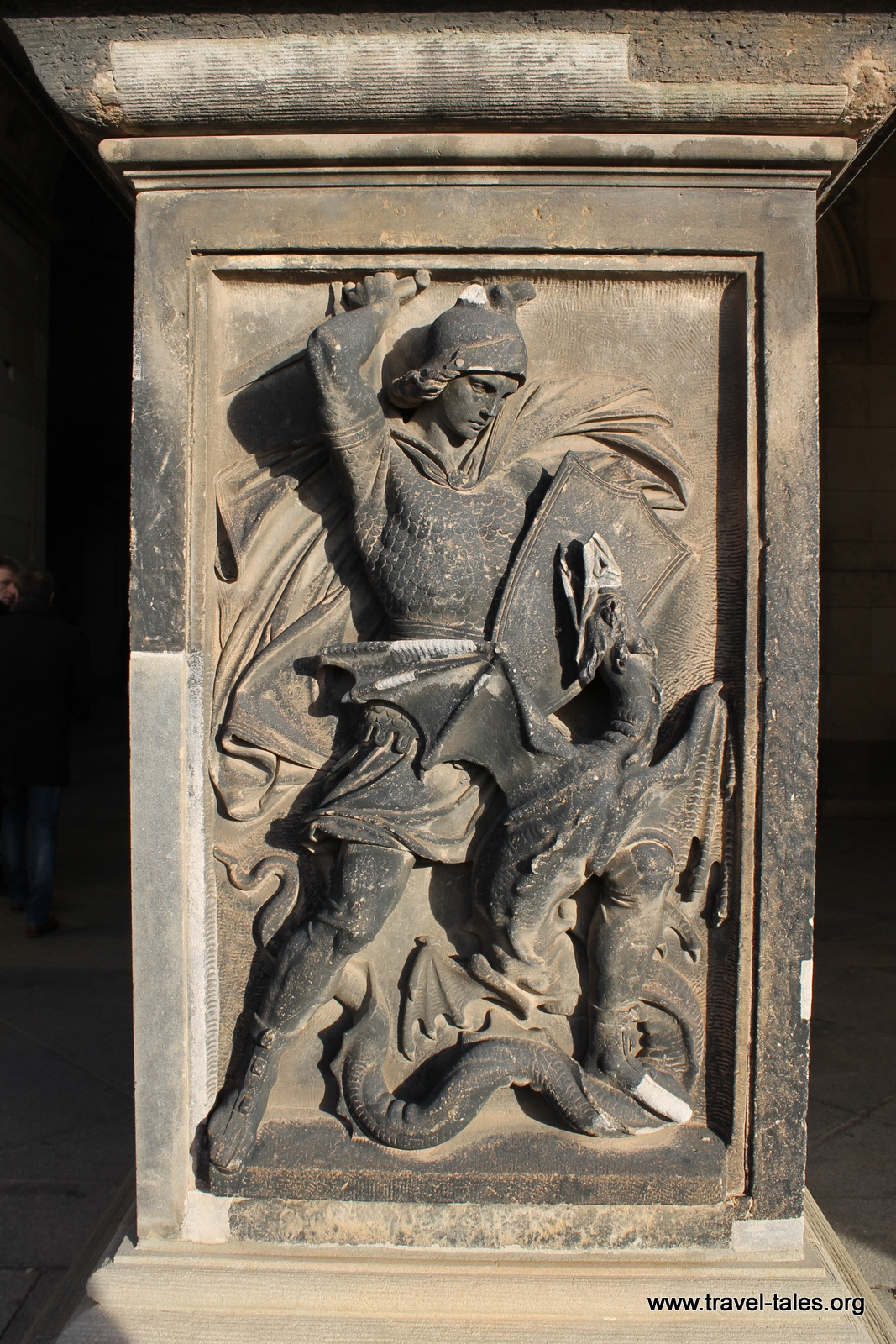
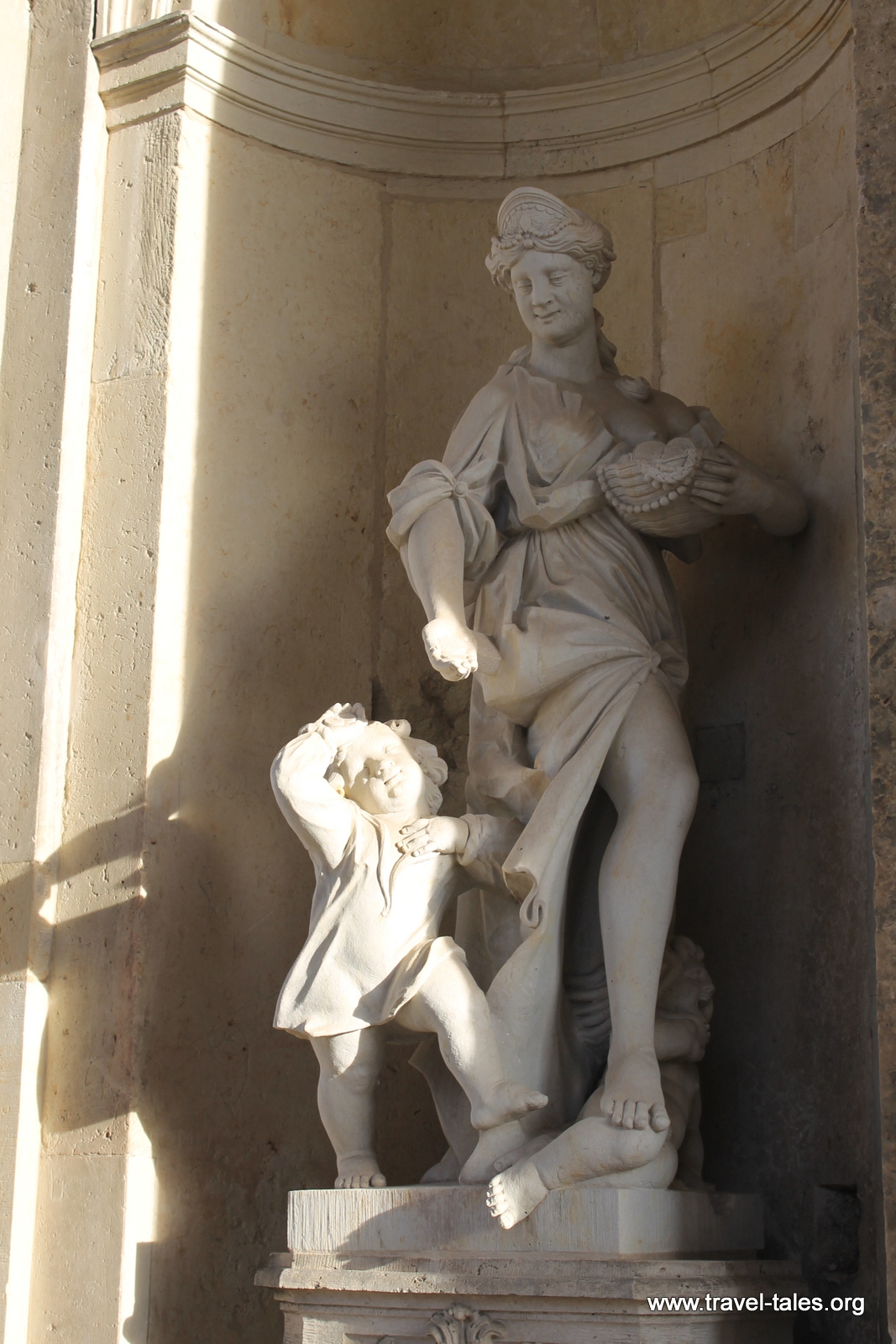
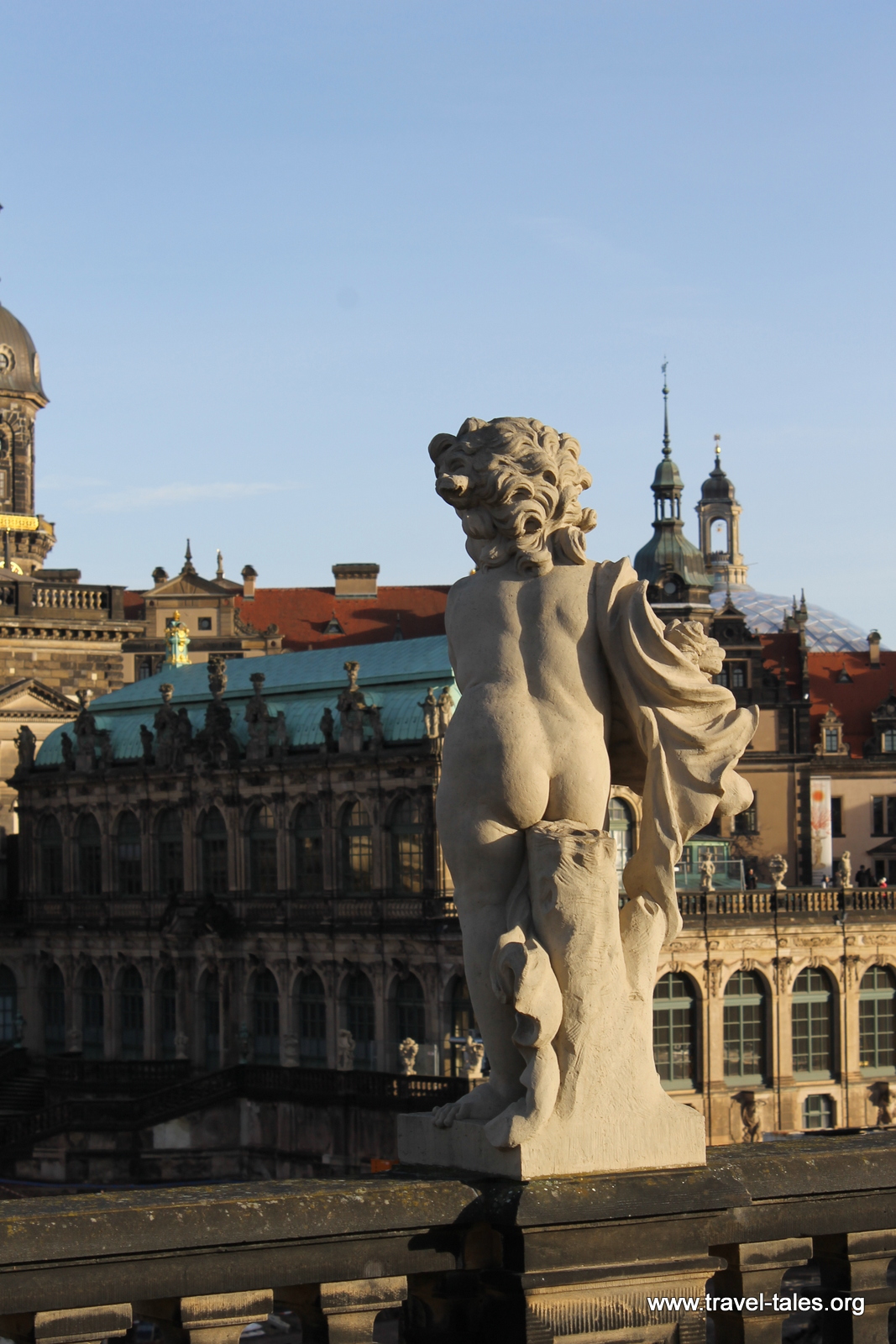
All around the open, upper gallery there are statues and carvings. I took pictures of those I found amusing or of interest. I have yet to research the significance of St. George to Dresden. He must be there for a good reason.

 travel tales