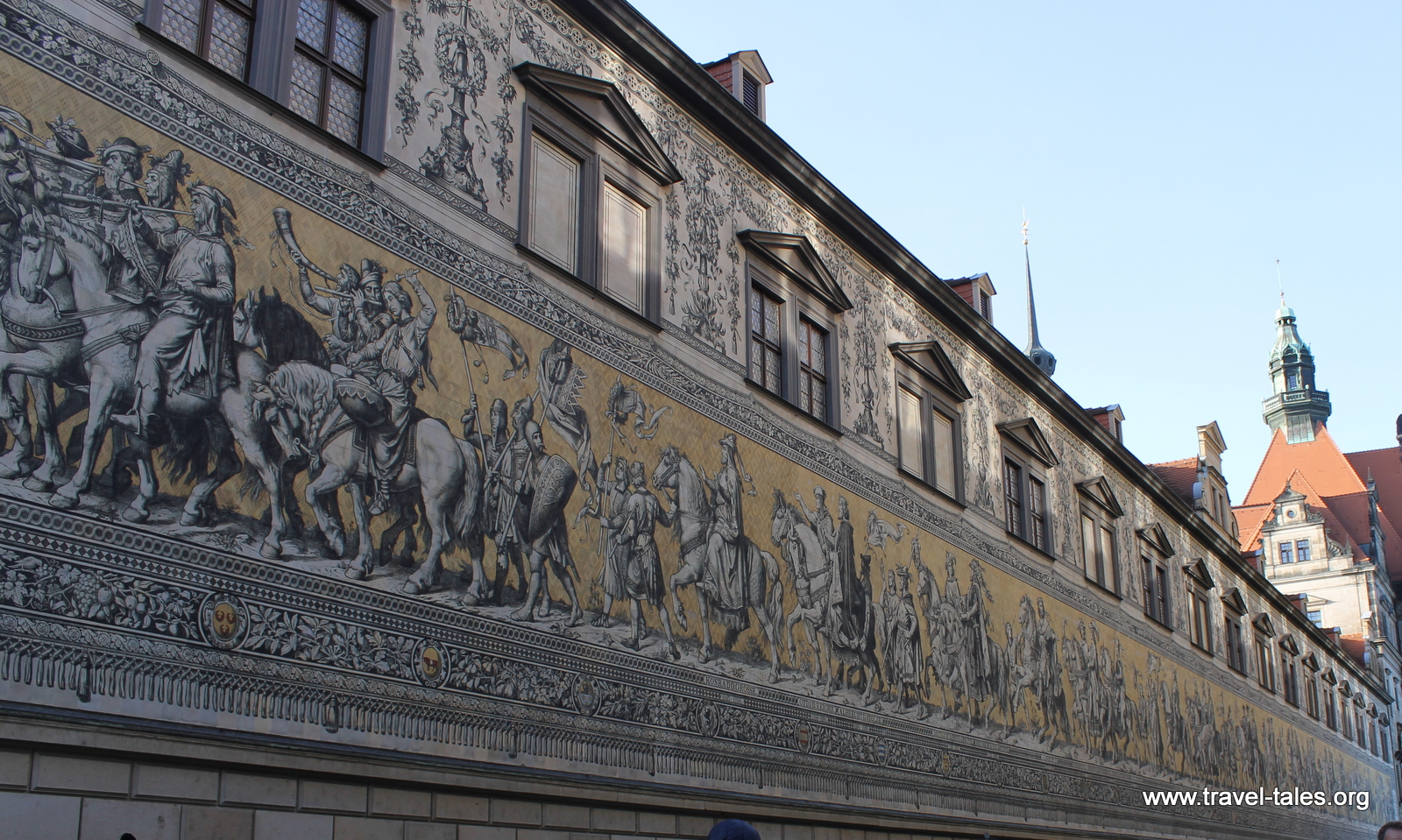
In the Augustiner Strasse in Dresden, you can admire the largest tiled mural in the world. The “Fürstenzug” (Procession of Princes) depicts 35 princes, who ruled Saxony from Dresden from 1127 to 1873.
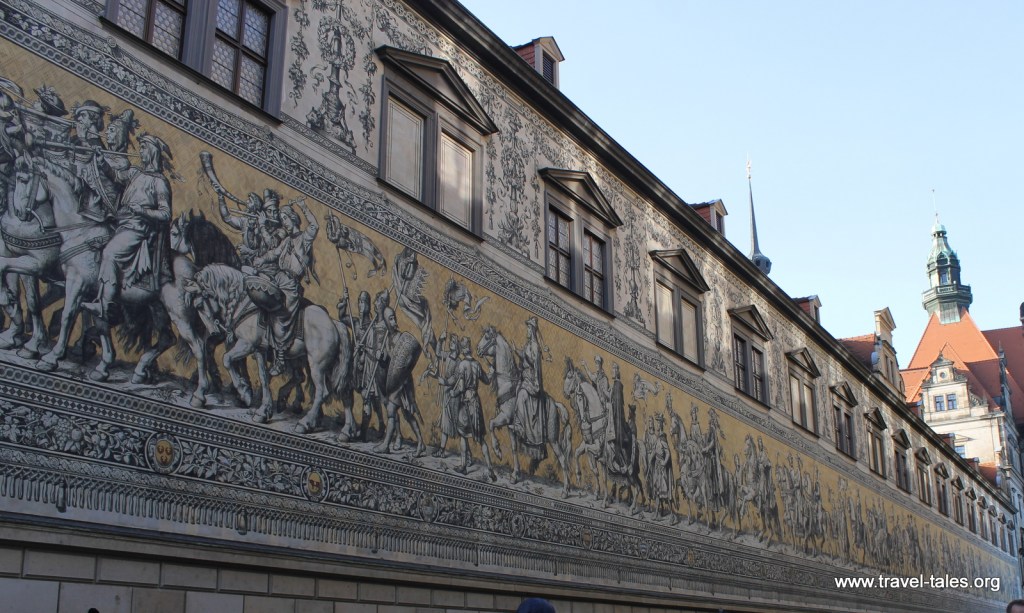
It is the outside wall of what had been the palace stables. Since 1589 the wall had been decorated with murals of chalk.
The original of this painting was commissioned to celebrate 800 years of the Wettin dynasty in 1889. Its creator made charcoal drawings of the image on squared paper, still in storage at the Dresden State Art Collection.
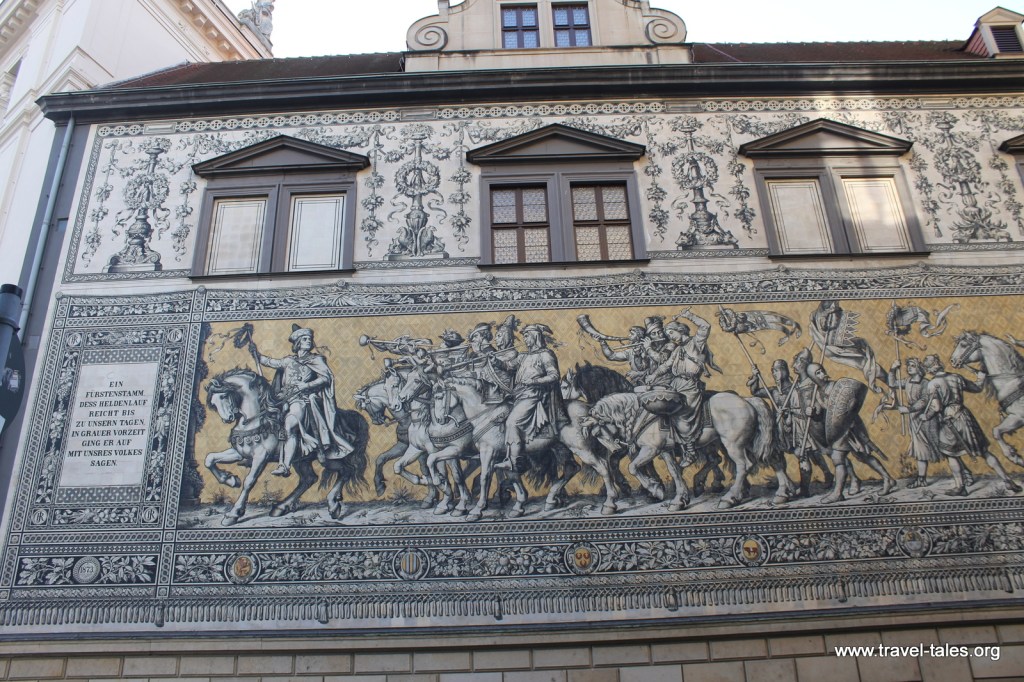
The mural was created in the Sgraffito method, of layers of different coloured plaster being applied and then upper layers being scratched away to reveal the colours underneath. The sgraffito of the above section was started in 1873, and the far end was revealed in 1876.
Unfortunately, the mural was not very weather-resilient. As a result, the full 10m long and 4m tall image was replaced by tiles manufactured in the local Meissen factory. A new process was devised to ensure that the painting and sizing would be as little affected as possible by the firing. The original charcoal sketch of the mural proved invaluable in this process.
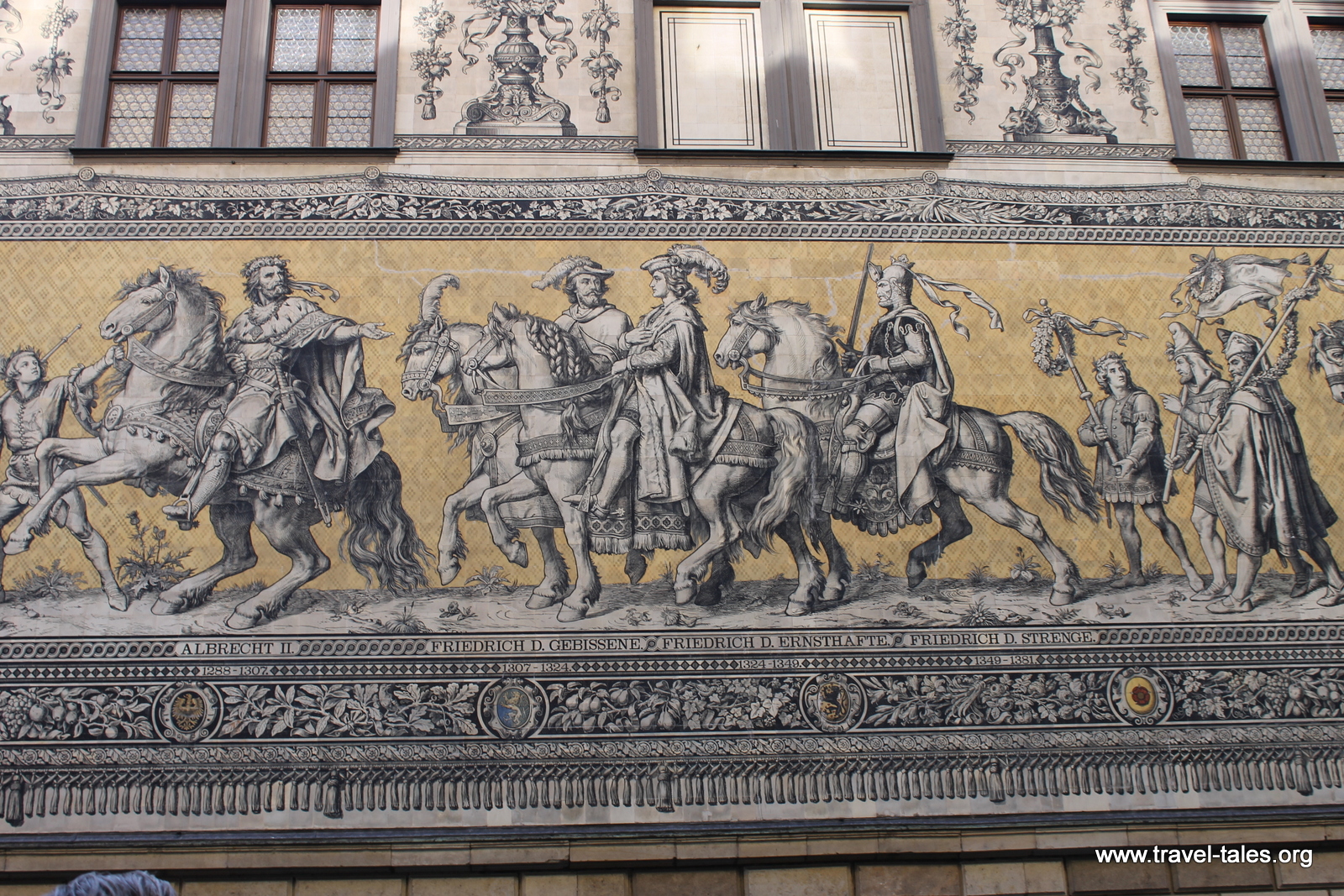


The name of each depicted prince appears below them. Some had interesting epithets and I took pictures of those. Otto the Rich and Albert the Proud appear together. Maybe one day I will do the research to find out what gave rise to the three Friedrichs who follow the “boring” Albrecht II, who in order are Friedrich the Bitten, Friedrich the Serious and Friedrich the Strict.
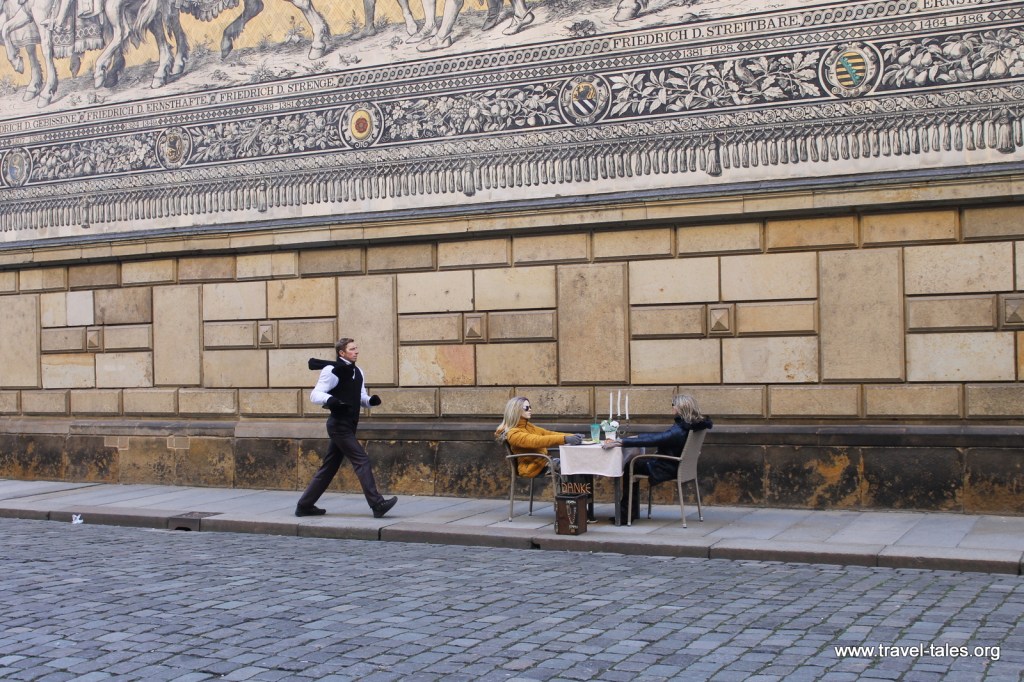
The still life of the mural invites street performers, who remain still in this position while the visitors meander past.

 travel tales