
Not long after the funicular railway connected the district of Loschwitz to Weißer Hirsch, the residents of Oberloschwitz (Upper Loschwitz) also wanted a convenient way to travel up the hill. In 1901, the Schwebebahn opened and did just that.

The literal translation of Schwebebahn is “Levitating Railway”, however, it is more commonly translated as “suspension railway”. The German original doesn’t describe the mechanism well and many people think it refers to a maglev system railway in which the carriages levitate above a guide using magnetic force.

The system developed by the Cologne engineer Eugen Langen involves a series of vertical metal stands joined by an upper rail. The carriages are suspended by that rail and are moved up and down the hill by a cable operated from the tower at the top of the line. This is what makes it more visible from the other side of the river than the traditional funicular railway.

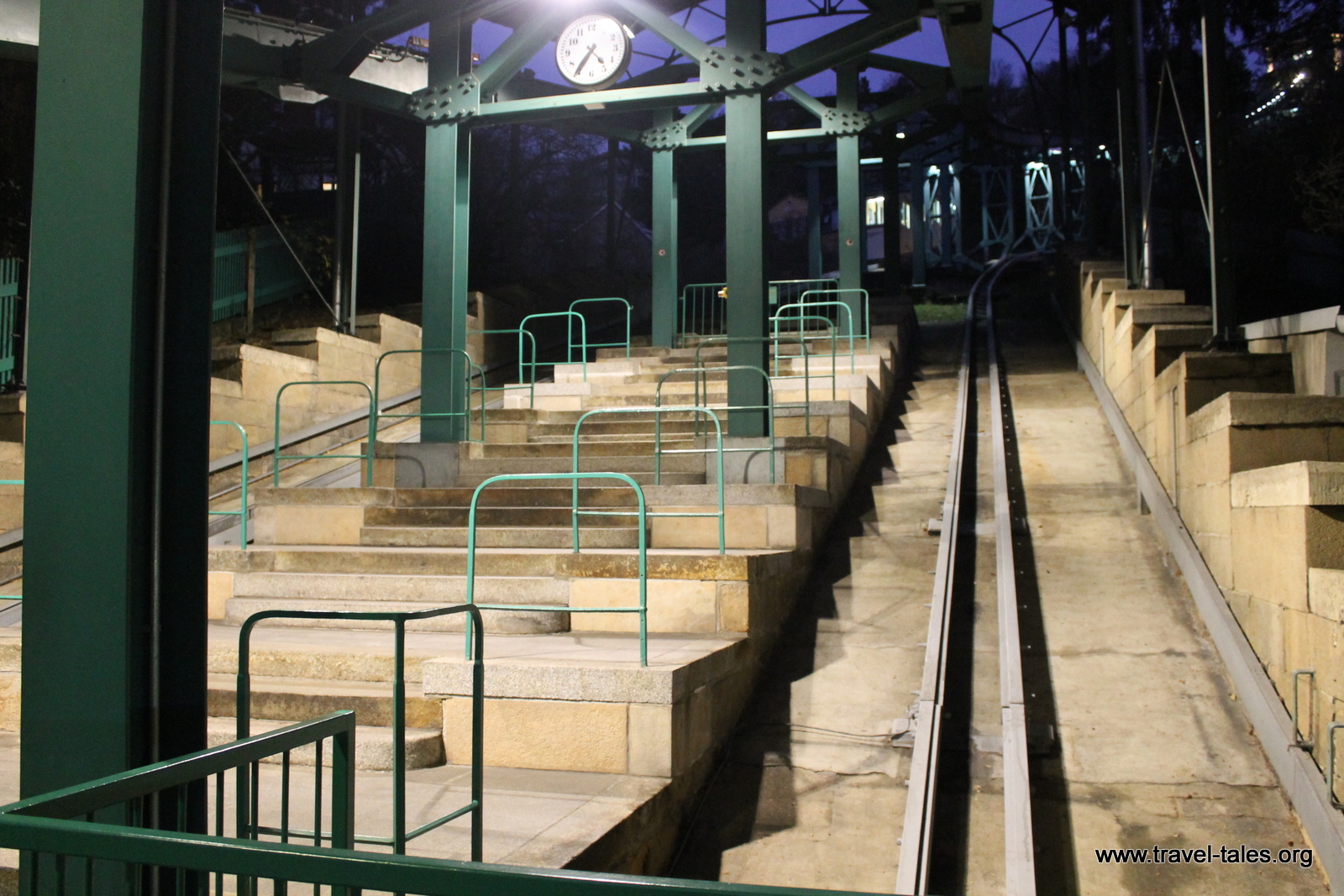
Like the other cable car, the Schwebebahn operates two carriages that cross each other’s path partway up the hill. Having two rails means that their journey times do not need to be as closely matched. The travel angle is relatively constant, at its maximum 39.9% steep. This means that the platforms and carriages are all angled too.



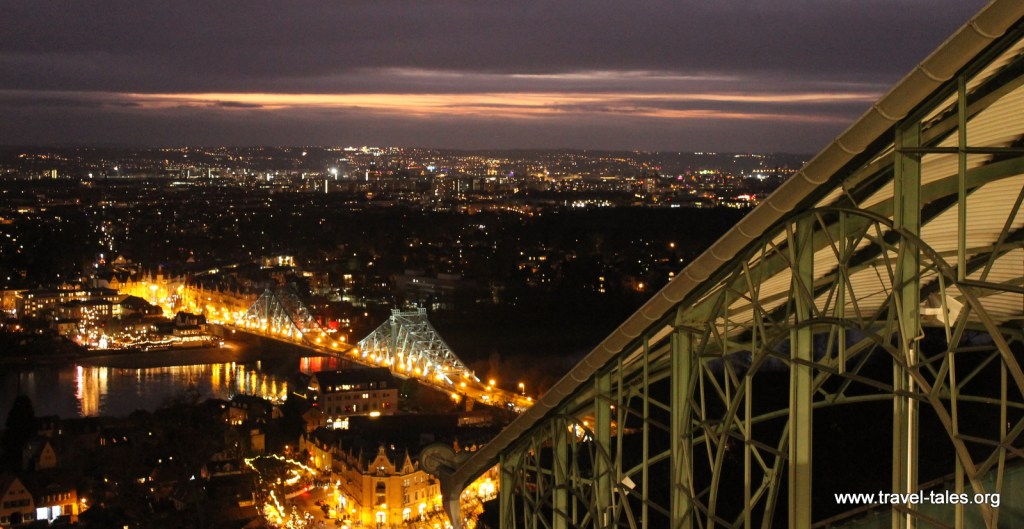
The evening had progressed since walking in Weißer Hirsch, we got a lovely night-time view of the river and the bridge that crosses it

 travel tales