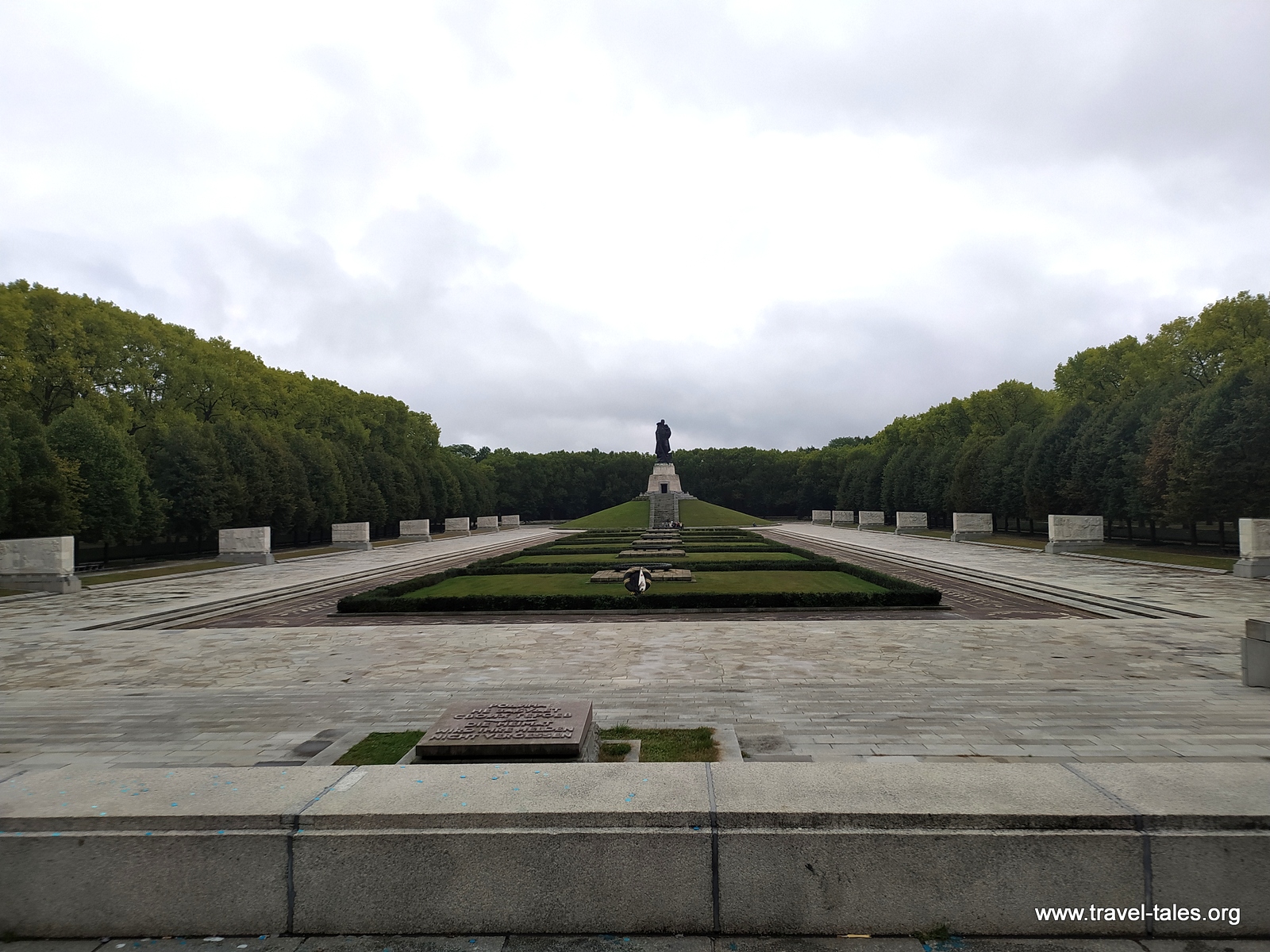
The Treptower Park is a large park on the banks of the river Spree in Berlin. Always designed to be a public park, it was built between 1876 and 1888 on the site of a public woodland that had been gifted by Otto III of Brandenburg to provide firewood.
From May to October 1896 it was the site of the Great Industrial Exposition of Berlin. Modelled on past World Fairs in London and Paris, Berlin Merchants put on this exposition despite a lack of support from the national government. Its main attraction, the largest telescope of the day in Germany remains intact and is now in the Berlin Observatory.
The park is now dominated by the war memorial erected in 1949 by order of the Soviet military administration to commemorate soldiers of the Red Army who died in the Second World War. It is also a military cemetery for the Soviet soldiers who died in the Battle of Berlin.

The picture above was taken from the foot of the dominant statue at one end of the memorial and provides an impression of the enormity and starkness of the memorial.
It is entered from the other end having passed through one of two granite gates on either side of the park, one from Puschkinallee, the other from Am Treptower Park.
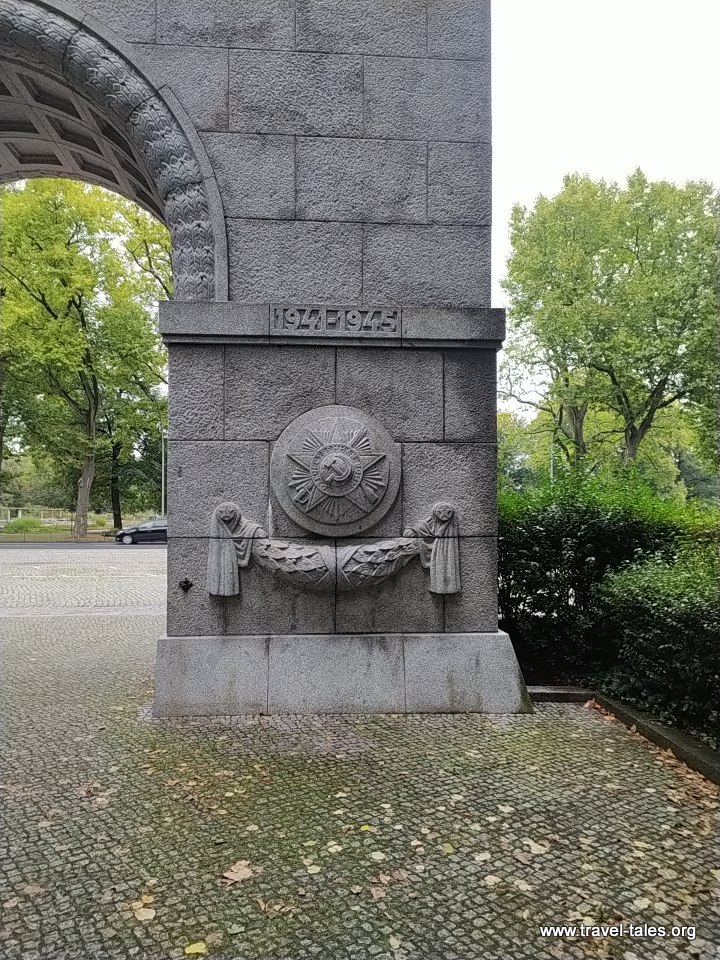
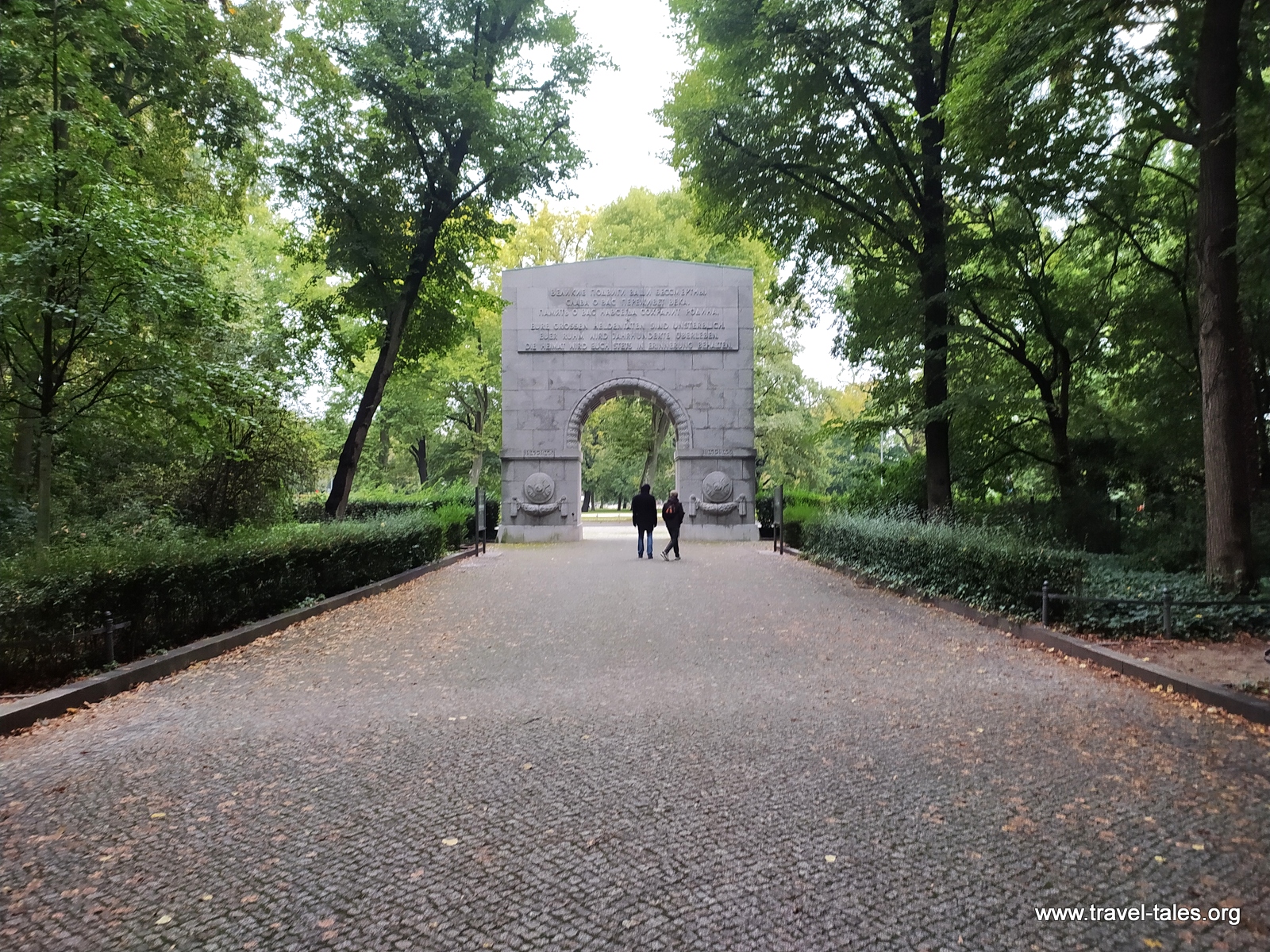
The avenues from these gates join at the statue of the Motherland, who is weeping over the loss of her sons.

Turning to stand with your back to the Motherland you get your first glimpse of the length of the memorial, topped by the soldier statue at the other end.
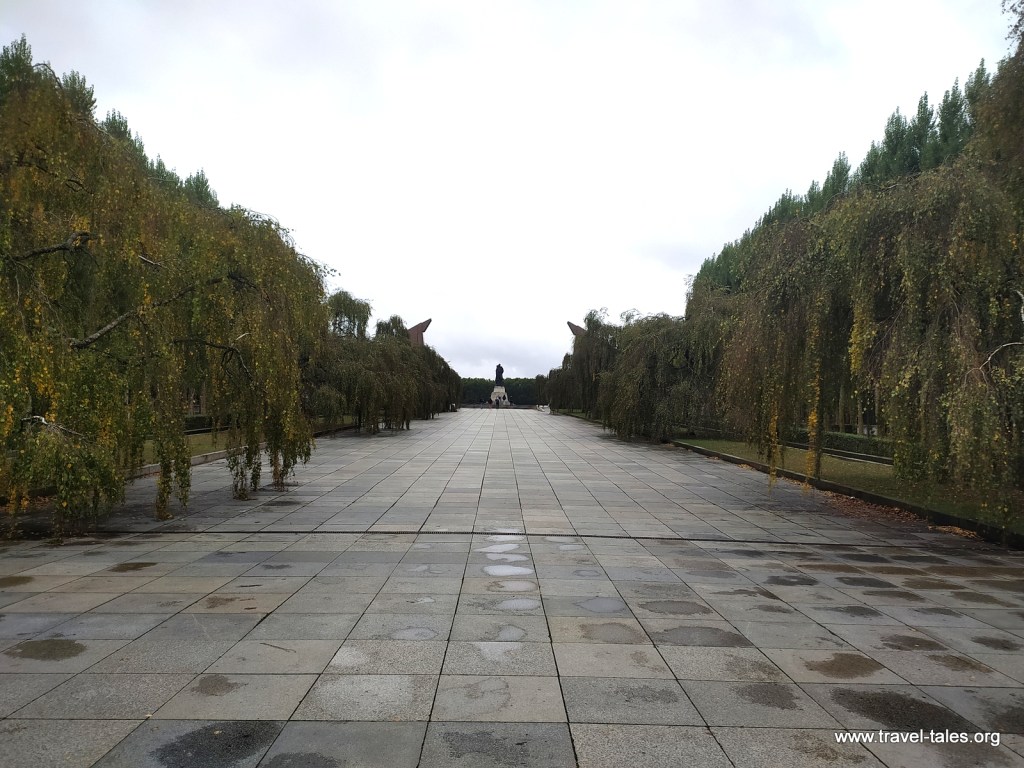
Having passed between the weeping birches, you then see the red granite stylised flags. Each has a chiselled inscription, the one on the left in Russian, and on the right in German. The inscription reads “Ewiger Ruhm den Kämpfern der Sowjetarmee, die ihr Leben hingegeben haben im Kampf für die Befreiung der Menschheit von faschistischer Knechtschaft.” An English translation is “Eternal glory to the fighters of the Soviet Army who gave their lives in the struggle for the liberation of humanity from fascist bondage.”

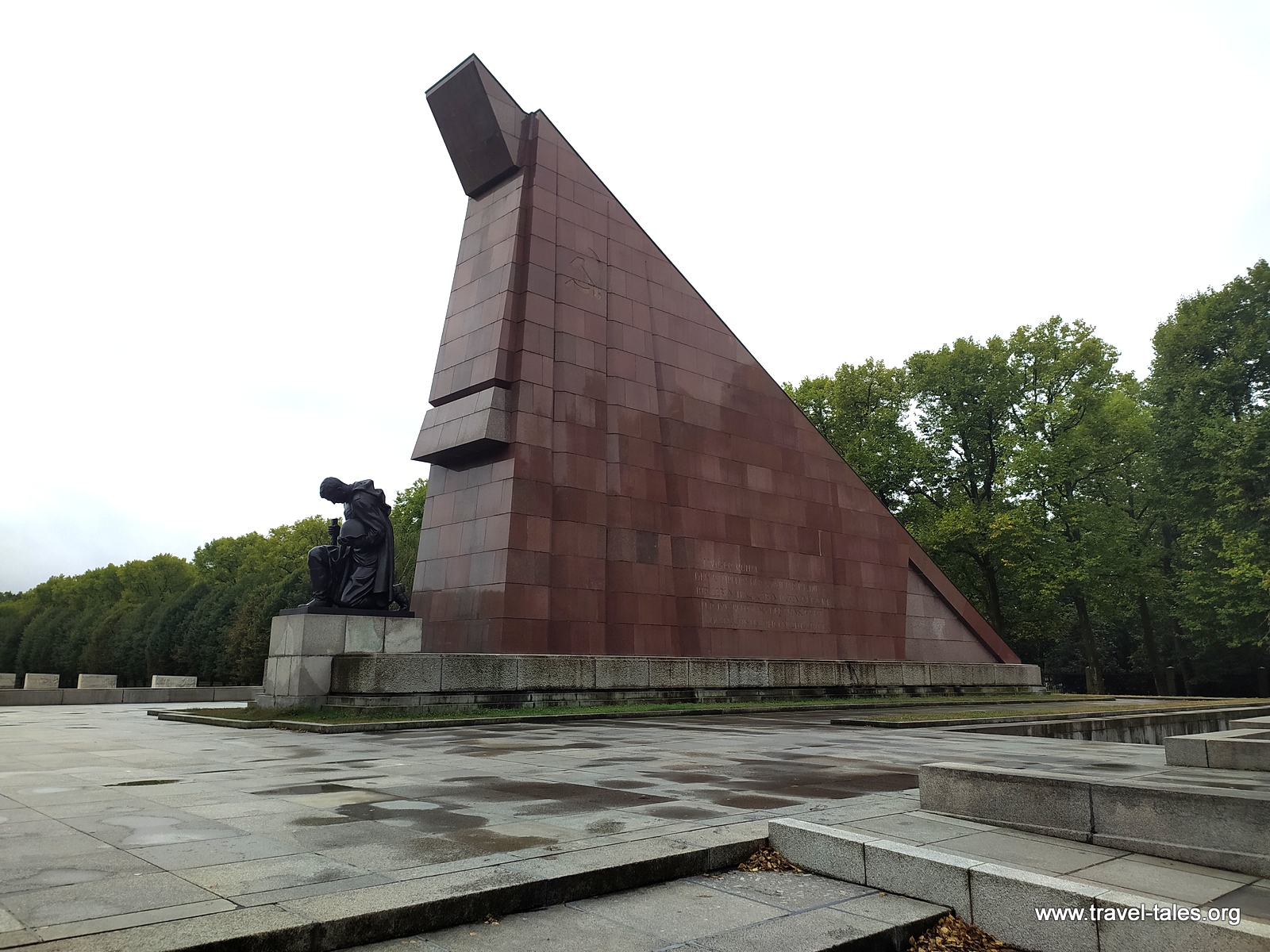
From between these flags, you get a full view of the symbolic burial site. The actual bodies are not buried in the large grassed-over squares, although they are meant to symbolise graves.
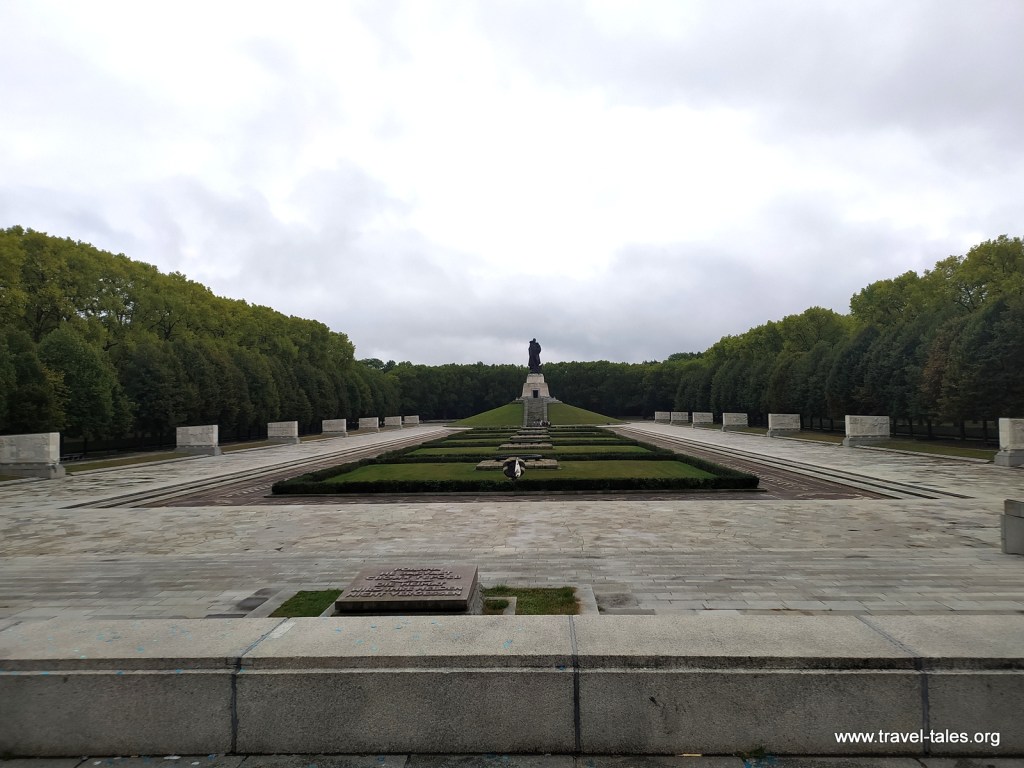
The white sarcophagi along the side of the central piece tell the story of the Great Patriotic War of the Soviets in relief images. Joseph Stalin quotes have been chiselled into the narrow, inward-facing sides. Again, on the left (north) side in Russian and on the right side in German.
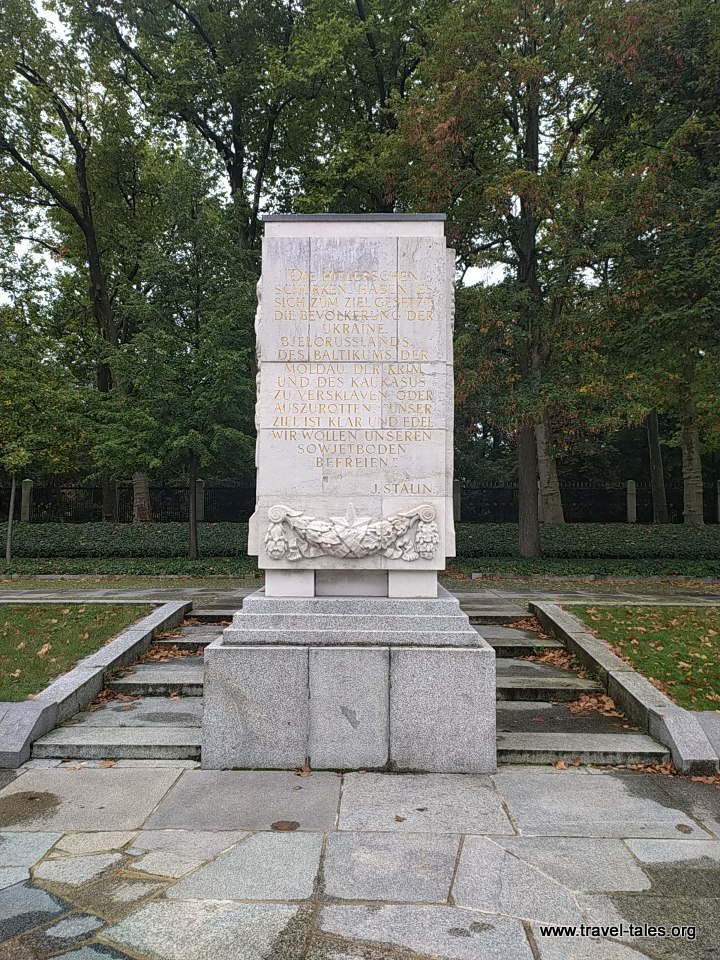
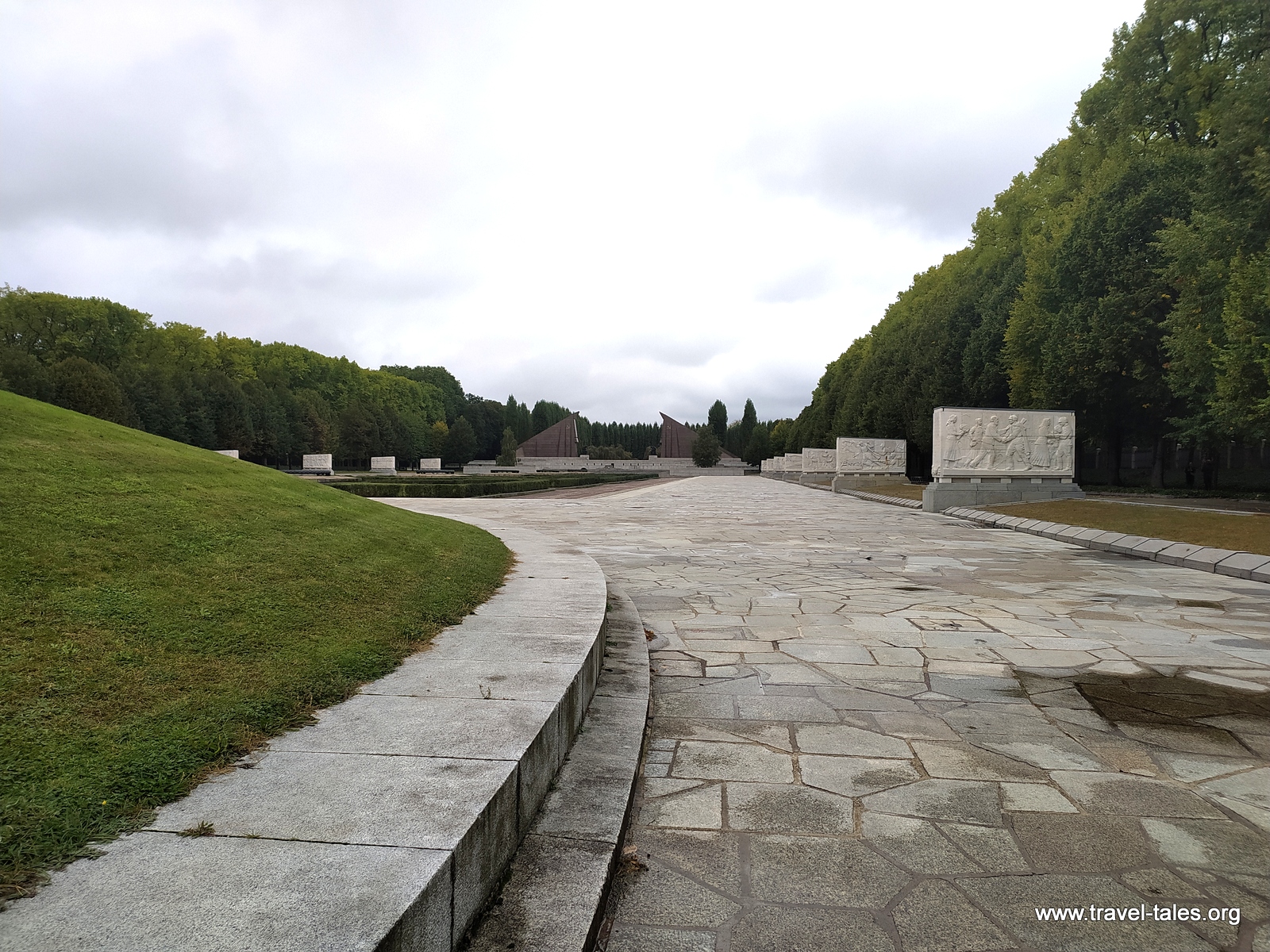
Passing the sarcophagi and symbolic graves takes you to the burial mound topped with the statue of a benevolent soldier protecting a child and crushing a swastika.
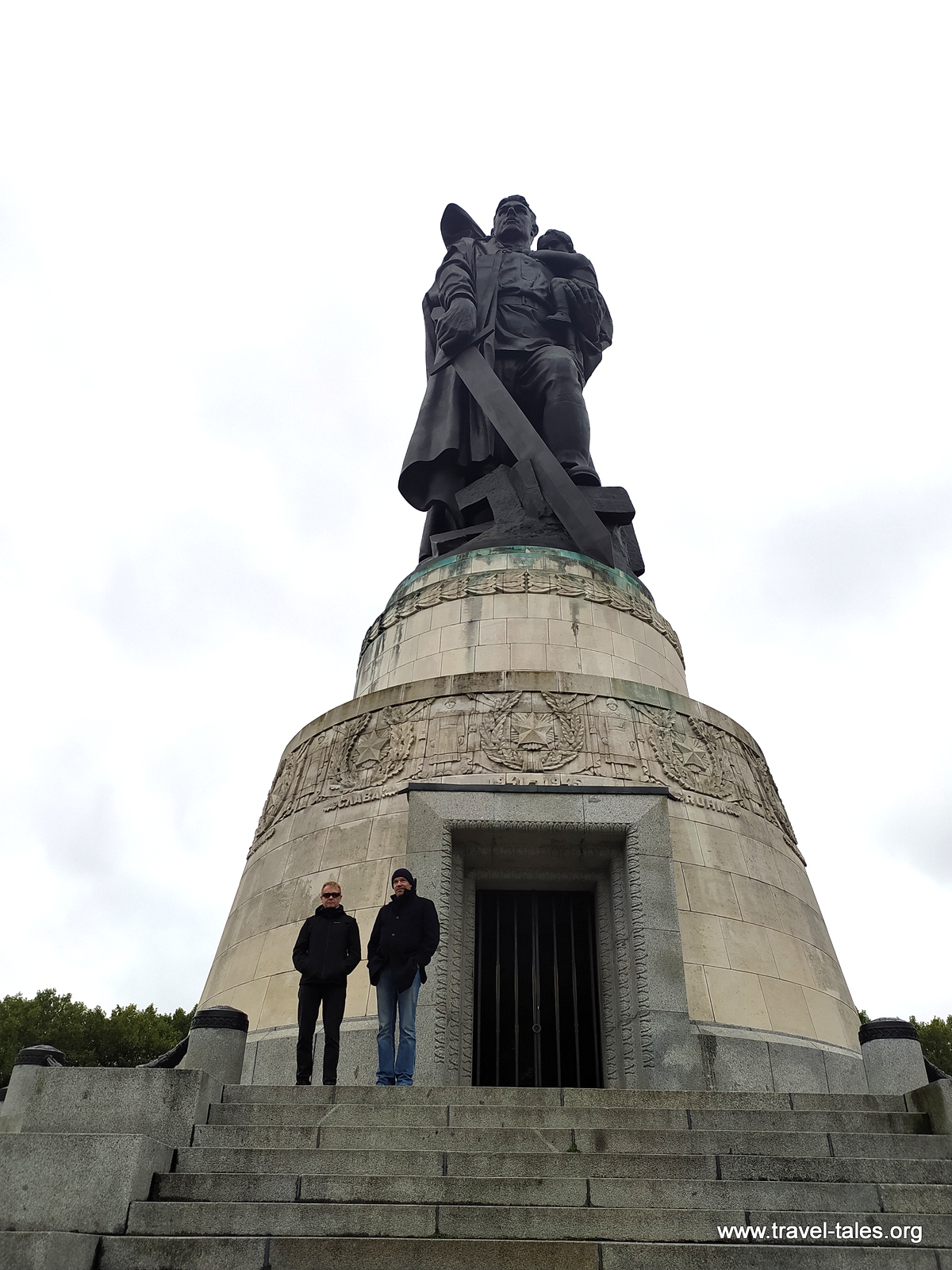

Overall the site is very impressive. The bad weather on the day of our visit meant it was very empty, which made it feel that much more disproportionately large. Every part of the monument is on a gigantic scale and I can only imagine what it must have felt like if it was filled with parading Soviet soldiers paying their respects to their fallen comrades.

 travel tales