
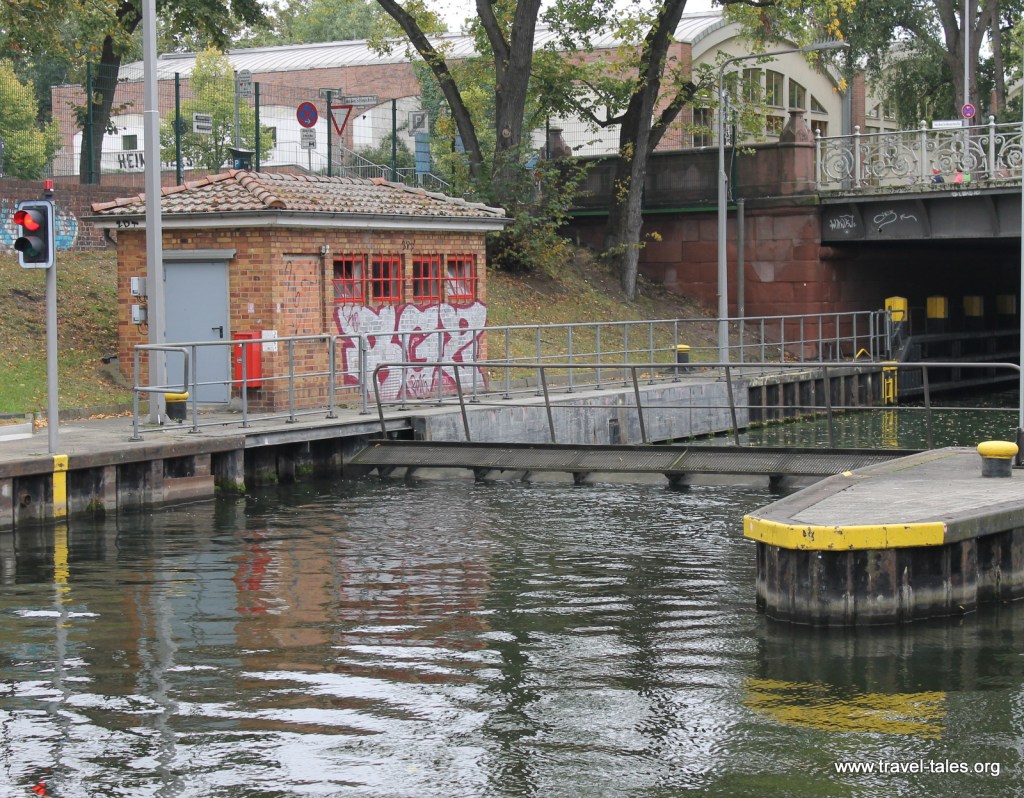
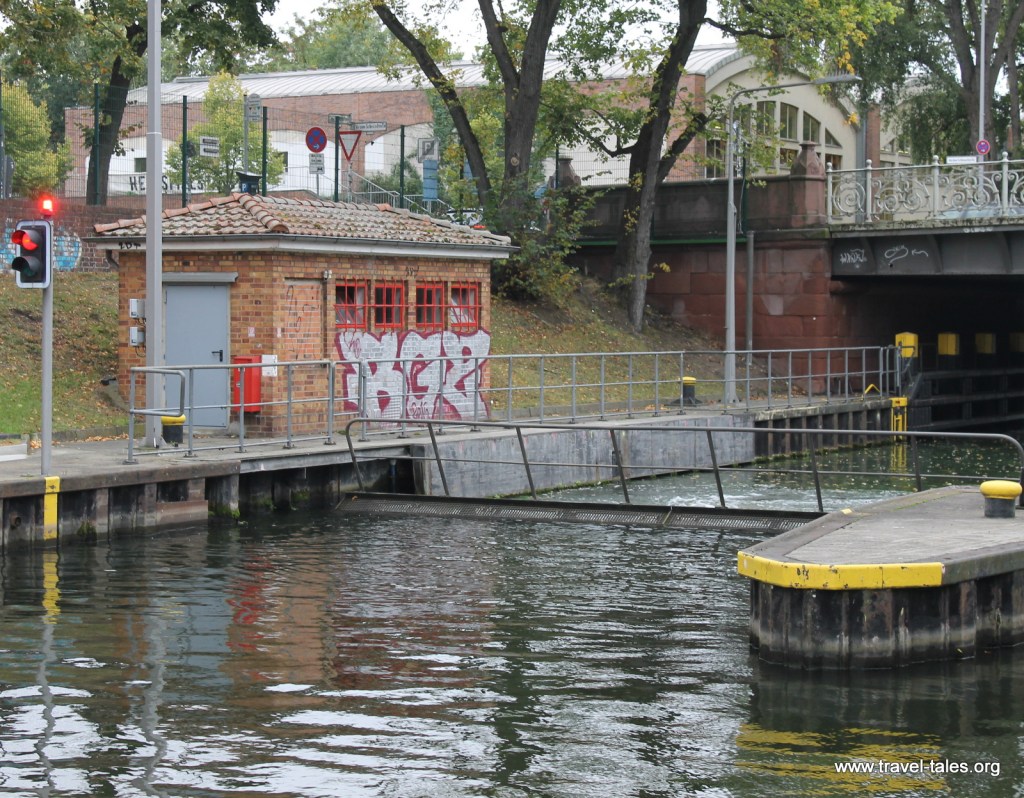
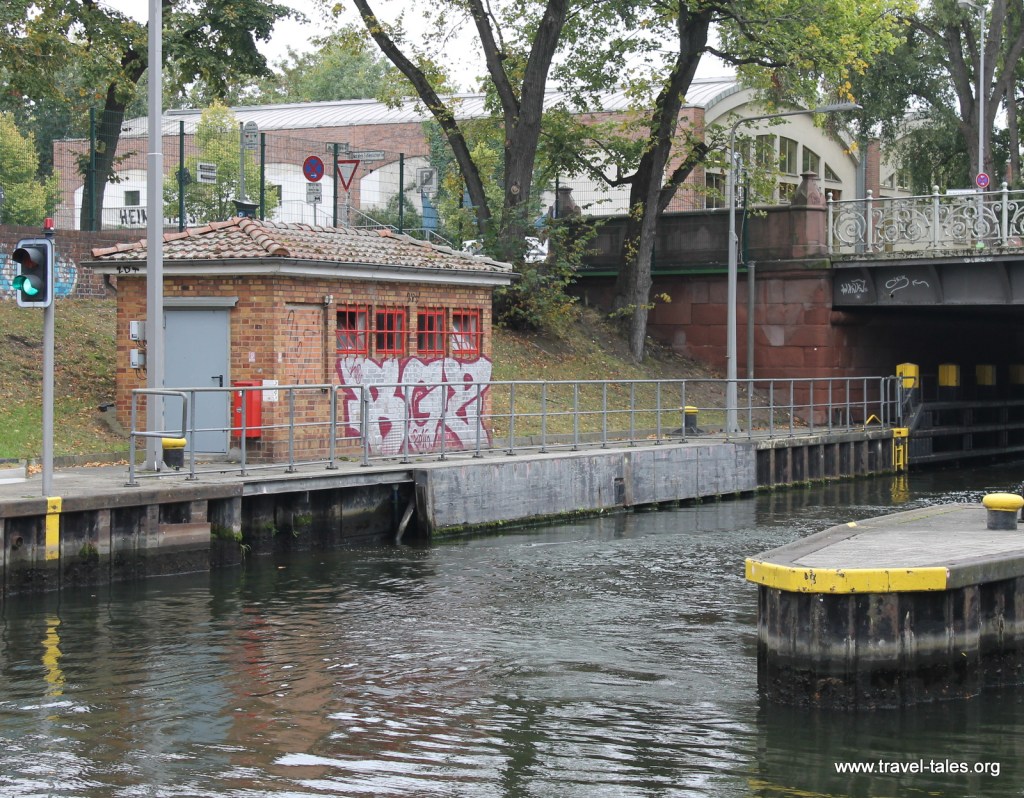
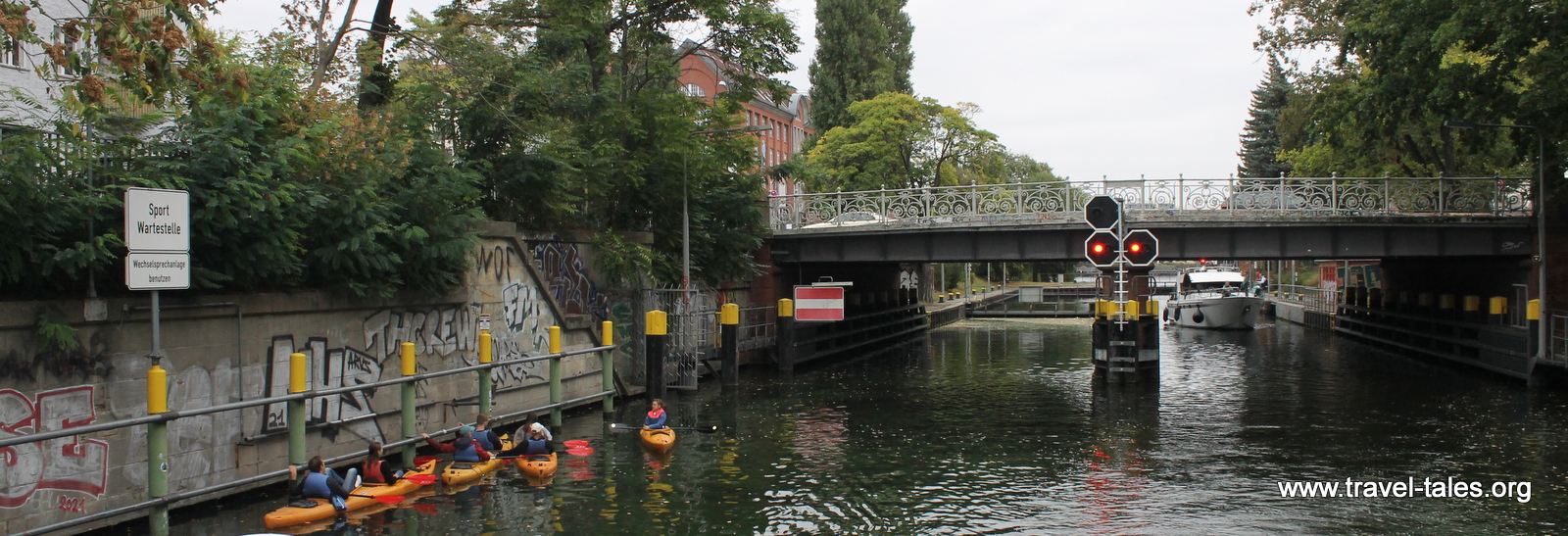
Once the lockkeeper arrived, he opened the entry gate into the Upper Lock and turned the lights to green.
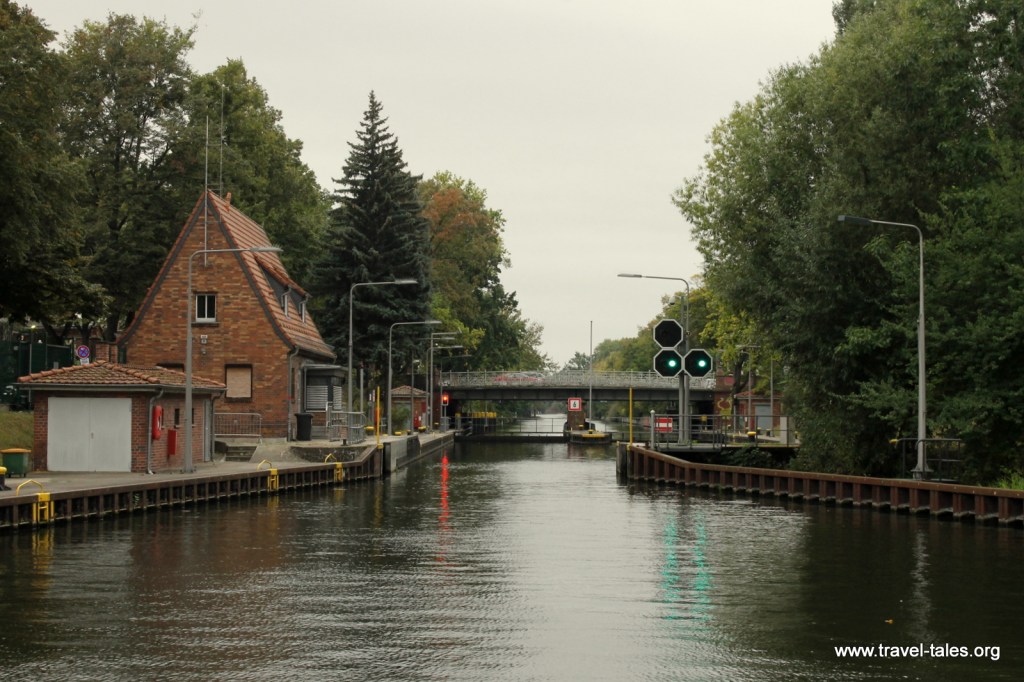
We entered the lock, which allows the water depth in the Landwehrkanal to be managed. In its heyday, ships would travel in both directions and could only pass each other if the water was deep enough. The water level of the Spree varies with rainfall and its tributaries. This variation could not be passed on to the canal as it had not been dug out deep enough to cope with the lower water levels in the dry season.
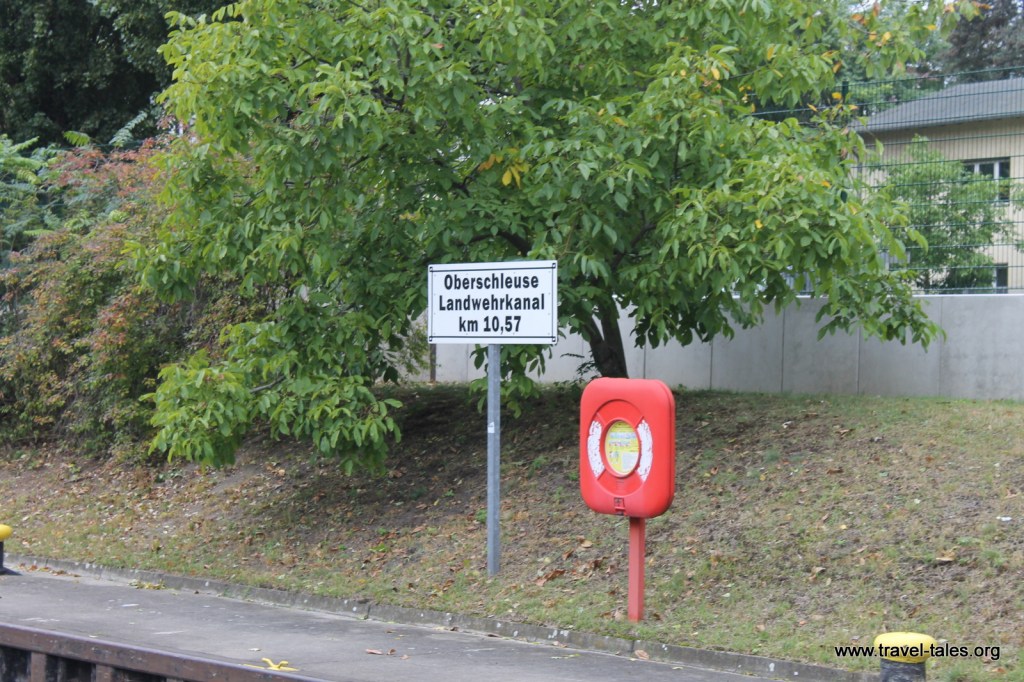
When we arrived, the water levels between the river and the canal were only about 30cm. This doesn’t feel like a lot in comparison to some other locks, but could be enough for a boat to run aground. I suspect because the water levels are usually not that different, the gates work differently from gates I had seen at other locks. Rather than two gates which meet in the middle with vertical hinges on the sides, these gates have a horizontal hinge at the bottom and the whole gate tips up and down. As expected, the gate behind us first came up

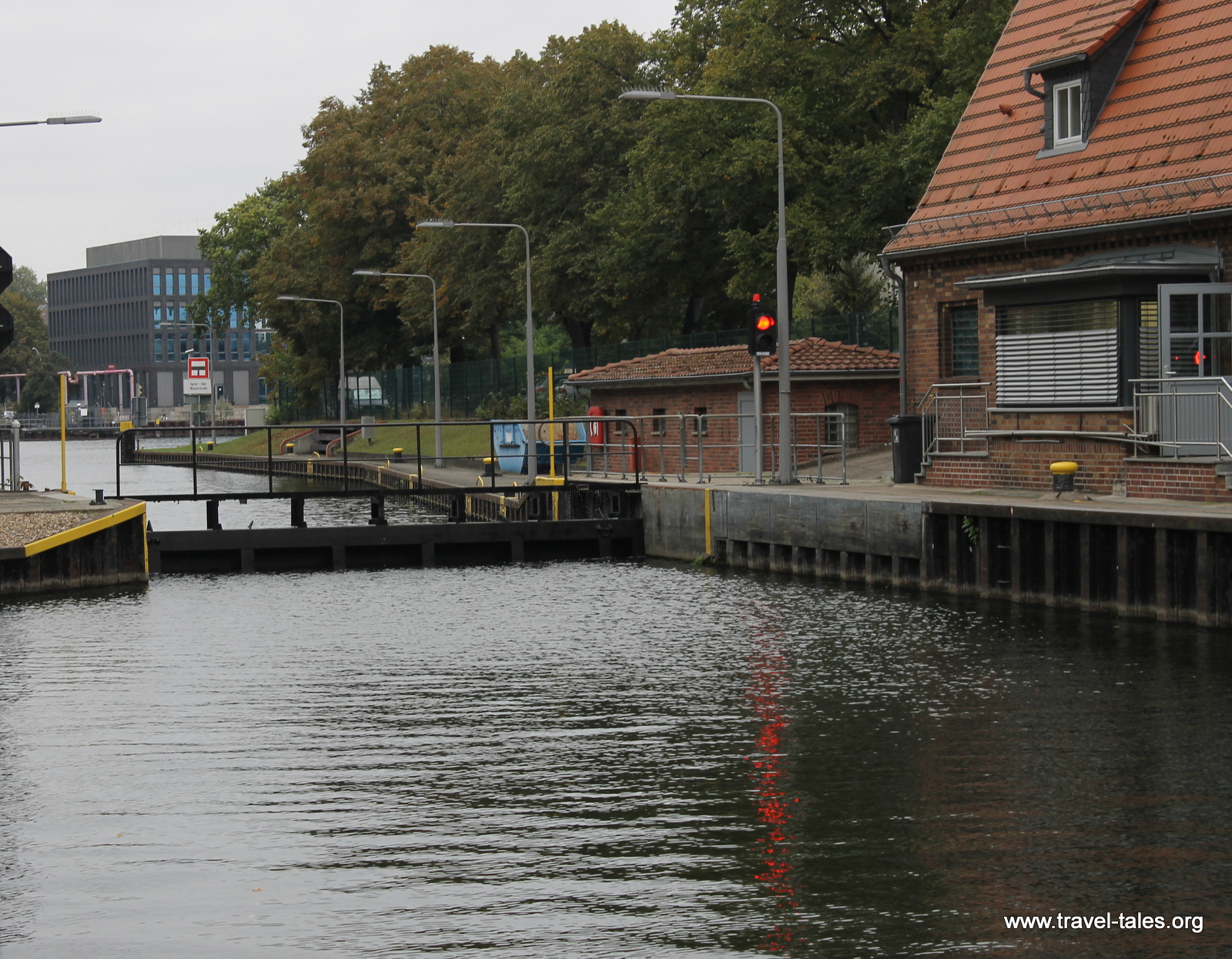
Then the water level in the basin adjusted to the level in the canal and the gate into the canal lowered to let us through.
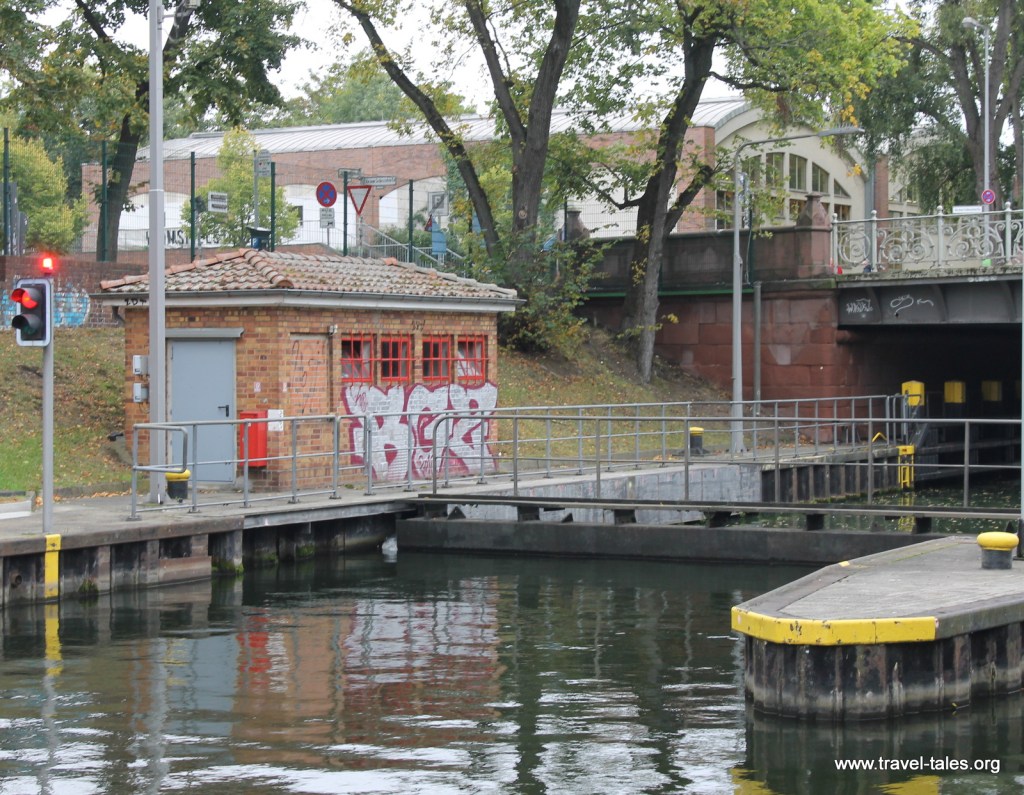
Nowadays the canal is mainly used for leisure purposes and is designed to be one-way. But this bridge, immediately beyond the lock, is not unique in being quite low.
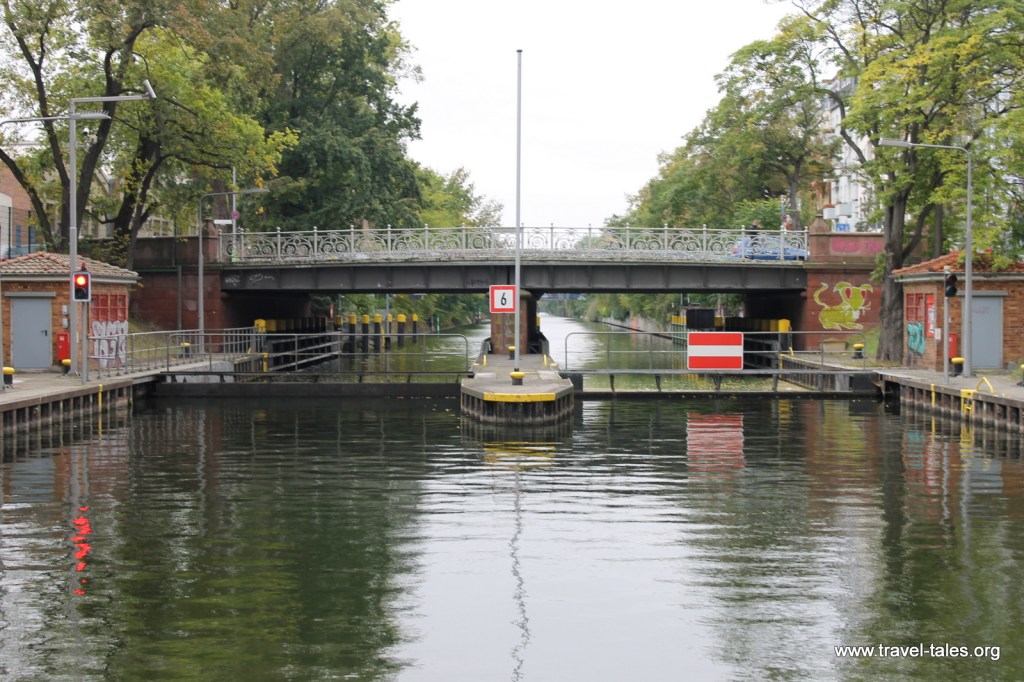
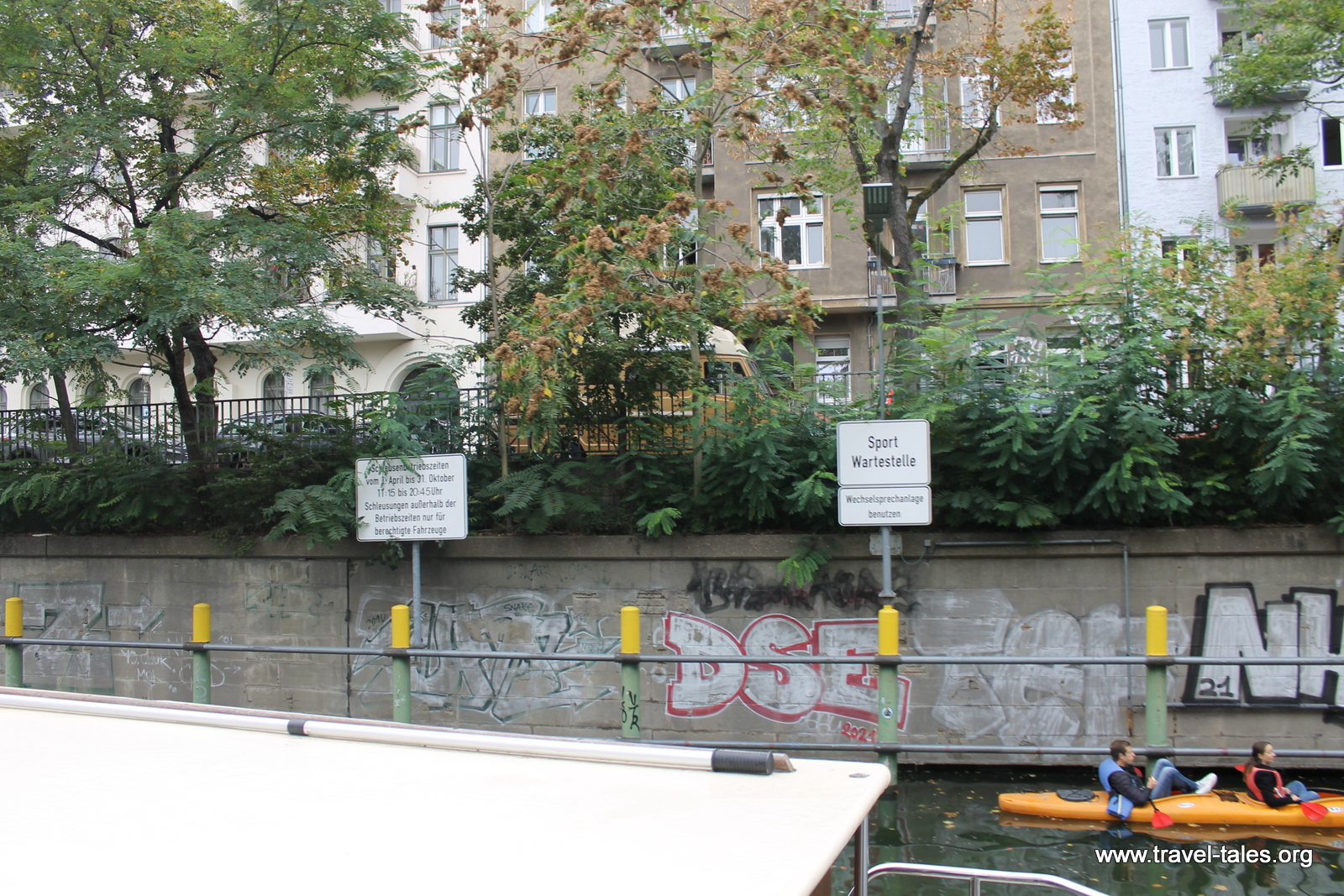
Our captain was quite familiar with this route and knew that our boat would fit under all the bridges. The boat behind us was taller and we heard the lockkeeper tell its captain that if they found they couldn’t fit under a bridge, they could turn around and he would let them out again. A group of canoeists also travelled in the other direction. They waited at the sports shipping waiting point for us to pass and then entered the lock to travel out onto the river. I can’t help thinking they were more sporty in their sports shipping than we were!

 travel tales