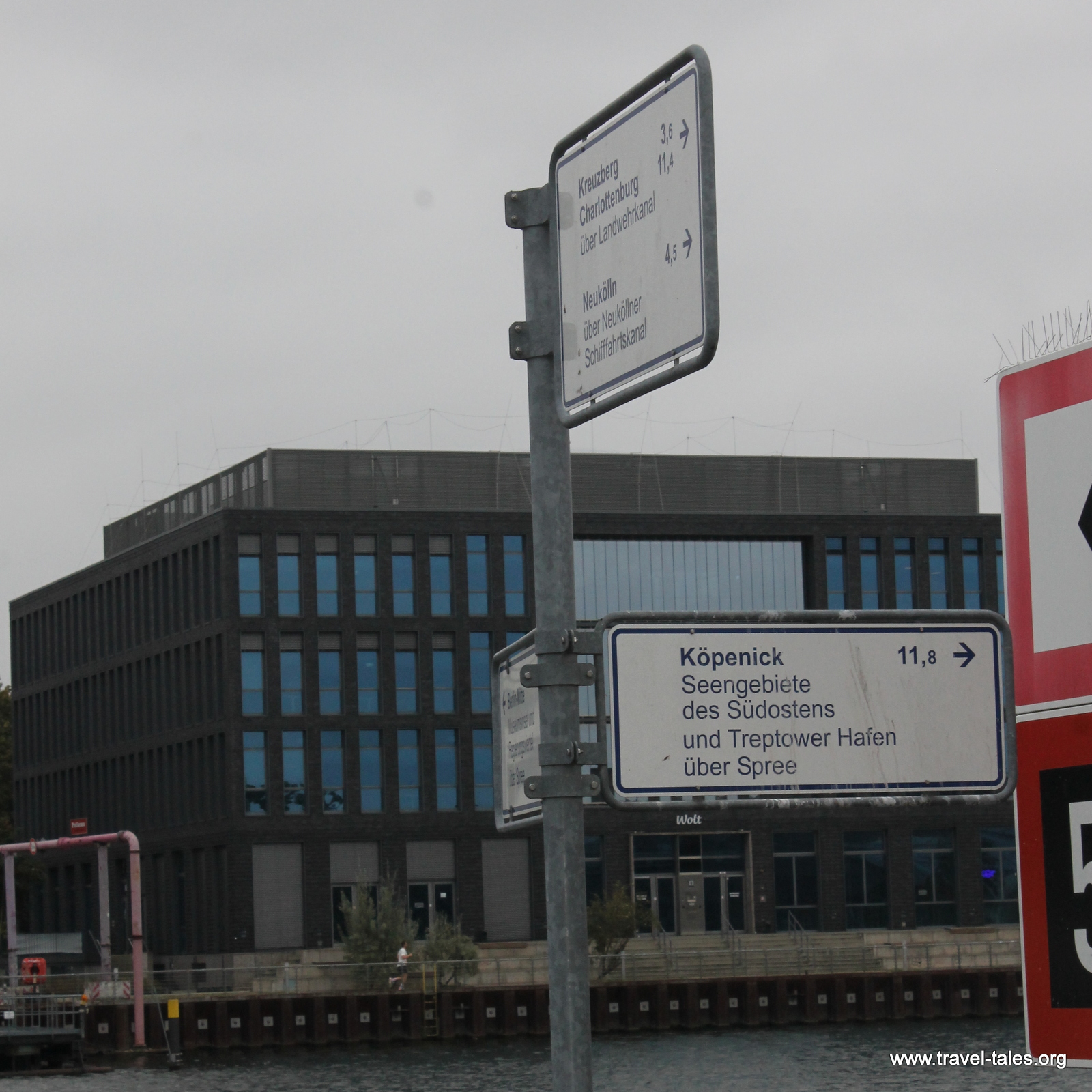
Travelling north from Köpenick, shortly after passing the Molecule Man sculpture in the Spree, there is a turning into the Landwehrkanal. The waterway sign shows which parts of the city you can reach if you turn into this canal. That includes Neukölln, for which you need to turn into a further canal from the Landwehrkanal.

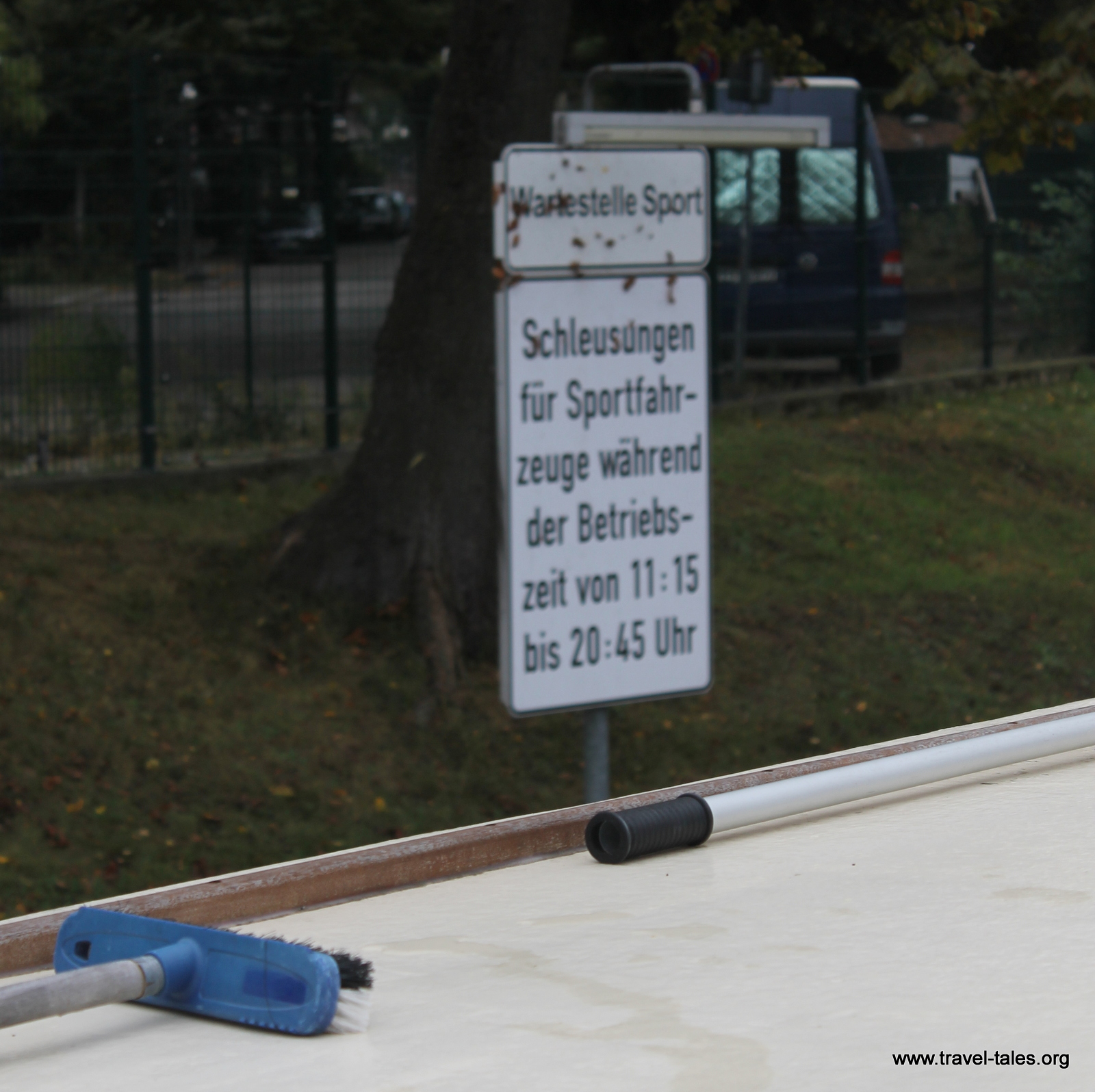
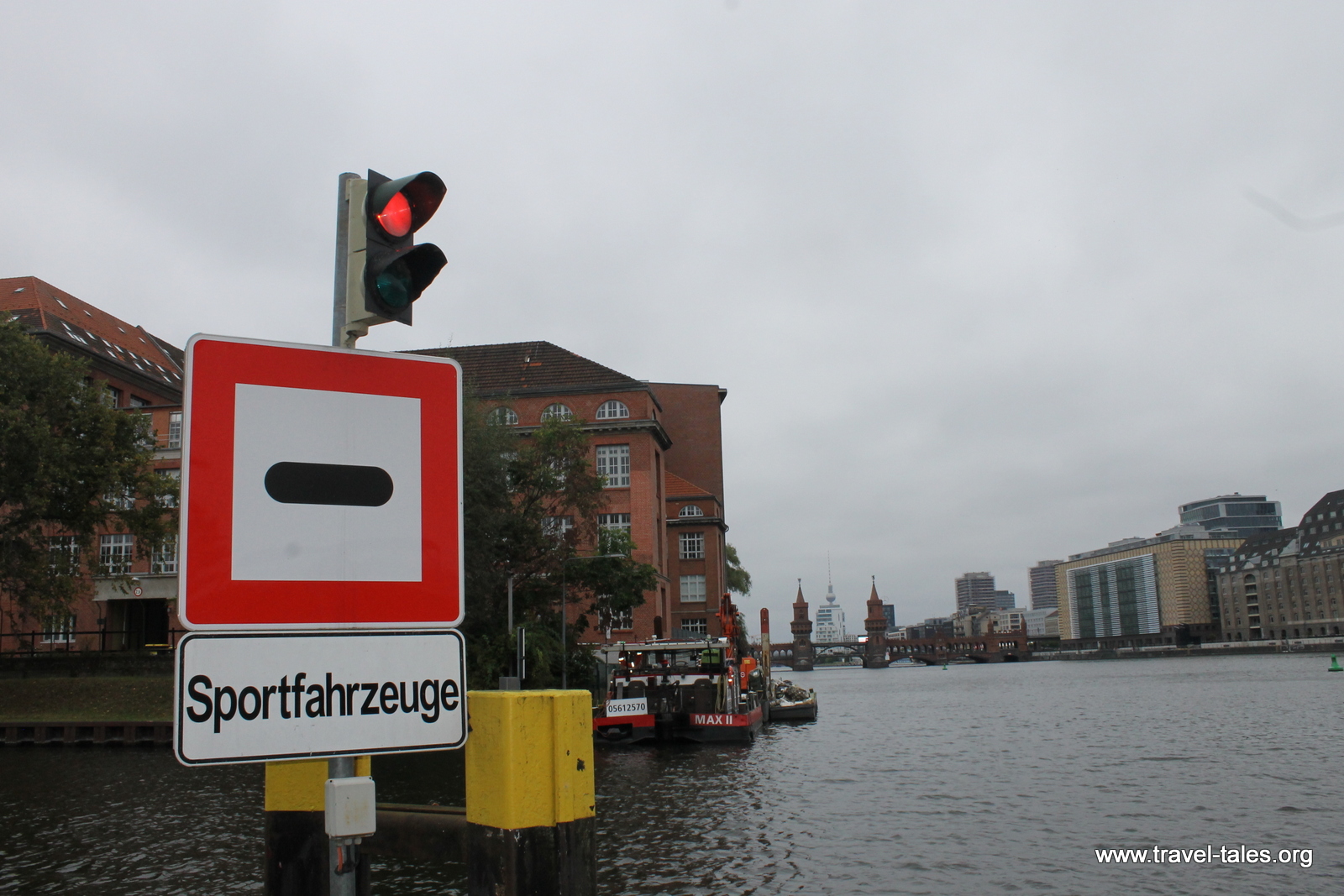
There is a lock to enter the canal which can be used by non-commercial shipping (sport shipping) between 11:15 am and 8:45 pm. Having arrived a little early, we stopped at the Sport Waiting Point. We tied up and waited for the red light to turn green.

In the meantime, I researched the canal’s history a bit. Its name in particular piqued my interest. The English words for “Landwehr” in dictionaries are “territorial army”. I would consider “home guard” a suitable term too, depending on the context. It has less branding attached to it in the UK, where the Army Reserves were called the Territorial Army until relatively recently.
The reason this canal is named after the Landwehr is because some of it was once part of the trench defending the city of Berlin to its south. As long ago as 1700 there was a defensive trench outside the city walls between the gates towards Halle and Silesia (Hallesches Tor and Schlesisches Tor). It also acted as a moat by providing a route for the high groundwater in the city to be drained into the Spree.
It wasn’t built into a navigable waterway until the 1840s. Its purpose was to provide an additional shipping lane as the narrow Spree was becoming increasingly clogged with increasing industrialisation. The opening in 1850 was largely ignored by Berliners, with it being outside the city walls and therefore not really relevant. It now provides an over 10km long stretch of nature and leisure opportunities pretty much in the middle of modern Berlin!


 travel tales