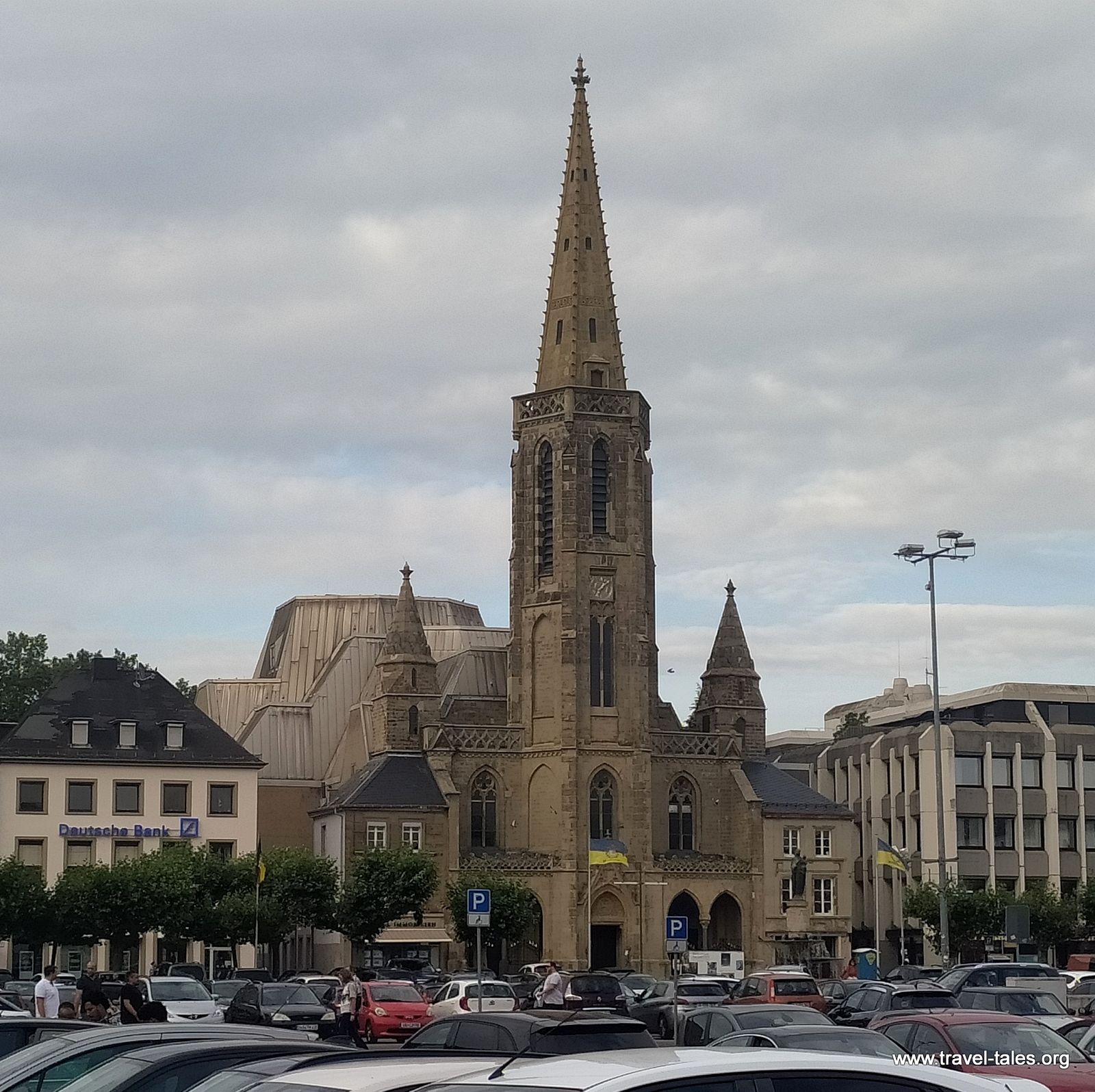
When passing St Ludwig and St Peter and St Paul’s church on the Grosser Markt in Saarlouis, the only thing a little unusual is that the facade appears to include two shops.

When on the other side of the large market square, you notice another peculiarity. The roof behind the facade appears to be from a far more recent epoch than the entrance.

When you walk through the outer door, it feels like many other churches. After the second door, however, there is quite a different design.

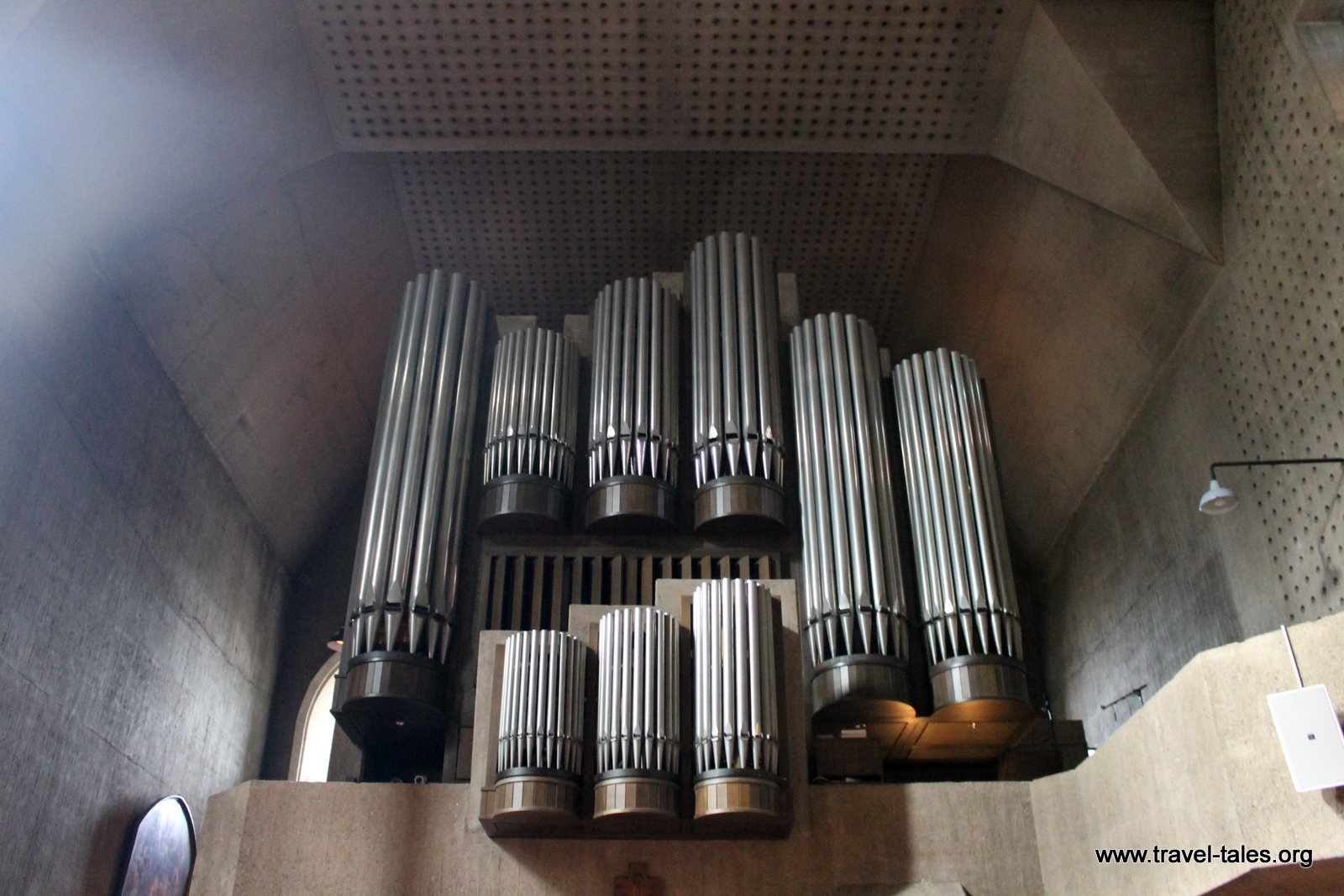
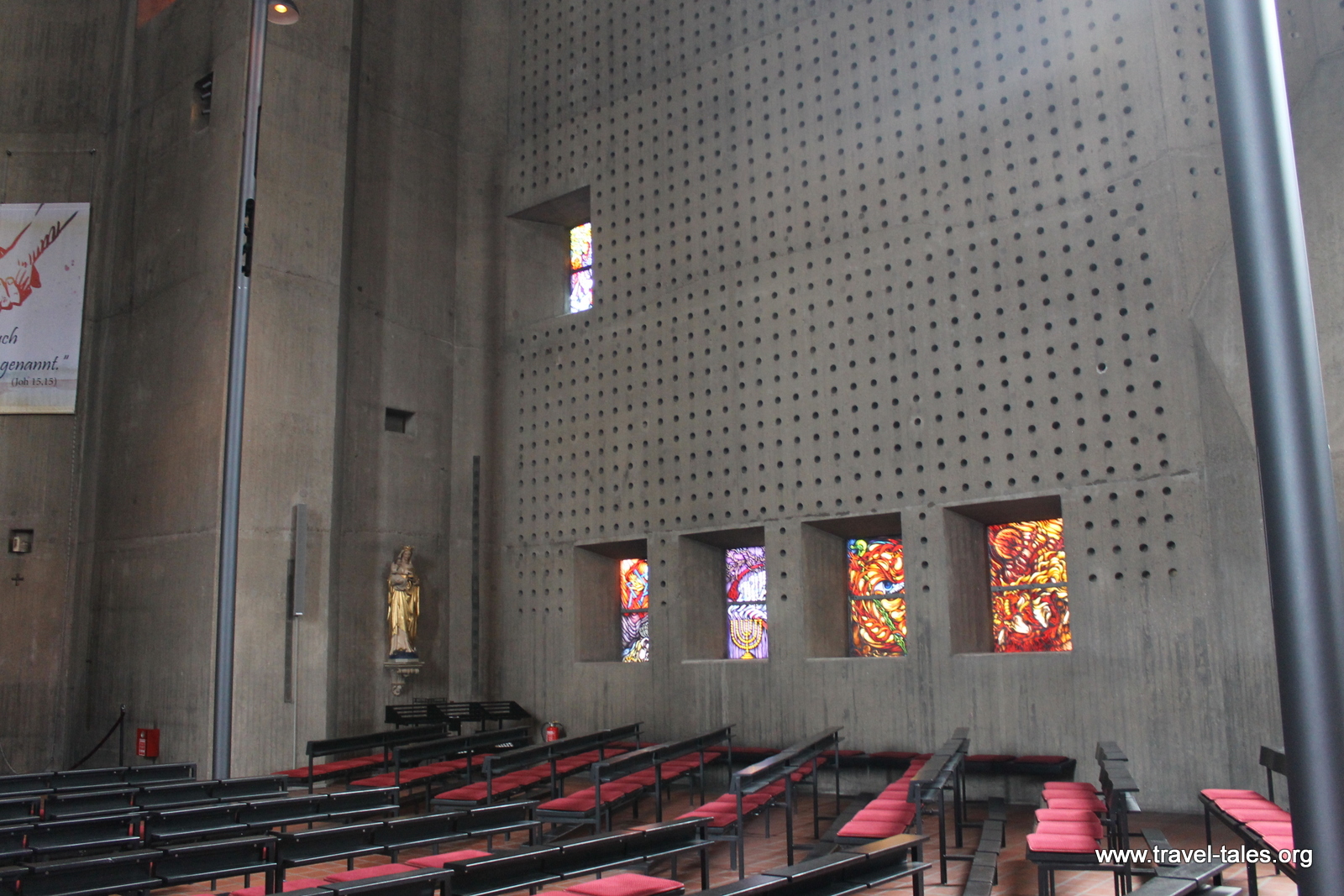
In Germany, it is not unusual for buildings which were bombed in WWII to have been rebuilt retaining what was not damaged by bombs. This was my first thought when I saw this.
However, the concrete architecture reminded me more of the 1960s and I was uncertain whether a bombed-out church would have remained a ruin that long. On researching the church I learned that it had suffered some bomb damage during the war. These were repaired in the 1940s.
The reason for the new building behind the facade was actually a drop in the groundwater levels which made the neogothic building unstable. Scaffolding was initially used to establish it, however, in 1964, the priest had to announce that the building needed to be torn down.
An architectural competition for a new church was won by Gottfried Böhm. The foundation stone was laid in 1969 and the new building was consecrated in August 1970.
Not only was the old facade retained, but other features of the old church. Having been removed through controlled demolition, artefacts could be removed and stored. The high altar dates from 1910 and is quite eye-catching when you walk in.


 travel tales
Love churches and their history. That stained glass is beautiful.