The Franco-Dutch War (1672 – 1678) included many more parties than just the French, led by Louis XIV and the Dutch Republic. Having sided with the Dutch, the Holy Roman Empire gave up its claim to German-speaking Lothringen in the peace treaty signed at Nijmegen. A year later, Louis XIV sent his most trusted fortress builder to build a fortress to secure his new eastern border: Sébastien Le Prestre de Vauban.

The location of this fortress town was on the river Sarre (spelt ‘Saar’ in German) and it was reverently named after the king: Sarre-Louis. The design of the fortress was similar to others Vauban built (33 in total). A star-shaped fortress around a large parade square.
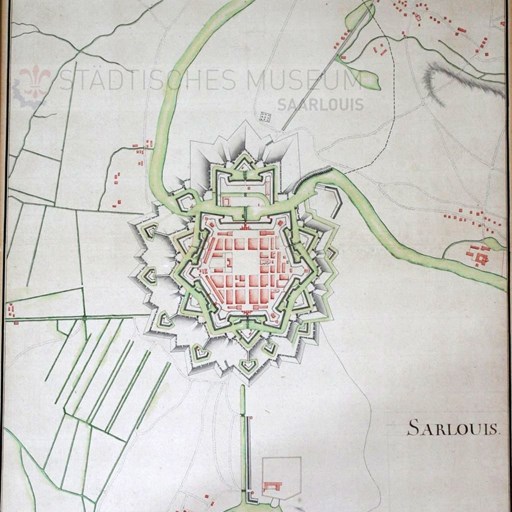
Louis XIV visited Sarre-Louis in 1678 and awarded it its crest of the sun under a banner of three fleurs de lys and the motto: Dissipat Atque Fovet (the sun separates the clouds and warms the earth). The fortress and fleur de lys are now part of the stylised logo of the town.

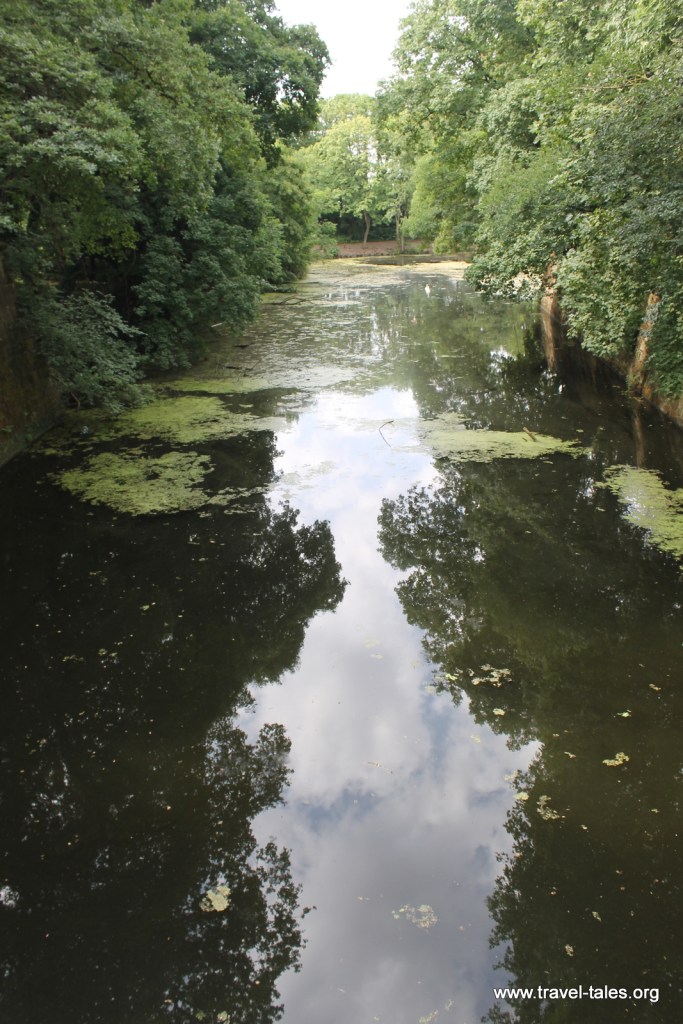
One of the points of the star shape remains and is part of a park. The park itself was made possible by the decision to re-route the river to ease shipping. The oxbow where the river once flowed forms a cooling centre point for the park.
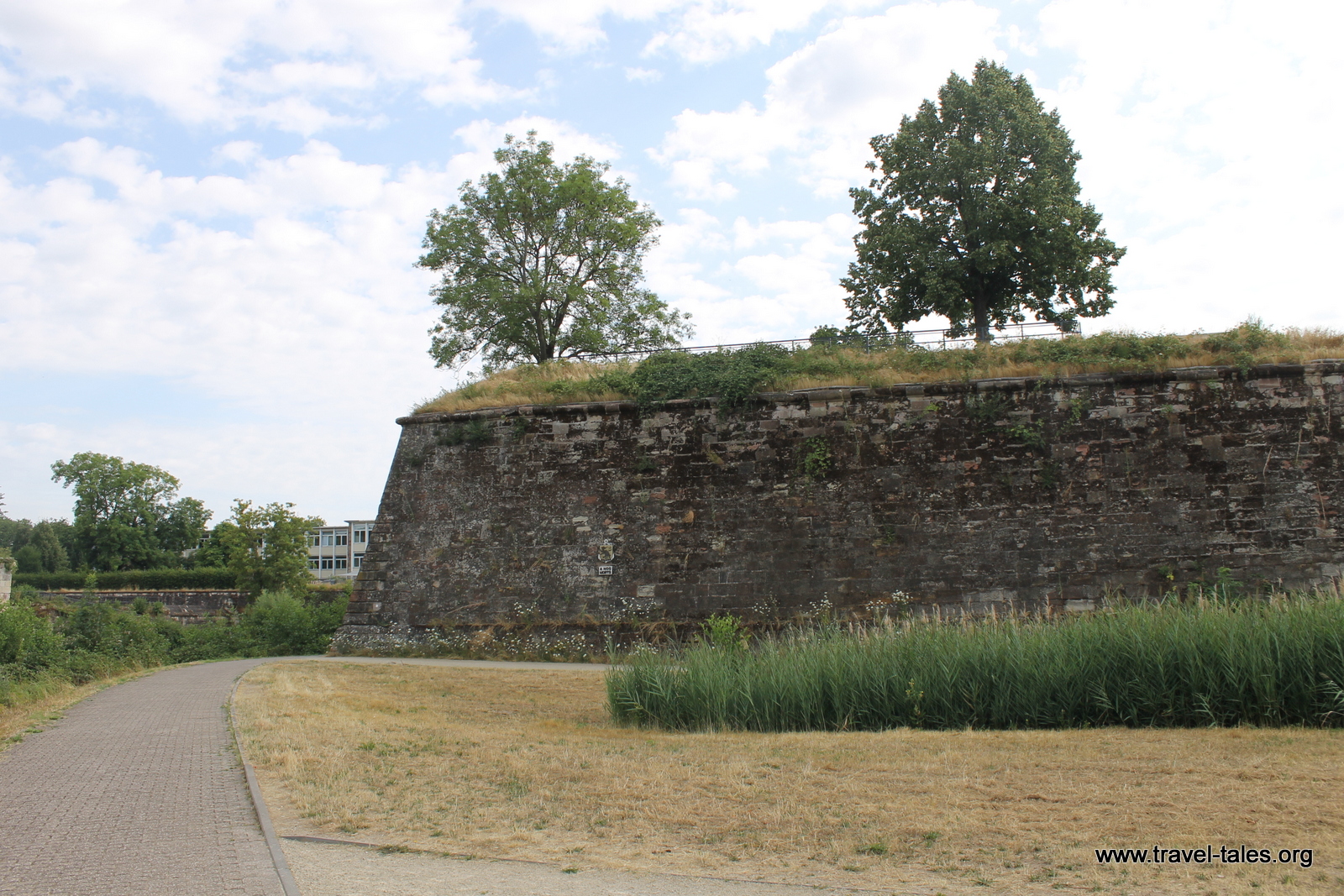
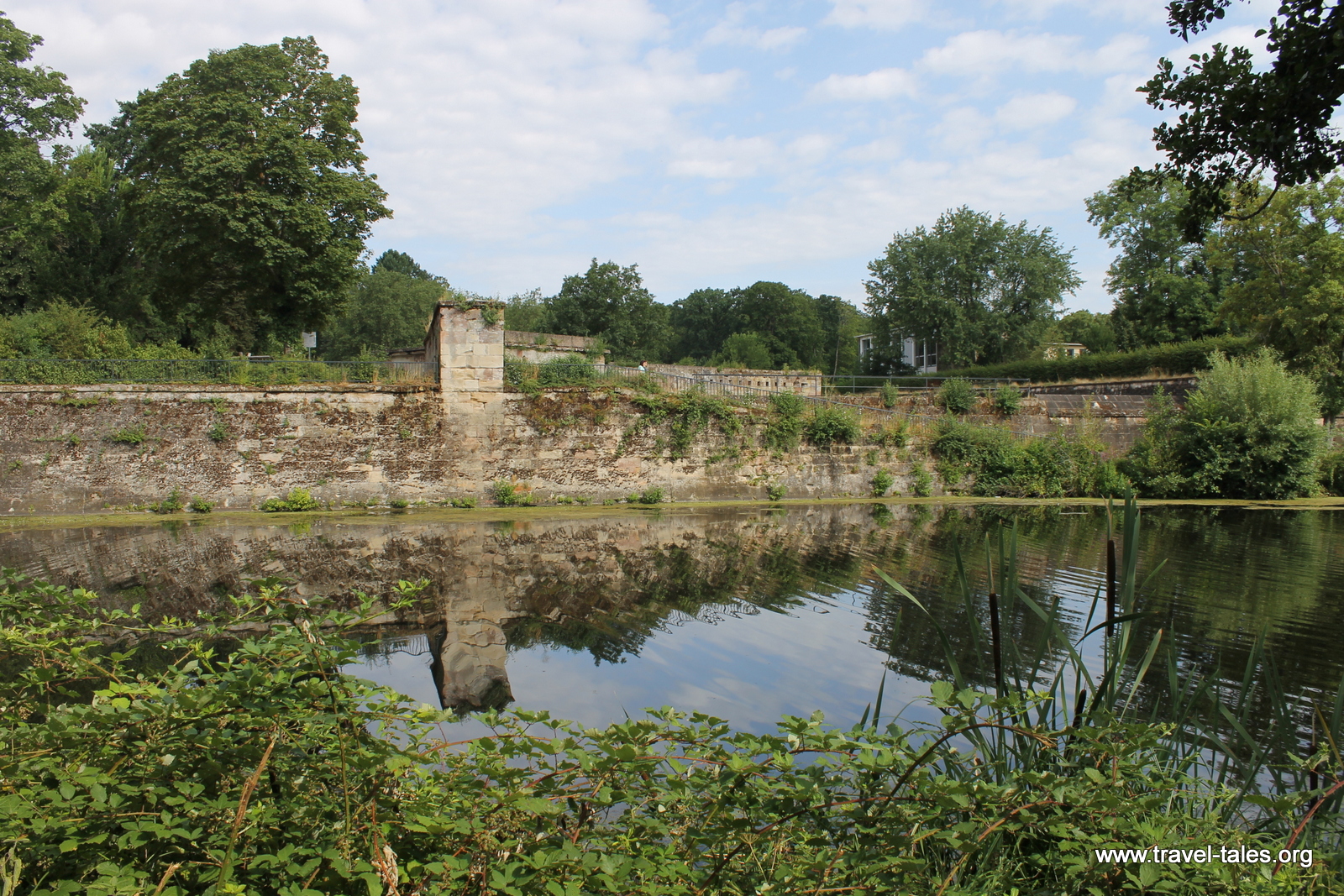


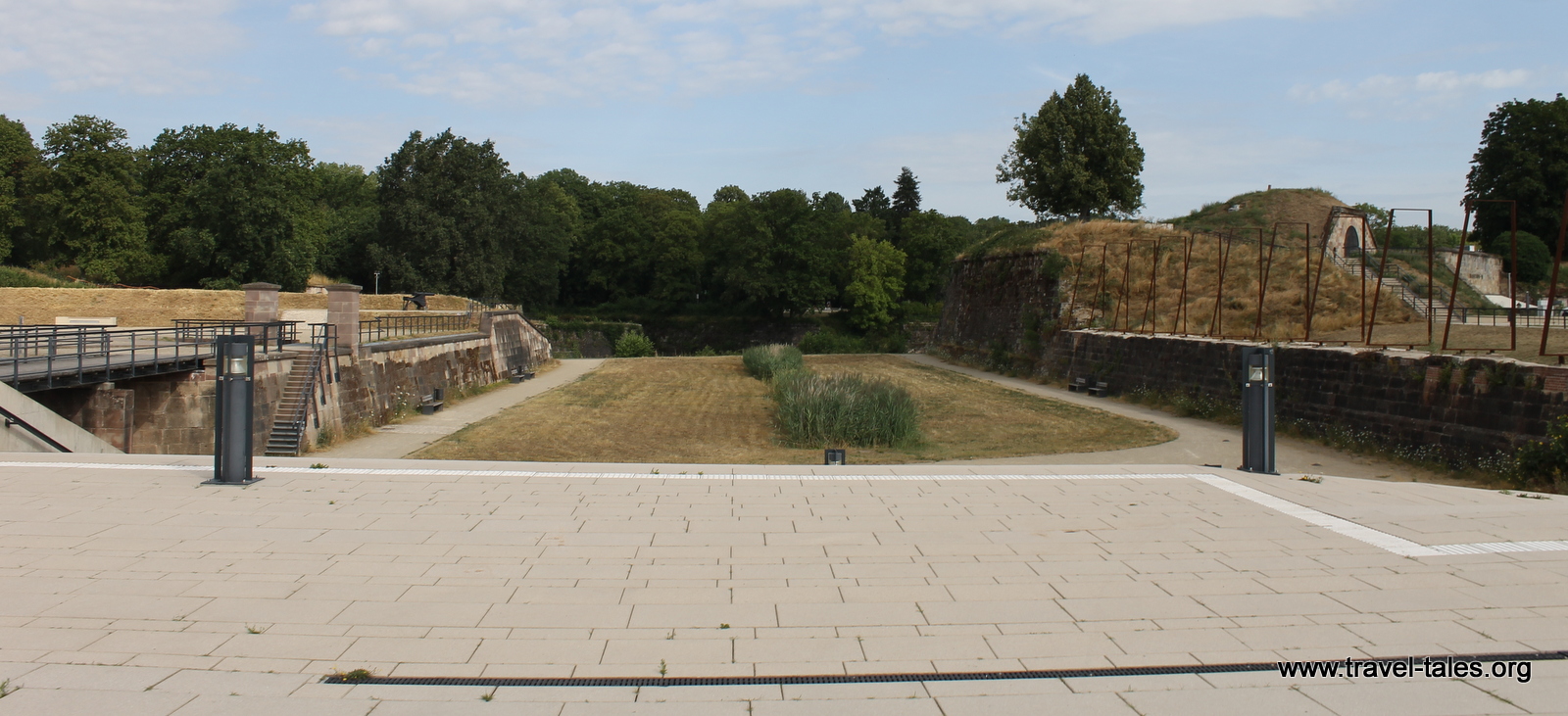
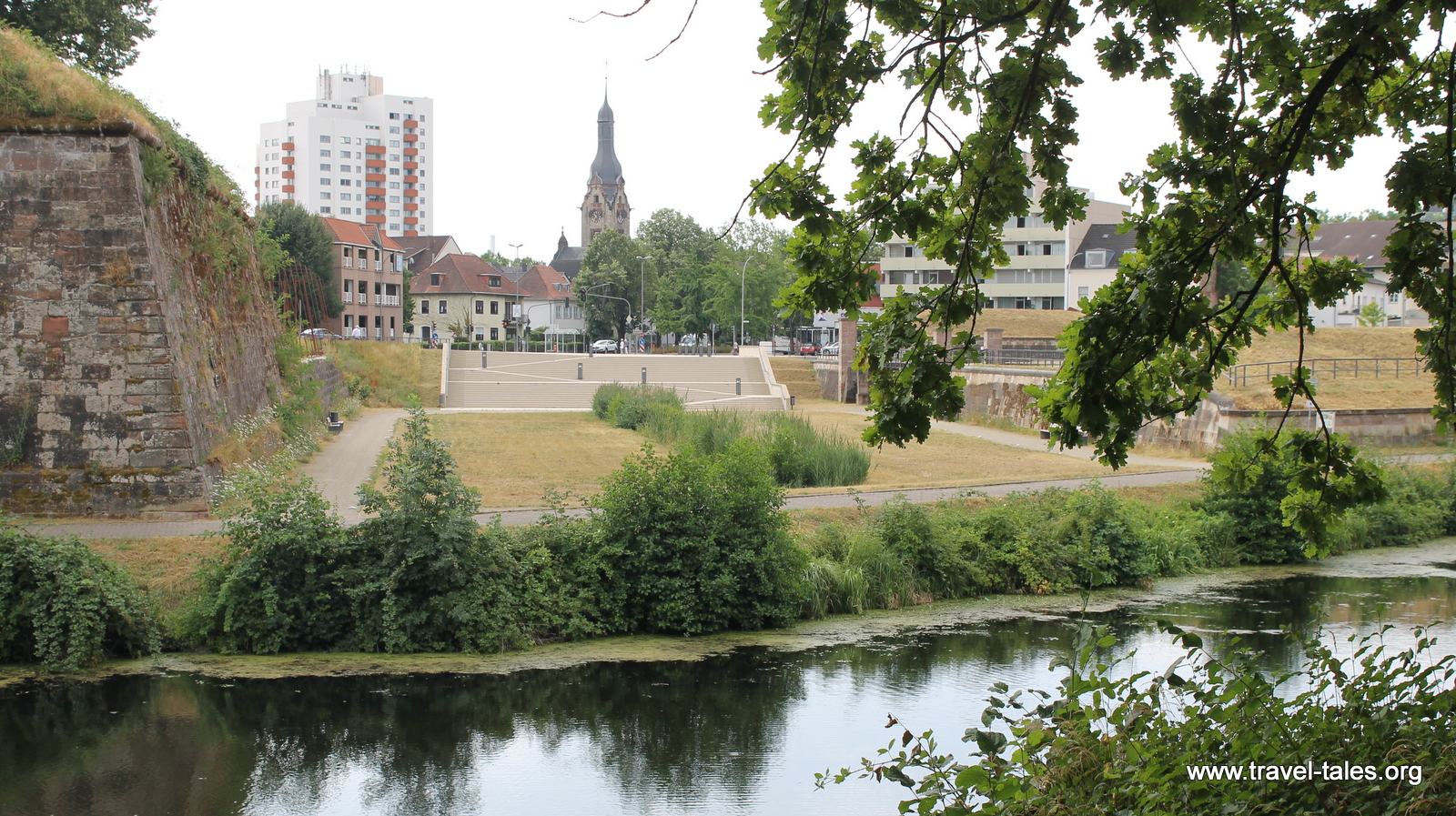
As the water remains connected to the Saar, you need to cross a bridge to get back to where you started.
Sarre-Louis changed its name to Sarre-Libre during the French revolution, but returned to its original name in 1810. In 1815, Lothringen/Lorraine became part of Prussia. Legend has it that a single French soldier called Lacroix was found still guarding the fortress by Prussian soldiers after the French had withdrawn. A statue in his memory remains at the edge of the remains of the fortress.


 travel tales